When I traded my smartphone for a journal and my fitness tracker for mountain trails, the things that became essential weren't camping gear or survival tools—they were practices I'd never valued before that fundamentally rewired my relationship with time, movement, and human connection.

Add VegOut to your Google News feed. 
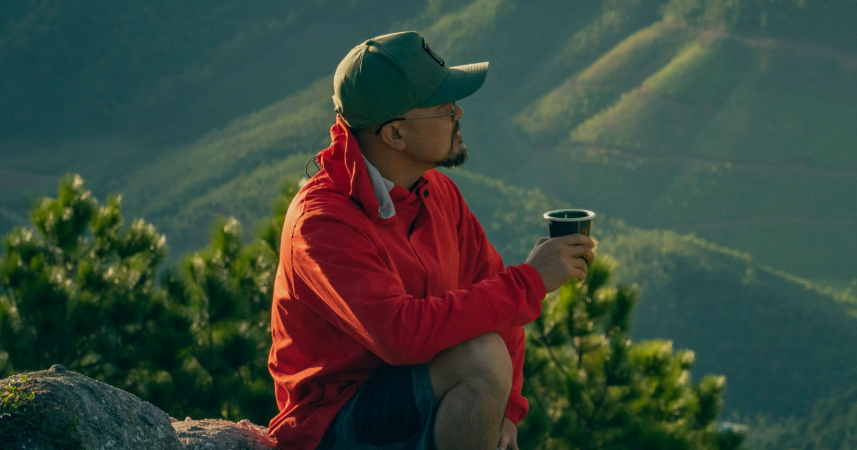
Six months ago, I packed up my life, turned off my phone, and disappeared into the mountains of northern Thailand.
No WiFi, no social media, no Netflix. Just me, a basic cabin, and whatever I could carry in a backpack.
Friends thought I'd lost it—maybe I had—but after years of constant notifications and that nagging feeling that life was happening somewhere else on a screen, I needed to know what actually mattered when everything else was stripped away.
What I discovered surprised the hell out of me.
The stuff I thought I'd miss desperately? Barely crossed my mind after week two.
But the things that became essential? They weren't what I expected at all.
The morning ritual that replaced my phone
You know that automatic reach for your phone when you wake up? That muscle memory that has you scrolling through emails before your eyes fully open?
For the first week off-grid, my hand would still reach for a device that wasn't there. It was like phantom limb syndrome for the digitally addicted.
But here's what replaced it: Journaling. Three pages of whatever came to mind, every single morning, with an actual pen and paper.
This became my sanity anchor. Without the constant input from screens, my mind needed somewhere to dump all the thoughts, worries, and random ideas that would normally get buried under a avalanche of other people's content.
The journal became my therapist, my planning tool, and my creative outlet all rolled into one.
It helped me process the silence in a way that meditation never could and, unlike my phone, it never demanded anything back from me.
Movement became my new dopamine hit
Without YouTube workouts or fitness apps tracking every step, I thought I'd become a sloth.
The opposite happened: Movement became addictive in a way it never was when I had all the tech toys. Every morning started with running the mountain trails near my cabin.
The absence of metrics was liberating. I ran when I felt like running, walked when I wanted to walk, and stopped to sit on a rock when the view demanded it. My body became the only fitness tracker I needed.
But it wasn't just running; I found myself constantly moving throughout the day. Chopping wood, hiking to the nearest village for supplies, doing bodyweight exercises just because I had energy to burn. Without screens to vegetate in front of, my body craved activity.
This relates to something I explored in my book, Hidden Secrets of Buddhism: How To Live With Maximum Impact and Minimum Ego. The Buddhist concept of mindful movement is about being present in your body, feeling each sensation without judgment.
Books became my internet
I brought twelve books with me, thinking that would last the full six months. I burned through them in the first month.
The local village had a tiny used bookstore run by an expat who'd been collecting books for twenty years.
It became my Google, my entertainment system, and my university all at once. I read everything from Thai cookbooks to quantum physics, from beat poetry to farming manuals.
Reading without the option to quickly Google every reference or immediately share quotes on social media changed how I absorbed information.
I had to sit with ideas, wrestle with concepts I didn't immediately understand, and form my own opinions without checking what everyone else thought first.
The depth of focus was intoxicating. I'd spend entire afternoons lost in a single book, something I hadn't done since I was a kid.
No notifications to break the spell, no urge to check something else "real quick."
Solitude became the teacher I didn't know I needed
Here's something nobody tells you about going off-grid: the silence is loud.
The first few weeks, I'd talk to myself just to hear a voice. I'd have full conversations with the gecko on my wall.
The quiet felt oppressive, almost hostile.
Then something shifted. The silence stopped feeling empty and started feeling full. Full of bird sounds I'd never noticed, wind patterns that predicted rain, the rhythm of my own thoughts without constant interruption.
Solitude taught me things that years of meditation apps and mindfulness courses never could. It showed me my patterns, my mental loops, the stories I tell myself when nobody else is around to distract me from them.
When you can't scroll away from uncomfortable thoughts, you have to face them. When you can't text someone the moment you feel lonely, you have to learn to be your own company.
Simple tools became complex solutions
A knife, a headlamp, and a water filter.
These three items became more valuable than any gadget I'd left behind:
- The knife was my kitchen tool, my craft implement, and my way of making marks to count days.
- The headlamp meant I could read after sunset, navigate night walks, and signal to others when needed.
- The water filter gave me freedom to explore without worrying about getting sick.
What struck me was how these simple tools required actual skill to use well. Unlike apps that do everything for you, I had to learn, practice, and problem-solve.
There's something deeply satisfying about solving problems with your hands and basic tools rather than downloading another app.
Community became everything
Without social media, I had to actually be social. Wild concept, right?
The local village had a weekly market where everyone gathered.
At first, I was the weird foreigner who'd chosen to live without electricity. But showing up consistently, learning basic Thai phrases, and helping neighbors with physical tasks slowly wove me into the community fabric.
Real community, it turns out, is about showing up, being useful, and sharing meals. It's about remembering people's names and their stories because you can't just look them up later.
One older local man taught me about finding peace without technology. He'd never owned a smartphone and couldn't understand why anyone would want one.
"Too much noise," he'd say, tapping his temple. "Makes the mind sick."
The simplicity of his wisdom hit harder than any productivity hack ever could.
Final words
Coming back to civilization after six months off-grid was like diving into a pool of chaos after floating in a calm lake. The noise, the speed, the constant demands for attention felt almost violent.
But here's what I know now: We don't need to escape to the mountains to find what matters, and we just need to be intentional about creating space for the essentials.
I still journal every morning, I still move my body without tracking every metric, I still read actual books and sit with ideas instead of immediately Googling them, and I still protect periods of solitude like they're sacred, because they are.
The surprising truth? What I couldn't live without had nothing to do with specific items or tools. It was about practices that connected me to myself, my body, and the people physically around me.
We're told we need more apps, more devices, more connections to live better. My six months off-grid taught me the opposite.
Sometimes the path to a richer life is about discovering what remains when you strip everything else away.
What’s Your Plant-Powered Archetype?
Ever wonder what your everyday habits say about your deeper purpose—and how they ripple out to impact the planet?
This 90-second quiz reveals the plant-powered role you’re here to play, and the tiny shift that makes it even more powerful.
12 fun questions. Instant results. Surprisingly accurate.