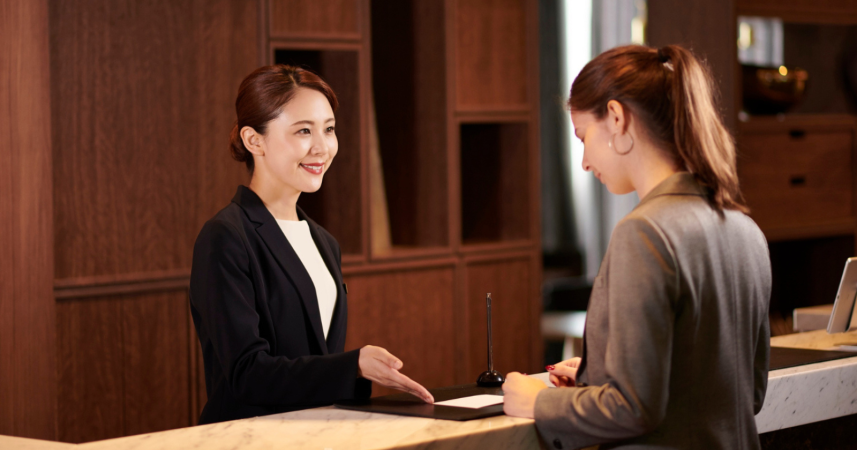
Years at a luxury hotel teach you a lot about people. I could usually tell who would tip well before they even reached the front desk.
We all like to believe tipping is random, don’t we?
That it depends on someone’s mood, generosity, or how their stay unfolds.
But after years managing the front desk of a 5-star hotel, I learned something surprising.
You can tell a lot about someone long before they slip you an envelope or tap the Add tip button on the card machine. And yes, there are patterns.
I did not start that job intending to read people like open books, but it did not take long before I found myself quietly predicting which guests would tip, and how much, before they even set their bags down.
As someone who later pivoted into psychology focused writing after a long stretch as a financial analyst, I realized how much those early experiences at the hotel taught me about people.
Tipping is not simply a financial act. It is an expression of values, awareness, and how a person relates to the world.
Here are the signs I noticed.
1) Their first interaction with staff speaks volumes
The moment someone walks into a lobby, they are revealing things they do not even realize they are revealing.
How do they greet the doorman? Do they acknowledge the porter? Do they make eye contact with whoever welcomes them?
People who tip well tend to treat every staff member like a real human being. They say hello. They smile. They use names when names are offered.
It is not performative kindness. It is consistent kindness. And that consistency usually extends to how they express gratitude, including tipping.
On the other hand, guests who breeze past staff as if no one exists rarely turn out to be generous.
I am not talking about jet lag or overwhelm. I am talking about the guests who seem allergic to courtesy.
If someone shows appreciation from the beginning, they usually show it at the end too.
2) They are prepared rather than frazzled
Tipping is often less about generosity and more about organization.
Some of our best tippers were business travelers who already had small bills ready because they knew they would need them. But it was not just the preparation that mattered. It was their overall energy.
People who come in calm and composed with boarding passes saved, reservation details handy, and luggage labeled tend to value preparedness.
Preparedness often reflects conscientiousness. And conscientious people care about fairness.
Guests who sprint into the lobby, frantically digging through pockets while shouting about WiFi, rarely end up being the ones who tip well.
3) They show curiosity rather than entitlement
One of my favorite signs was always curiosity. The guest who asks how your day is going. Or whether it is a busy time of year. Or my personal favorite, the ones who ask for local vegan food recommendations.
These questions matter because they reflect something deeper. Curiosity shows that a person sees you as part of their experience, not just a function in the system.
Entitlement does the opposite. It demands without connection.
Curious people tip well because they notice things. They recognize effort. They register when someone goes the extra mile.
Entitled guests tend to assume that mile should have been included in the room rate.
4) Their body language is respectful rather than performative
I used to pay attention to this without even meaning to.
Some guests approached the desk with open posture, relaxed shoulders, and genuine interest.
Others stood stiff, glanced at their phones every few seconds, or kept their body angled away like they were halfway out the door.
People who tip well tend to be fully present. They tuck their phone away. They look you in the eye. They listen.
You feel the difference. They are not trying to impress you. They are simply acknowledging you.
Disengaged body language, like tapping fingers or crossed arms, often predicts a transactional mindset. And transactional mindsets do not pair well with generous tipping.
5) They respect boundaries and policies

A surprisingly strong predictor of tipping is how someone reacts to rules.
If a guest politely asks whether early check-in is possible, the odds are good. If a guest demands it as if the universe owes them one, my internal prediction meter falls fast.
People who respect boundaries tend to also respect labor. They understand there is a system, a process, and human beings behind that process.
I once had a guest who laughed when I explained a policy he did not expect, saying that I was just doing my job. He later tipped half the front desk staff on his way out.
The ones who made a scene rarely left anything except stress.
6) They notice the invisible work
Some guests were incredibly observant. They noticed housekeeping quietly refreshing the lobby plants. They noticed bell staff managing a surge of arrivals. They noticed how the desk team juggled ten tasks at once.
Noticing matters. People who notice effort tend to reward effort.
They say things like you have been amazing today or I appreciate how quickly you handled that. They see the layers of work happening behind the scenes.
The people who are most aware of invisible labor are often the ones who tip the most consistently. Maybe it is empathy. Maybe it is experience. Maybe they once worked a service job themselves.
Whatever the reason, they recognize value and show appreciation for it.
7) They keep their sense of humor
This one surprised me at first. I started to notice that guests who could laugh about travel delays or lost luggage were often the ones who tipped well.
Humor shows flexibility. Flexibility shows generosity.
When someone can make a lighthearted comment after a grueling day, it usually means they are not looking to unload their stress on staff.
I remember a guest whose room was delayed because of a technical glitch.
He sighed, then joked that at least the lobby looked more peaceful than his office. He ended up tipping the bellman enough to cover two lunches.
Guests who cannot find humor in anything tend to hold tightly to everything else too, including their money.
8) They show gratitude without overdoing it
There is a difference between performative politeness and genuine appreciation.
Performative guests say thank you repeatedly while never looking you in the eye. Genuine guests say it once with sincerity, and you feel it.
Those genuine expressions often lead to real generosity later.
Interestingly, the biggest tippers were rarely the most talkative or outwardly expressive guests. They were steady, kind, warm, and appreciative in a grounded way.
No theatrics. No exaggeration. Just thoughtful appreciation.
9) They treat stressful moments ethically
Travel can be a mess of delays, cancellations, and frustrations. How someone handles those moments reveals so much about their character.
I could often tell who would tip well simply by watching how they treated a staff member delivering inconvenient news.
People who remain calm under stress tend to understand that staff are human beings trying their best. They channel frustration into problem solving, not blame.
Those are the guests who come back later to say thank you for your patience earlier. Sometimes they slip an envelope across the counter. Sometimes they ask to add something extra to their folio for the team.
When someone chooses grace over anger, generosity often follows.
10) They do not make assumptions about status
One of the clearest indicators of a generous tipper is how they respond to hierarchy.
Some guests only show courtesy to the general manager. Others only to the concierge. But generous tippers understand that every role matters.
Guests who treat the front desk associate the same way they treat the hotel manager tend to be the ones who tip from genuine appreciation, not obligation.
That mindset appears quickly. You can feel it in the first interaction.
Final thoughts
Working the front desk of a luxury hotel taught me more about human nature than any psychology textbook I have read since. Most people think tipping is about money, but it is mostly about mindset.
The guests who tipped well were not always wealthy. They were not always business travelers. They were not always frequent fliers.
They were simply self aware, grounded, curious, and considerate.
And to this day, whenever I meet someone at a cafe, on a trail, or at a farmers market, I often notice those same qualities.
How someone treats others, especially those offering a service, says a lot about who they are long before the bill arrives.
What’s Your Plant-Powered Archetype?
Ever wonder what your everyday habits say about your deeper purpose—and how they ripple out to impact the planet?
This 90-second quiz reveals the plant-powered role you’re here to play, and the tiny shift that makes it even more powerful.
12 fun questions. Instant results. Surprisingly accurate.