For those who cherish their weekly grocery runs, it's not about the shopping—it's about the sacred hour where nobody needs saving, no crisis requires immediate attention, and choosing between pasta brands becomes the most complicated decision they're allowed to make alone.
A 2019 study from Michigan State University found that nearly 60% of shoppers report grocery shopping as a genuinely calming activity, and researchers have long noted that repetitive, low-stakes decision-making can lower cortisol levels in ways that resemble mild meditation. That data probably sounds absurd to anyone under forty, but it stopped me cold the first time I read it, because it explained something I'd been unable to articulate for years.
After my husband died five years ago, after thirty-two years of teaching other people's children, after raising two kids who still called with their crises despite being adults themselves, I discovered that the supermarket had become my sanctuary.
Dr. Susan Albers, a psychologist, notes that "Research suggests there's significant psychological and therapeutic value to shopping — when done in moderation, of course." But I think it goes deeper than retail therapy. It's not about acquiring things; it's about the rhythm of selection, the small decisions that affect only you, the blessed anonymity of being just another person buying milk on a Wednesday afternoon.
In the produce section, I can spend ten minutes selecting apples with the same careful attention I once gave to choosing poems for reluctant readers. Each piece of fruit gets consideration, a gentle squeeze. No one is rushing me. No one needs an immediate answer about anything life-altering. The stakes are wonderfully, blissfully low.
When chaos becomes the norm
Think about your typical day. How many times are you interrupted? How many problems land in your lap that aren't yours but somehow become yours to solve? For many of us, especially those in caregiving roles, the answer is: constantly.
I remember one particularly overwhelming period when my husband was dealing with his Parkinson's. My phone would ring at all hours. Doctors with test results, insurance companies with denials, my daughter needing advice about her baby, my sister wanting to process her issues. Even the book club I'd joined for escape had become another source of obligation, with heated debates about hosting duties and restaurant choices I couldn't afford.
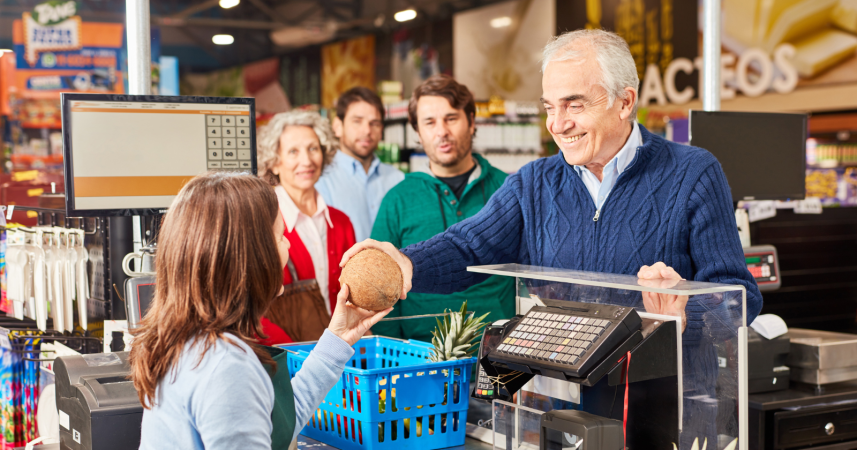
During those months, my Thursday afternoon grocery runs became the only time my phone stayed silent in my purse. Between the canned tomatoes and dried pasta in aisle seven, no one needed me to be anything except a woman with a list. The problems I faced there, store brand or name brand, whole wheat or white, had clear, immediate solutions.
The psychology of controlled environments
What makes the supermarket such an unlikely refuge? Michael Breazeale, an Associate Professor of Marketing, explains that "The presence of other shoppers in a store is psychologically arousing for people on both ends of the personal space spectrum, but in different ways."
For those of us who find peace in grocery shopping, the presence of strangers creates a perfect balance. We're not alone, but we're not obligated to engage. We're surrounded by people who don't know our histories, our failures, our responsibilities. To them, we're just another person comparing pasta sauces.
I've learned to time my visits perfectly: 2 PM on Thursdays, after the lunch rush but before the after-school chaos. This window of relative quiet feels like stolen time. In the tea aisle, I can read labels like literature. Earl Grey with lavender. Chai with cardamom. These small choices, made without consultation or compromise, feel revolutionary after years of every decision being communal property.
Finding ourselves in unexpected places
I'd argue it's less about personality traits and more about life circumstances. Show me someone who genuinely loves their grocery runs, and I'll show you someone whose life is full of other people's needs.
Last week, I watched a young mother struggle past with a screaming toddler. I caught her eye and offered the smile I'd perfected during my years of single motherhood, one that said "I see you, you're doing fine, this too shall pass." Her shoulders relaxed slightly. I remembered being her, buying generic everything, calculating down to the penny. I'd hated grocery shopping then, when it was another chore squeezed between grading papers and keeping the lights on. The transformation happened gradually. As my children grew independent, as my teaching career wound down, as my husband's illness progressed and then ended, the supermarket evolved from obligation to opportunity. Now, at seventy, I discover preferences I didn't know I had, parts of myself that waited patiently while I raised children, buried a husband, taught teenagers to find meaning in Shakespeare.
The paradox of modern peace
Isn't it strange that we've created lives so demanding that a fluorescent-lit building full of strangers becomes a refuge?
Cathrine Jansson-Boyd, a Reader in Consumer Psychology, found that "Studies suggest that almost 50% of all groceries are sold due to consumer impulsiveness." But maybe what looks like impulse is actually the luxury of making a decision just because we want to, not because we have to.
In the cereal aisle, I think of my husband and his habit of mixing three different kinds in his bowl. Something that drove me crazy for twenty-five years until suddenly he was gone and I'd give anything to buy those three boxes again. I allow myself thirty seconds of grief, then move on. Even my sorrow is my own here, private and manageable.
Final thoughts
Here's what bothers me about the conversation around self-care and small joys. We've turned the act of buying apples in peace into something a woman has to defend, explain, or dress up in therapeutic language before anyone will accept it as legitimate. Why? Why does a grown woman need research citations to justify enjoying an hour alone in aisle seven?
The real question isn't whether people like me are strange for loving the supermarket. The real question is why we built a culture where an hour of uninterrupted silence has become so scarce that we have to steal it between the frozen peas and the checkout line. If that strikes you as sad, good. Sit with it. And then ask yourself what you've been denying yourself in the name of being useful to everyone else.
I'm going shopping Thursday. I won't be apologizing for it.
If You Were a Healing Herb, Which Would You Be?
Each herb holds a unique kind of magic — soothing, awakening, grounding, or clarifying.
This 9-question quiz reveals the healing plant that mirrors your energy right now and what it says about your natural rhythm.
✨ Instant results. Deeply insightful.

Marlene Martin
Marlene Martin is a retired high school English teacher who spent 38 years in the classroom before discovering plant-based eating in her late sixties. When her daughter first introduced her to the idea of removing animal products from her diet, Marlene was skeptical. But curiosity won out over habit, and what started as a reluctant experiment became a genuine transformation in how she thinks about food, health, and aging.
At VegOut, Marlene writes about nutrition, wellness, and the experience of embracing new ways of eating later in life. She brings a teacher’s instinct for clarity and patience to topics that can feel overwhelming, especially for readers who are just beginning to explore plant-based living. Her writing is informed by personal experience, careful research, and a belief that it is never too late to change.
Marlene lives in Portland, Oregon, where she spends her mornings reading research papers, her afternoons tending a modest vegetable garden, and her evenings knitting while listening to audiobooks. She has three adult children and two grandchildren who keep her honest about staying current.
More Articles by Marlene