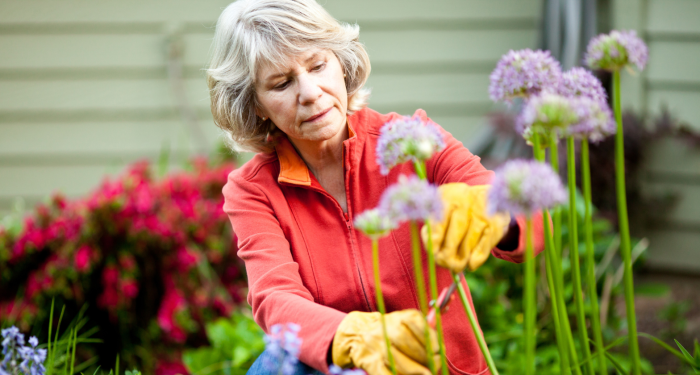
After decades of putting everyone else first, discovering these seven boundaries transformed my 62-year-old father from a perpetual people-pleaser into the happiest version of himself I'd ever seen.

Add VegOut to your Google News feed. 
Look, I'll be straight with you. Watching my dad navigate his 60s taught me something profound about self-respect that most of us miss until it's too late.
He spent decades being everyone's go-to guy. The reliable friend, the accommodating colleague, the parent who never said no. But somewhere around his 62nd birthday, something shifted. He started setting boundaries, and honestly? He became happier than I'd seen him in years.
The thing is, after 60, you've earned the right to protect your peace. You've given enough of yourself to the world. Now it's time to be selective about what you allow into your life.
Yet so many people struggle with this transition. They feel guilty about saying no, worried about disappointing others, or scared of being seen as difficult. But here's what I've learned from both Eastern philosophy and watching countless people transform their lives: self-respect isn't selfish. It's essential.
Today, we're diving into seven crucial boundaries that can transform your life after 60. These aren't just nice-to-have guidelines. They're fundamental shifts that honor the wisdom you've accumulated and the person you've become.
1. Your time is non-negotiable
Remember when you used to say yes to every committee, every favor, every "quick coffee" that turned into a three-hour emotional dumping session?
Yeah, those days need to be over.
After 60, your time becomes more precious than ever. Not in a morbid way, but in a deeply liberating one. You finally understand that every yes to one thing is a no to something else. And frankly? You've earned the right to be picky.
Start by auditing your commitments. Which ones actually bring you joy or align with your values? Keep those. Which ones are you doing out of obligation or habit? Time to let them go.
When someone asks for your time, pause before responding. Ask yourself: Does this energize me or drain me? Will I feel resentful afterward? Your gut knows the answer.
2. Financial boundaries with adult children
This one's tough, and I get it. You want to help your kids. But there's a difference between supporting and enabling.
In my book [Hidden Secrets of Buddhism: How To Live With Maximum Impact and Minimum Ego](https://www.amazon.com/Hidden-Secrets-Buddhism-Maximum-Minimum-ebook/dp/B0BD15Q9WF), I explore how attachment to outcomes often creates suffering. This principle applies perfectly here. When you constantly bail out adult children financially, you're attached to an outcome where they never experience natural consequences.
Set clear limits on what you will and won't provide. Maybe it's emergency medical help but not monthly rent. Maybe it's advice but not cash. Whatever your boundaries, communicate them clearly and stick to them.
Your retirement security matters. You can't pour from an empty cup, and you definitely can't help anyone if you're financially struggling yourself.
3. The right to change your mind
Here's something wild: You're allowed to evolve. You're allowed to wake up at 65 and realize you don't actually enjoy hosting huge holiday dinners anymore. You're allowed to decide that the friend you've had for 30 years is actually kind of toxic.
People might push back. "But you've always done Christmas dinner!" or "You can't just stop being friends with Susan!"
Watch me.
Growth doesn't stop at 60. If anything, this is when you finally have the clarity to see what truly serves you and what doesn't. Honor that wisdom.
4. Physical space and privacy
Whether you live alone or with others, your physical space matters. You need a place that's just yours, where you can retreat without explanation or apology.
Maybe it's your entire home, and you're setting boundaries about unexpected visitors. Maybe it's just one room where family members know not to disturb you. Either way, claim it.
And privacy? That extends to your personal information too. You don't owe anyone explanations about your health, your finances, or your relationships. "That's personal" is a complete sentence.
5. Energy vampires get cut off
You know exactly who I'm talking about. The person who calls only when they need something. The relative who turns every conversation into a crisis. The friend who somehow makes your good news about their problems.
After 60, you don't have time for energy vampires. Period.
Start distancing yourself. Don't pick up every call. Don't engage with every drama. Use phrases like "I can't take this on right now" or "I need to focus on my own well-being."
Will some people get upset? Probably. But protecting your emotional energy is more important than managing other people's reactions.
6. Your beliefs and values are not up for debate
By now, you've formed your worldview through decades of experience. You've earned your perspectives through living, learning, and growing.
So why do some people still feel entitled to challenge, correct, or convert you?
In Buddhism, there's a concept of right speech, which I explore in [Hidden Secrets of Buddhism: How To Live With Maximum Impact and Minimum Ego](https://www.amazon.com/Hidden-Secrets-Buddhism-Maximum-Minimum-ebook/dp/B0BD15Q9WF). Part of this is knowing when not to engage. You don't need to defend your political views at family dinners. You don't need to justify your spiritual beliefs to anyone.
"We'll have to agree to disagree" is your new favorite phrase. Use it liberally.
7. The boundary of joy
This might be the most radical boundary of all: actively choosing joy and refusing to feel guilty about it.
Want to spend your Tuesday afternoons painting badly? Do it. Want to blow money on that trip to Italy instead of leaving more inheritance? Book the flight. Want to date someone new, learn the ukulele, or start a YouTube channel? Go for it.
The guilt that says you should be more serious, more responsible, more "age-appropriate"? That's just societal programming. You've played by the rules long enough.
Your joy doesn't need justification. It doesn't need to be productive or sensible or approved by committee. It just needs to be yours.
Final words
Setting these boundaries won't always be comfortable. You might lose some relationships. People might call you difficult or selfish.
Good.
Because here's the truth: The people who truly love and respect you will adjust to your boundaries. They'll celebrate your newfound self-respect. They'll see you becoming more yourself, not less.
And those who can't handle your boundaries? They were probably benefiting from you not having any.
At 60-plus, you've earned the right to curate your life carefully. To protect your peace fiercely. To choose joy unapologetically.
This isn't about becoming rigid or unkind. It's about finally, truly, deeply respecting the person you've become and the life you've built. It's about recognizing that your well-being matters just as much as everyone else's.
Actually, scratch that. Right now, in this season of your life, it matters more.
If You Were a Healing Herb, Which Would You Be?
Each herb holds a unique kind of magic — soothing, awakening, grounding, or clarifying.
This 9-question quiz reveals the healing plant that mirrors your energy right now and what it says about your natural rhythm.
✨ Instant results. Deeply insightful.

Lachlan Brown
Lachlan Brown is a psychology graduate, mindfulness enthusiast, and the bestselling author of Hidden Secrets of Buddhism: How to Live with Maximum Impact and Minimum Ego. Based between Vietnam and Singapore, Lachlan is passionate about blending Eastern wisdom with modern well-being practices.
As the founder of several digital publications, Lachlan has reached millions with his clear, compassionate writing on self-development, relationships, and conscious living. He believes that conscious choices in how we live and connect with others can create powerful ripple effects.
When he’s not writing or running his media business, you’ll find him riding his bike through the streets of Saigon, practicing Vietnamese with his wife, or enjoying a strong black coffee during his time in Singapore.
More Articles by Lachlan