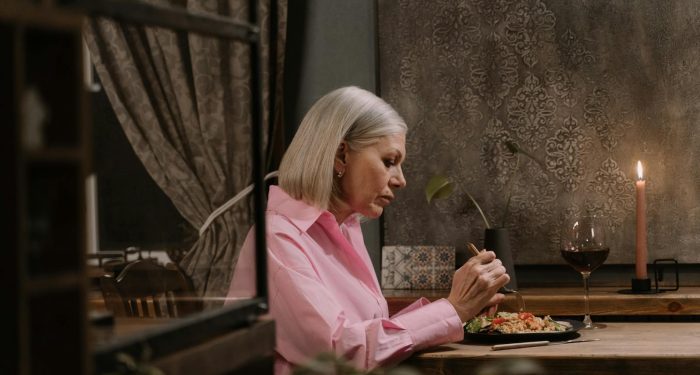
The same mental blind spot that makes someone interrupt every conversation or miss obvious social cues also prevents them from noticing the uncomfortable silences and averted gazes that would normally signal something's wrong.

Add VegOut to your Google News feed. 
Ever notice how some conversations feel like you're speaking different languages, even though you're both using English?
I used to think I was pretty good at reading the room. After years as a financial analyst, I prided myself on picking up subtle cues in meetings and navigating office politics. Then a close friend pulled me aside one day and gently told me that my habit of constantly offering solutions when people shared problems was exhausting. She'd been trying to signal this for months through shorter responses and changed topics, but I'd completely missed every hint.
That wake-up call sent me down a research rabbit hole that changed how I understand social interactions. What I discovered was both humbling and fascinating: those of us who struggle socially often have no idea we're struggling. And the very skills we lack to connect well with others are the same ones we'd need to recognize we're not connecting.
The invisible feedback loop
Think about learning any skill. When you're bad at cooking, you taste the burned food. When you're bad at running, you feel winded after a block. But when you're bad at conversation? The feedback is subtle, coded, and easy to miss entirely.
Research on the Dunning-Kruger effect shows that individuals with low ability in a specific area tend to overestimate their competence, a phenomenon observed across various tasks, including social skills. This isn't arrogance talking. It's a genuine inability to see what we don't know.
I witnessed this firsthand at a recent volunteer event at the farmers' market. A fellow volunteer kept interrupting customers mid-sentence to share lengthy stories about his own garden. When people started avoiding his booth, he assumed they just weren't interested in organic produce. He couldn't see that his conversation style was driving them away because recognizing those social cues requires the very awareness he lacked.
Why we miss the signals
Chris Segrin, Head of the UA Department of Communication, notes that "People with poor social skills tend to experience more stress and loneliness, both of which can negatively impact health." But here's what makes this especially cruel: that stress and loneliness often come from not understanding why social interactions keep going wrong.
During my people-pleasing years, I thought agreeing with everyone and never expressing strong opinions made me likeable. What I didn't realize was how this came across as inauthentic or even manipulative. People would give me puzzled looks or seem uncomfortable, but I interpreted these as random mood issues rather than responses to my behavior.
The signals were there. I just didn't have the decoder ring.
The eye contact dilemma
Jaunty observes that "People with poor social skills often swing to one extreme or the other. They either avoid eye contact altogether—making them seem disinterested or evasive—or they hold it too intensely, which can come off as aggressive or awkward."
This perfectly describes my early networking attempts. I'd read that eye contact showed confidence, so I'd lock eyes with people like I was trying to win a staring contest. Later, overcorrecting, I'd look everywhere but at the person talking to me. Neither approach worked, but without someone explicitly telling me what felt off, I kept cycling between these extremes.
When different becomes difficult
Research on autistic young adults found that they often feel their communication styles are misunderstood, leading to challenges in connecting with others and difficulties in sustaining conversations, which may result in overestimating their conversational success due to limited feedback processing.
This resonates beyond any single neurotype. Many of us have communication styles that don't match the mainstream, and we might not even realize it. We think we're being clear and engaging, while others experience something entirely different.
The anxiety paradox
Sometimes the problem swings the opposite way. Studies show that individuals with social anxiety disorder often underestimate their social performance, particularly during speech, compared to control participants, indicating a biased perception of their conversational effectiveness.
So we have people who struggle socially but think they're doing fine, and people doing fine who think they're disasters. Both groups miss the actual feedback because their internal experience drowns out external reality.
Breaking through the blind spot
Recognizing this pattern in myself was uncomfortable but liberating. Once I understood that I might be missing social cues, I started actively seeking clearer feedback. Instead of assuming conversations went well, I'd check in with trusted friends about specific interactions.
Allison Price notes that "People with poor social skills often display behaviors without realizing how they come across." The key word here is "realizing." Once we accept that our self-perception might be off, we can start gathering real data.
I began paying attention to patterns rather than individual interactions. If multiple people seemed to end conversations abruptly with me, maybe the issue wasn't that everyone was suddenly busy. If friends often seemed exhausted after we talked, perhaps I needed to examine my conversation style.
Recording myself in conversations (with permission) revealed habits I never knew I had. Interrupting, monopolizing airtime, missing when others wanted to speak. These weren't character flaws. They were skill gaps I could work on once I knew they existed.
The path forward
Nathan Brookford points out that "People with poor social skills often use these ten common phrases without realising the hidden impact they have on others."
This gets at the heart of the challenge. We can't fix what we don't know is broken. But once we accept that our social radar might need calibration, we can start the real work of improving.
For me, this meant letting go of perfectionism in social situations. Instead of trying to nail every interaction, I focused on learning from each one. I asked for specific feedback: "Did I give you enough space to share your thoughts?" rather than "How did that go?"
I also learned to watch for concrete signs rather than trying to read minds. Did the conversation flow both ways? Did the other person ask follow-up questions? Did they seem relaxed or tense? These observable behaviors gave me better data than my assumptions ever could.
Finding grace in the gap
Understanding this social skills blind spot changed how I view awkward interactions. That person who dominates every conversation might genuinely believe they're being engaging. The colleague who never picks up on hints might literally not see them.
This doesn't excuse poor behavior or mean we shouldn't set boundaries. But it does suggest that many social struggles come from ignorance rather than malice. And for those of us working to improve our social skills, it means accepting that the journey requires both humility and patience.
The correction we need most is often the one we're least equipped to receive. But once we know that, we can start building the very awareness we lack. We can ask for help, seek specific feedback, and gradually develop the skills to both connect better and recognize when we're not connecting well.
The gap between how we think we're doing and how we're actually doing socially might be wider than we realize. But acknowledging that gap is the first step to closing it.
If You Were a Healing Herb, Which Would You Be?
Each herb holds a unique kind of magic — soothing, awakening, grounding, or clarifying.
This 9-question quiz reveals the healing plant that mirrors your energy right now and what it says about your natural rhythm.
✨ Instant results. Deeply insightful.

Avery White
Formerly a financial analyst, Avery translates complex research into clear, informative narratives. Her evidence-based approach provides readers with reliable insights, presented with clarity and warmth. Outside of work, Avery enjoys trail running, gardening, and volunteering at local farmers’ markets.
More Articles by Avery