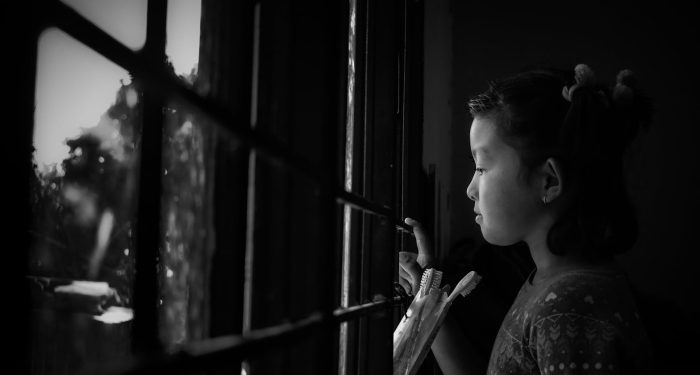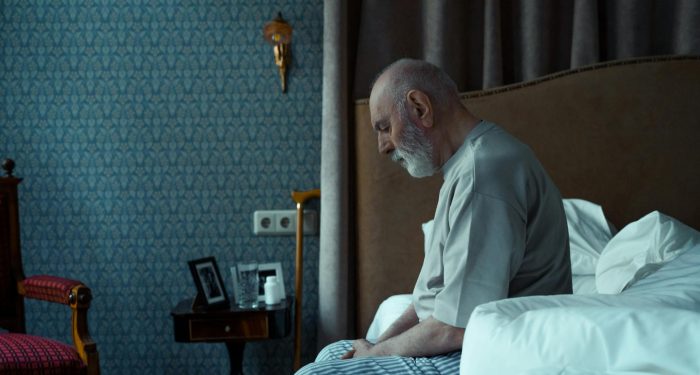
They show up to every game, remember every friend's name, and document every milestone with an intensity that comes from intimately knowing what it feels like when no one shows up at all.

Add VegOut to your Google News feed. 
The nursery is quiet except for the soft rhythm of my daughter's breathing. It's 3 AM, and I'm holding her against my chest, feeling that tiny heartbeat that somehow carries the weight of the entire universe. In these moments, something primal takes over—a fierce determination to be everything she needs, to never let her feel the emptiness I once knew.
If you're reading this, there's a good chance you understand what I'm talking about. Maybe you grew up with that father-shaped void too. Maybe you're now pouring everything you have into being the dad you never had.
Here's the thing nobody tells you: that desperate love, that overwhelming need to overcompensate, it's both your superpower and your kryptonite.
The ghost in the room
Growing up without a strong father figure leaves marks you don't fully understand until you become a parent yourself. Suddenly, you're standing in the delivery room, holding this tiny human, and every unresolved emotion from your childhood crashes into you like a tidal wave.
You think about all the baseball games without someone in the stands. The questions about shaving and girls and how to be a man that went unasked. The anger that had nowhere to go.
And then you make a promise. A sacred vow that this child will never know that particular brand of loneliness.
What's fascinating is how common this pattern is. Research reveals that men raised without fathers or father figures often plan to be better fathers to their children than their own fathers were to them, indicating a desire to overcompensate for their own experiences.
But here's where it gets complicated. That determination to fill the gap? It comes from a place of pain, not peace. And anything born from pain carries its own burden.
The overcompensation trap
I see it in myself constantly. My daughter cries, and I'm there in seconds. She reaches for a toy, and I'm already handing it to her. Every milestone gets documented, celebrated, shared. I'm present for everything because I remember what absence felt like.
But being hypervigilant is exhausting. You're not just parenting your child; you're simultaneously trying to heal your inner child. Every bedtime story, every tucked-in blanket, every "I love you" carries the weight of all the ones you never received.
The irony? The National Fatherhood Initiative found that "men who grew up with absent fathers were more likely to become absent fathers." Yet here we are, the ones who broke the cycle, swinging so hard in the opposite direction that we risk losing ourselves in the process.
You become the dad who never misses a recital but forgets to eat lunch. The one who knows every friend's name but can't remember the last time you called your own friends. You're filling a gap so intensely that you create new ones in your own life.
The biological paradox
There's something almost mystical about how fatherhood rewires us. Lawrence R. Samuel, Ph.D., notes that "men are hardwired to be fathers."
Think about that for a second. Despite growing up without a model, despite having no roadmap, something in our biology knows what to do. The instinct is there, waiting.
But when you combine that natural instinct with the desperate need to compensate for your own childhood, you get something intense. You're not just following your biological programming; you're amplifying it through the lens of your own unmet needs.
I felt it the moment my daughter was born. This ancient knowing mixed with modern anxiety. The desire to protect her from everything, including the pain of my own past.
The strength in the struggle
Not everything about this overcompensation is negative. Far from it.
Sean Grover, L.C.S.W., observed that "the most remarkable and inspiring aspect of the film is the hope it conveys." He was talking about stories of fatherless boys, but that hope? It transforms into something powerful when those boys become fathers.
We bring an intentionality to parenting that's rare. Every decision is conscious because we know what happens when nobody's making those decisions. We don't take presence for granted because we know absence intimately.
The overcompensation creates fathers who are deeply attuned to their children's emotional needs. We notice the small shifts in mood, the quiet requests for attention, the unspoken fears. We notice because we spent our childhoods hoping someone would notice us.
In my book, "Hidden Secrets of Buddhism: How To Live With Maximum Impact and Minimum Ego," I write about the concept of mindful presence. Ironically, the desperation to be present for our children forces us into a kind of mindfulness practice. We can't afford to be distracted because we're too busy making sure they never feel forgotten.
The hidden cost
But let's be honest about the exhaustion. It's bone-deep, and it's different from regular parenting tired.
You're essentially parenting on two levels simultaneously. There's the actual child in front of you who needs lunch and help with homework. Then there's the child inside you who's finally getting the father they always wanted, living vicariously through your own kid.
Research indicates that men who grew up without their biological fathers are more likely to experience unemployment, lower educational attainment, and higher incarceration rates in adulthood. Those of us who beat those odds? We're terrified of our children facing any of those struggles.
So we overcompensate. Extra tutoring, extra activities, extra everything. We're not just trying to be good fathers; we're trying to be the antidote to every statistic we were supposed to become.
Finding balance in the chaos
The key isn't to stop overcompensating entirely. That drive, born from our gaps, makes us incredible fathers. The key is recognizing it for what it is and finding sustainable ways to channel it.
I've learned to check in with myself. When I feel that desperate urgency to fix, solve, or prevent, I pause. Is this about my daughter's actual need, or is this about the kid I used to be?
Sometimes it's both, and that's okay. But knowing the difference helps me respond rather than react.
Studies show that men raised without fathers are more likely to become fathers at a young age, with those experiencing father absence between ages 7 and 16 being 4-5% more likely to become fathers by age 23. Maybe we're in such a hurry to create the family we never had that we jump in before we're ready.
But readiness is relative. The gap we're trying to fill gives us a different kind of preparation. We've been mentally practicing fatherhood since we were kids, imagining what we needed and storing those lessons for later.
Final words
Standing in that nursery at 3 AM, I realize something profound. The exhaustion I feel isn't just from the sleepless nights or the constant vigilance. It's from carrying two people through this journey—my daughter and the boy I used to be.
Vicky Phares, Ph.D., points out that "fathers who have behavioral disorders often beget mental disorders in their children." But what about fathers who transform their wounds into wisdom? What legacy do we leave?
We leave children who are deeply loved, perhaps overwhelmingly so. We leave a generation that knows presence because we taught ourselves its value through absence. We leave proof that cycles can be broken, even if the breaking takes everything we have.
The gap never fully closes. You can't retroactively give yourself the father you needed. But in trying to fill that space for your own children, something beautiful happens. You become the answer to a prayer you whispered as a child, even if you're answering it for someone else.
That's both the burden and the gift. We parent with a desperation that exhausts us and a love that surprises us. We overcompensate because undercompensating isn't an option we can live with.
And maybe, just maybe, that's exactly the kind of father our children need.
If You Were a Healing Herb, Which Would You Be?
Each herb holds a unique kind of magic — soothing, awakening, grounding, or clarifying.
This 9-question quiz reveals the healing plant that mirrors your energy right now and what it says about your natural rhythm.
✨ Instant results. Deeply insightful.
Lachlan Brown
Lachlan Brown is a psychology graduate, mindfulness enthusiast, and the bestselling author of Hidden Secrets of Buddhism: How to Live with Maximum Impact and Minimum Ego. Based between Vietnam and Singapore, Lachlan is passionate about blending Eastern wisdom with modern well-being practices.
As the founder of several digital publications, Lachlan has reached millions with his clear, compassionate writing on self-development, relationships, and conscious living. He believes that conscious choices in how we live and connect with others can create powerful ripple effects.
When he’s not writing or running his media business, you’ll find him riding his bike through the streets of Saigon, practicing Vietnamese with his wife, or enjoying a strong black coffee during his time in Singapore.
More Articles by Lachlan