When your home sparkles like a showroom but your phone never rings, you're not failing at priorities — you're succeeding at the only relationship that's never betrayed you: the one with your spotless countertops.

Add VegOut to your Google News feed. 
Ever notice how some people's homes look like they could be featured in a magazine spread, but their personal lives tell a different story? I've been thinking about this lately, especially after visiting a friend whose apartment was so pristine I was afraid to sit on the couch, yet who hadn't spoken to his brother in three years.
There's something profound happening here that goes beyond simple priorities. It's not that these people don't want close relationships. They've just learned through painful experience that while you can control where every book sits on a shelf, you can't control whether someone will stay in your life.
The illusion of control becomes a survival strategy
In my mid-20s, I was drowning in anxiety, constantly trying to perfect every aspect of my life. My apartment? Spotless. My relationships? A disaster zone. Looking back, I realize I was pouring all my energy into what I could control because people terrified me.
Think about it. Your kitchen counter never wakes up one morning and decides it needs space. Your perfectly organized closet doesn't suddenly change its mind about loving you. The vacuum lines on your carpet don't text you at 2 AM saying "we need to talk."
When you've been hurt enough times by unpredictable humans, that sparkling bathroom becomes more than just a clean space. It becomes a sanctuary where the rules never change, where effort equals outcome, where you're never blindsided.
This isn't weakness. It's adaptation.
Why your nervous system chooses bleach over bonding
Our nervous systems are constantly scanning for safety. When you grow up in an environment where people were unpredictable, where love came with conditions that changed without warning, your body learns to stay on high alert around humans.
But that alphabetized bookshelf? That's predictable. That's safe.
I spent years believing my perfectionism was a virtue, not realizing it was actually a prison. Every meticulously cleaned surface was really me trying to create one corner of the world where I felt safe. Where chaos couldn't reach me. Where disappointment lived outside my door.
In my book "Hidden Secrets of Buddhism: How To Live With Maximum Impact and Minimum Ego", I explore how attachment to control is really just fear wearing a productive mask. We think we're being responsible, but we're actually just terrified.
The thing is, your body keeps the score. Every time someone important let you down, changed the rules, or left without explanation, your nervous system took notes. It learned that humans equal danger, but that organized pantry? That's where peace lives.
The hidden cost of choosing countertops over connection
Here's what nobody talks about: the exhaustion. Maintaining perfection is a full-time job that pays in temporary relief but charges compound interest in loneliness.
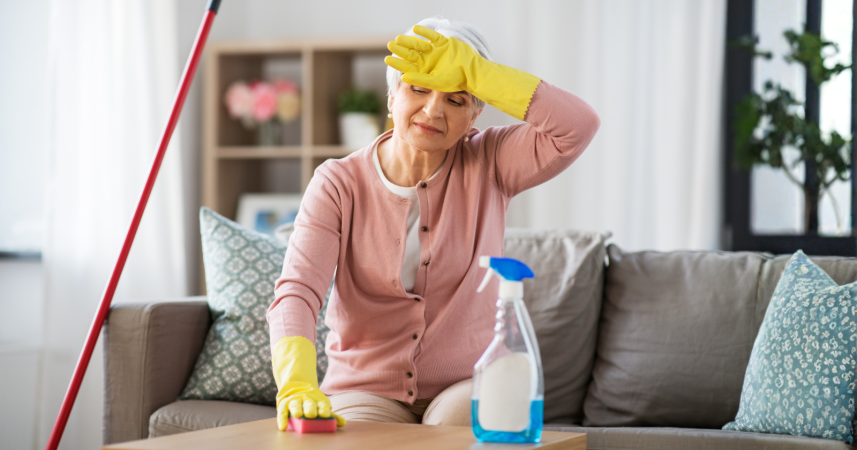
You spend Sunday deep-cleaning instead of accepting brunch invitations. You cancel plans because someone might see your space when it's not perfect. You choose reorganizing your garage over that awkward coffee date because at least you know how the garage afternoon will end.
And slowly, without realizing it, you build a pristine prison.
I've been there. There was a time when I could tell you exactly where every single item in my apartment belonged, but I couldn't tell you what my best friend was going through because I'd been too busy organizing to answer his calls.
The cruel irony? The cleaner my space got, the emptier it felt.
Understanding the nervous system's logic
Your nervous system isn't stupid. If you've been burned by unpredictability, it makes perfect sense to seek control where you can find it. This isn't about judgment. It's about understanding.
When I finally started therapy and began exploring why I was so obsessed with order, the patterns became clear. Every person who'd left suddenly in my life had left a mark. My body had learned that connection equals potential pain, but organizing equals immediate calm.
Buddhist philosophy teaches us about impermanence, how everything changes. But when change has historically meant loss, that teaching feels more like a threat than wisdom. So we fight against it with our label makers and our color-coded calendars, trying to create permanence in a world that promises none.
The cleaning isn't really about the cleaning. It's about trying to feel safe in a world that's proven it isn't.
The path from spotless surfaces to meaningful connection
So how do you choose people when your entire body is screaming that the safe choice is your sanitized kitchen?
Start small. Really small.
Pick one relationship that feels manageable. Maybe it's the barista who makes your coffee, or that colleague who always smiles in the hallway. Practice tiny moments of connection without expectation. Your nervous system needs to relearn that not all human interaction ends in abandonment.
I learned that relationship quality is the single biggest predictor of life satisfaction, but knowing this intellectually and feeling safe enough to pursue it are two different things. The bridge between them is built one small, scary step at a time.
Consider this: What if you left one dish in the sink and called a friend instead? What if you let someone see your space when it's merely clean instead of perfect? These might seem like small acts, but to a nervous system that's been protecting you through perfection, they're revolutionary.
Emotional intelligence is a skill, not a gift
Here's something that changed my life: realizing that emotional intelligence isn't something you're born with or without. It's a skill you can learn, even if your training ground has been Lysol bottles instead of heart-to-heart conversations.
I spent my 20s believing I was just bad at relationships, that some people got the manual and I got the mop. But that's not true. We all learned what we needed to survive our specific circumstances. Now we get to learn what we need to thrive.
Start noticing when you choose cleaning over connecting. Not to judge yourself, but to understand yourself. What feeling are you avoiding? What fear is driving you to the cleaning supplies instead of the phone?
In "Hidden Secrets of Buddhism: How To Live With Maximum Impact and Minimum Ego", I discuss how awareness without judgment is the first step toward change. You can't heal what you won't acknowledge, but you also can't heal what you're beating yourself up about.
Final words
If your home is spotless but your relationships are strained, you're not broken. You're not wrong. You're protecting yourself the best way you learned how.
Your sparkling countertops aren't the enemy. They're a coping mechanism that served you when you needed it. The question isn't whether to stop cleaning. It's whether you're ready to slowly, carefully, add some connection to your comfort zone.
Remember: that perfectly organized space will still be there after coffee with a friend. The floor that's never left without warning will wait patiently while you risk a conversation. Your safe space doesn't have to disappear for relationships to appear.
You learned that environments can be controlled but people can't. That's still true. But maybe, just maybe, not everything needs to be controlled for it to be safe. Maybe some things can be wonderfully, terrifyingly, beautifully unpredictable.
And maybe that's where life actually happens. Right there in the mess.
If You Were a Healing Herb, Which Would You Be?
Each herb holds a unique kind of magic — soothing, awakening, grounding, or clarifying.
This 9-question quiz reveals the healing plant that mirrors your energy right now and what it says about your natural rhythm.
✨ Instant results. Deeply insightful.

Lachlan Brown
Lachlan Brown is a psychology graduate, mindfulness enthusiast, and the bestselling author of Hidden Secrets of Buddhism: How to Live with Maximum Impact and Minimum Ego. Based between Vietnam and Singapore, Lachlan is passionate about blending Eastern wisdom with modern well-being practices.
As the founder of several digital publications, Lachlan has reached millions with his clear, compassionate writing on self-development, relationships, and conscious living. He believes that conscious choices in how we live and connect with others can create powerful ripple effects.
When he’s not writing or running his media business, you’ll find him riding his bike through the streets of Saigon, practicing Vietnamese with his wife, or enjoying a strong black coffee during his time in Singapore.
More Articles by Lachlan