While that pre-call anxiety might make you feel flawed, psychology reveals it's actually a sign you possess rare qualities like exceptional empathy and emotional intelligence that most people lack.
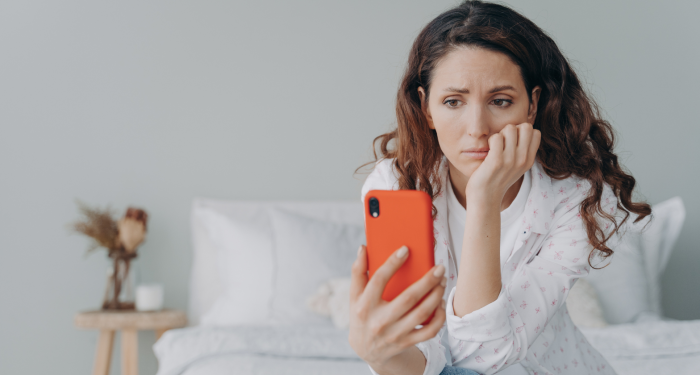
Your phone buzzes. You glance at the screen and see an incoming call. Your stomach tightens. Your mind races through a dozen scenarios about what this person might want and how the conversation could go wrong.
So you let it ring. Then you text back: "Hey, what's up?"
If this sounds familiar, you're not alone. Research shows that about 70% of millennials experience anxious thoughts when their phone rings, and the phenomenon has become so common that Gen Z has been called "generation mute."
But here's what most people miss: phone anxiety isn't always about inadequacy or poor social skills. Often, it reveals something much more interesting about how your mind works.
Let's explore what psychology says about the distinct traits of people who still get nervous before making phone calls.
1) You're deeply attuned to emotional nuance
Last month, my partner's voice cracked slightly when she mentioned a work project. We were on the phone, and in that tiny vocal shift, I caught everything: the stress she was trying to downplay, the frustration she hadn't quite named yet, the exhaustion underneath her casual tone.
Here's the thing about phone anxiety. It's not always about fear. Sometimes it's about being too good at listening.
Research from Cornell University shows that phone calls put us in the spotlight in ways we often underestimate. When others can only hear one side of a conversation (what researchers call "halfalogues"), they pay more attention to what you're saying than if you were talking face-to-face.
If you get nervous before calls, there's a good chance you're picking up on all of this. You're not just hearing words. You're catching hesitations, tone shifts, breathing patterns, the subtle ways voice betrays what someone isn't saying. That's emotional intelligence in action, and it's exhausting when you can't turn it off.
The nervousness isn't about incompetence. It's about understanding just how much information flows through a simple phone call.
2) You have higher standards for your own communication
I spent twenty minutes yesterday rehearsing a two-minute phone call in my head. My grandmother would've called that ridiculous. I call it being prepared.
People who get anxious about phone calls often share a trait that sounds negative but really isn't: perfectionism. Not the toxic kind that ruins your life, but the variety linked to what psychologists call conscientiousness.
Studies consistently show that conscientiousness correlates with what's termed "self-oriented perfectionism," which is basically holding yourself to high standards. When you care deeply about getting things right and saying exactly what you mean, unscripted phone conversations feel risky.
You can't edit what you've already said. You can't take back a poorly worded sentence. There's no delete button for an awkward pause or a joke that lands wrong.
This isn't a character flaw. It's evidence that you value precision and take communication seriously. The anxiety emerges because phones demand real-time performance from people who prefer to get it right the first time.
3) You're highly self-aware about social dynamics
About five years ago, I stopped making phone calls after 8 p.m. Not because I'm rigid about schedules, but because I started noticing how often people sounded slightly strained when I called them late. They'd say it was fine, but their voice told a different story.
If phone calls make you nervous, you probably spend more mental energy than most people considering the other person's experience. Will you be interrupting something? Is this a good time? Are they actually available to talk, or just being polite?
This kind of social sensitivity is a subtle form of empathy. While others might view texting as impersonal, you see it as considerate because it gives both people the freedom to respond when they have the mental space.
The anxiety isn't selfishness. It's the opposite. You're so tuned into potential social disruption that the uncertainty of a phone call feels inconsiderate. You're imagining scenarios where you've accidentally imposed on someone, and that concern creates stress.
4) You value autonomy over your attention and energy
Phone calls can feel intrusive because they break into your rhythm without warning. You're focused on something, maybe deep in work or just enjoying quiet time on your balcony, and suddenly someone demands your immediate attention and mental presence.
If this bothers you more than it seems to bother others, you likely have a strong sense of personal autonomy. You value control over your time, attention, and energy, and you recognize that constant accessibility doesn't equal closeness.
Research on phone anxiety found that calls from unknown numbers increased anxiety by 14.5% compared to not receiving a call at all. The effect was even stronger for millennials, with anxiety increasing by 25%.
This isn't about being distant or antisocial. Emotionally intelligent people understand that healthy relationships are built on respect for each other's boundaries and space. The nervousness before calls often stems from knowing how much they demand from you, and wanting to ensure you can show up fully present rather than resentful.
5) You're a careful internal processor
I do my best thinking silently. Always have. When someone asks me a complicated question on the phone, there's this panicky moment where I know I need more time to formulate a thoughtful answer, but the silence feels awkward, so I rush to fill it with something half-formed.
Research on cognitive processing styles suggests that some people think best when they have time to process information internally before responding. This isn't about being slow. It's about tempo.
Phone calls don't accommodate this rhythm. They demand immediate reactions, quick responses, verbal thinking. For internal processors, this creates genuine stress because you're being asked to perform in a style that doesn't match how your brain naturally works.
Texting allows you to read something, sit with it, consider your response, and craft something that accurately reflects your thoughts. Phone calls strip away that buffer, and the anxiety you feel is your brain recognizing the mismatch between what's being demanded and how you function best.
6) You recognize the weight of vocal cues and want to get them right
Here's something I've noticed: I never worry about emojis coming across wrong, but I obsess over whether my tone sounded dismissive or whether I laughed at the right moment during a phone call.
This is because voice carries information that text simply can't replicate. Studies show people can actually "hear" your smile, and the emotional content of your voice shapes how your message is received more than the actual words you use.
If you get nervous before calls, you probably understand this intuitively. You know that a sigh at the wrong moment can undermine everything you're trying to say. You know that sounding too enthusiastic might come across as fake, while sounding too flat might seem cold.
This awareness creates pressure. You're not just thinking about what to say; you're managing the entire emotional performance that accompanies it. That's sophisticated social intelligence, and it's mentally taxing.
7) You may be experiencing genuine social anxiety
Phone anxiety is real, it's common, and recognizing it doesn't mean something's broken in you.
Psychology researchers have documented that phone anxiety is a subtype of social anxiety disorder. On calls, you can't see facial expressions, you might accidentally talk over someone, silences feel more awkward, and you're essentially performing without a script.
Studies have found that about 70% of millennials experience anxious thoughts when the phone rings. For many people, phones trigger anticipatory anxiety even before the call connects, activating the same brain circuits associated with threat response.
Texting eliminates many of these triggers. You have time to craft responses, you won't interrupt anyone, and pauses are built into the format. The preference for texting over calling isn't avoidance in the clinical sense. It's a healthy adaptation to a communication style that works better for how your brain processes social interaction.
If this describes you, you're not alone. You're part of a significant portion of the population that finds phone calls genuinely stressful for legitimate neurological and psychological reasons.
The bottom line
I'm not here to tell you phone anxiety is great or that you should be proud of dreading calls. But I am saying it's worth examining what that nervousness actually reveals about you.
You're likely more emotionally intelligent than you give yourself credit for. You value precision in communication. You respect other people's time and boundaries. You understand that voice carries meaning beyond words. You're self-aware enough to recognize when your processing style doesn't match what's being demanded of you.
These aren't weaknesses. They're sophisticated psychological traits that happen to make one specific form of communication feel uncomfortable.
The goal isn't to eliminate the nervousness entirely. It's to recognize that your discomfort with phone calls comes from a place of heightened awareness and sensitivity, not inadequacy. You're not bad at communication. You're just operating at a different level than people who can casually dial without a second thought.
If You Were a Healing Herb, Which Would You Be?
Each herb holds a unique kind of magic — soothing, awakening, grounding, or clarifying.
This 9-question quiz reveals the healing plant that mirrors your energy right now and what it says about your natural rhythm.
✨ Instant results. Deeply insightful.