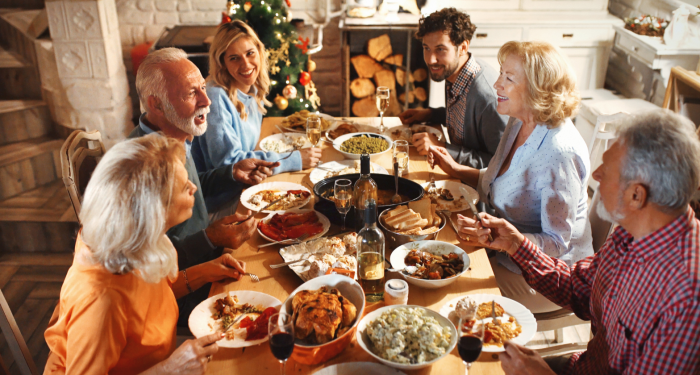
Boomers quietly mastered the basics - maintain what matters, show up for people, use manners, call when it counts, and let small rituals hold a big life
I was waiting for my mom at a diner she loves, the kind with cracked vinyl booths and coffee that tastes like memory. She was ten minutes late, which is on time in her world.
When she arrived, she handed the server a folded newspaper clipping about a local teacher who retired, then asked for “the usual” like this place had always known her.
We sat, we ate, and we talked about everything and not much. On the way out she slipped two quarters in the tip jar even though she had already left cash on the table. “Always leave a little extra,” she said. “Someone’s kid has braces.”
I keep thinking about tiny moments like this when people ask me what Boomers know that the rest of us are still learning on the slow setting. It is not that older folks are wiser because of a number.
It is that they practiced certain truths long enough for them to sink below opinion and become muscle memory. Watching my parents’ generation, talking to neighbors at the farmers’ market, and comparing notes with readers, I see a pattern.
Here are ten truths Boomers tend to understand about life that younger generations are still taking their time to learn. You do not have to agree with all of them.
Try them on the way you try on a jacket. See what fits and makes your posture better.
1) Maintenance beats reinvention
Boomers grew up fixing things. Shoes were resoled. Zippers replaced. Houses painted before the boards complained. They know that consistent small care prevents emergency big care. That applies to marriages, bodies, roofs, friendships, and budgets.
Younger folks are brilliant at pivoting and reinventing. The blind spot is thinking the next new thing will solve what regular maintenance would have prevented. The Boomer trick: schedule maintenance.
Oil the hinge before it squeals. Check on your friend before the silence grows teeth. Get the colonoscopy, update the will, clean the gutters when the leaves tell you to. Boring is often what smart looks like in the long run.
2) Real wealth is time with people, not things with logos
Ask a Boomer what they miss from a decade that is over and they will tell you names, not brands. They remember the uncle who told the same joke every Christmas and the neighbor who shoveled their sidewalk when they were sick.
Did they enjoy a nice car or a color TV when it finally arrived? Sure. But the highlight reel is people.
Younger generations know this in theory. Our feeds say “experiences over stuff” and then we grind to afford experiences that feel like stuff with a timestamp. Boomers remind me to downgrade the gear and upgrade the gathering. Put a chair in the yard, bring a pot of soup, set a regular Sunday call. The richness shows up in laughter lines, not receipts.
3) If you want a community, you have to show up somewhere
A lot of Boomers belong to something with a meeting time. A bowling league, a garden club, a congregation, a volunteer shift, a local board with terrible coffee and a slow agenda. They learned that community is not a group chat. It is a place where your absence is noticed.
Younger folks are geniuses at finding micro tribes online. The lesson many are still learning is that belonging gets sticky when you share duties and chairs. Pick a room where you will be the same face, most weeks, for a season. You will learn names, take minutes, and bring cookies when someone is grieving. That is how towns stay towns.
4) Good manners are not old-fashioned. They are social oil
Holding the door, sending a thank you note, returning a call, bringing something when you are invited, tipping like you mean it. Boomers learned these as default settings. Formalities may shift, but the core idea is steady: small courtesies make shared spaces feel safe and kind.
Younger generations often roll their eyes at etiquette until a day arrives when someone’s quiet courtesy saves their morning. Try adding one notch of manners to whatever room you are in. Use names. Look the barista in the eye. Offer your seat. It costs pennies and pays out in relief.
5) The phone call still has superpowers
Texting is efficient. Email is official. Phone calls are human. Boomers know when to pick up the phone. They call when a friend’s parent dies, when a decision needs tone and speed, when congratulations should sound like a voice, not a balloon emoji. They also call for no reason, which is the best reason.
Younger folks often avoid calls like they are pop quizzes. Try a five minute weekly phone ritual. Ask two questions: what felt good this week and what could be easier next week. Calls compress distance. A friendship that has live audio running through it holds better under stress.
6) You can disagree without making someone your enemy
A lot of Boomers grew up in houses where politics and religion lived at the table next to mashed potatoes. Voices got loud. People still split pie. They learned to keep showing up even when views clashed because the person mattered more than the position in the long run.
Younger generations inherit a hotter, louder internet. Outrage pays rent online. Boomers can teach us to downgrade some debates to the right size. You can say, “I think you are mistaken,” without setting the room on fire. You can value the sidewalk you shovel together and still vote differently. Not for everything. But for more things than Twitter would suggest.
7) Start early, go steady, and let compounding do heavy lifting
From money to health to skills, Boomers saw the math work on long timelines. A small 401(k) started at 25 beats a bigger one started at 45. A 20 minute walk five days a week beats a wild diet at 60. Ten minutes of guitar daily beats a weekend binge once a month.
Younger folks are often swinging for fences by 30. There is nothing wrong with big bets. Just do not skip the boring autopilot that wins in the background. Set up automatic transfers. Cook simple dinners. Stretch while the tea steeps. Repetition is not failure. It is strategy.
8) Privacy is a form of freedom
Boomers came of age before it was normal to narrate your life to strangers. They edited themselves in public for reasons beyond brand. Not because there were secrets, but because a little mystery protects a lot of peace. They know that you do not owe the world your every thought, and that not every fight deserves the dignity of your attention.
Younger generations have blended public and private so tightly that boundaries feel awkward at first. Try a privacy sprint. Keep one big goal and one tender story off the internet until they have roots. Tell your closest people. Live it in real life. Announce when it is sturdy. Watch how sane you feel.
9) Work is important. It is not your whole identity
Boomers were not perfect about balance. Many worked too long and came home worn out. They will tell you the truth, though: the jobs that defined them the least often fed them the most. The coworkers who became friends mattered more than the title. The pension mattered in February more than the LinkedIn headline.
Younger generations are brave about quitting bad jobs. They also risk letting every role become a referendum on their worth. Keep reminding yourself: your work is a slice. Keep friends outside your field. Let something besides a career give your calendar shape. You will weather layoffs, pivots, and recessions better with a life that is not a single bet.
10) Rituals make life feel like life
Boomers are world-class at ritual. Friday fish fry. Sunday calls. Birthday cards on time. Holiday dishes that do not change much even when waistlines and politics do.
This is not nostalgia for its own sake. It is structure for meaning. Ritual tells your body what kind of day it is in ten seconds. It calms children, anchors adults, and gives grief a place to sit.
Younger folks are great at inventing new traditions. The Boomer lesson is to keep a few long enough for them to do their quiet work.
The ritual is not for the photo. It is for your nervous system. Pick three: a weekly walk with someone, a monthly meal with a standing name on it, a yearly trip to somewhere your heart remembers. Keep them through busy seasons and rough patches. That is how they become medicine.
A few ways to borrow these truths without pretending you grew up in the same era:
- Keep a maintenance Monday list. One house thing, one body thing, one relationship thing. Rotate through. Small, dull, done.
- Put people on your calendar first. Two names get a real date each month. Not when you have time. Make time and let other plans work around it.
- Choose one room where you are a regular. A café, a class, a volunteer shift. Learn names and let yours be learned back.
- Use the phone for the good stuff. Five minutes, not an hour. Pick two questions in advance. Leave a voicemail if they do not answer.
- Upgrade your manners by one notch. Write one thank you note on paper each month. Tip well when you can. Return what you borrow quickly and in better shape.
- Set two private projects that will not touch the internet until they are baked. One personal, one professional. Enjoy the privacy like shade.
- Build a ritual list. Weekly, monthly, yearly. Keep it simple and repeatable. Tell a friend so they can hold you to it when life is loud.
A story to close. A Boomer couple I know hosts a pot of chili on the first cold Saturday of the season. They text ten neighbors the same sentence every year. “Chili at 6. Bring nothing but yourself.” Sometimes five people come.
Sometimes twenty. They put a folding table on the porch and set out a stack of bowls and two ladles. No theme. No photos. Just heat, chairs, and the knowledge that winter is long but none of us have to walk through it alone. That is a truth worth learning at any age.
Final thoughts
Boomers carry a set of lived truths that read like practical wisdom more than philosophy: maintain what you want to keep, prize people over things, show up somewhere until you belong, use manners as social oil, pick up the phone when it matters, debate without scorched earth, let compounding and consistency work behind the scenes, protect your privacy, keep your identity larger than your job, and hold rituals steady enough to support a life.
You do not need to adopt all ten overnight. Choose one to practice this week. Oil the hinge. Call your aunt. Schedule chili and chairs. The point is not to become your parents.
It is to carry forward what lets a life feel sturdy, kind, and human, even when the internet is loud and the world is unpredictable. That is a lesson worth learning slowly and living on purpose.
If You Were a Healing Herb, Which Would You Be?
Each herb holds a unique kind of magic — soothing, awakening, grounding, or clarifying.
This 9-question quiz reveals the healing plant that mirrors your energy right now and what it says about your natural rhythm.
✨ Instant results. Deeply insightful.