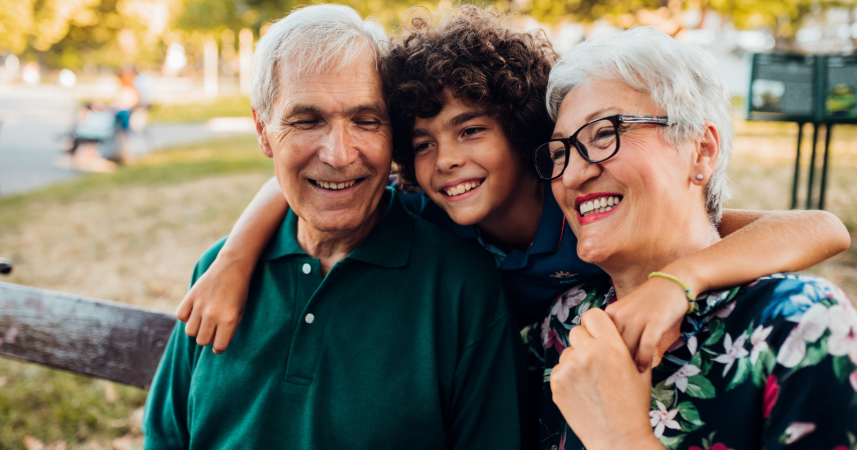
Boomer grandparents don’t build bonds with grand gestures—they stack small, steady moments until love feels like home
The strongest grandparent move I ever saw happened at a kitchen table that had seen fifty Thanksgivings.
After dessert, a Boomer grandfather slid an old cigar box across the wood to his nine-year-old grandson. Inside were two marbles, a faded patch from his Little League team, and a note that said, “Ask me the story behind any of these.”
The kid picked the patch. The grandfather told a simple tale about striking out three times in one game and the teammate who taught him how to laugh about it. The boy listened like it was a campfire. No lecturing, no life lesson bumper stickers. Just a true story told with warm hands.
That is how bonds are built—one small invitation, offered with time.
Here are ten things Boomer grandparents tend to do that create unbreakable connections with their grandkids. They are old-school in the best ways.
1. They give their full, undivided attention
Presence is rare currency. Boomer grandparents often grew up before smartphones and notifications, so they know how to sit and actually be there. They listen without reaching for a pocket. They ask questions that don’t sound like pop quizzes—“What was the best part of your week?”—and then wait for the answer. Kids feel the difference instantly. Attention says, “You matter,” louder than any toy does.
I watched a grandmother put her phone face down and say, “I’m all yours for twenty minutes—show me your world.” The child walked her through an elaborate Lego city. When he finished, he hugged her without being asked. That hug was the receipt.
2. They hand down stories, not lectures
Boomers know how to talk in scenes. Instead of “work hard,” they describe the graveyard shift that paid for school. Instead of “be kind,” they recall the neighbor who brought casseroles after a loss. Kids remember stories because they can see them. The moral is optional; the image sticks. Over time, these anecdotes stitch a family identity—where we come from, how we act when it’s hard, what we find funny.
Practical tip: keep three pocket stories ready—one about courage, one about failure, one about unexpected kindness. Tell them when the moment invites it, not as a sermon.
3. They teach skills with their hands
Nothing bonds like doing something side by side. Boomer grandparents are masters of “come here, let me show you.” How to change a bike tire. How to fold dumplings. How to bait a hook, plant basil, polish shoes, patch a knee, or make a breakfast that tastes like Saturday. The skill is important; the subtext is deeper—you’re capable, and I trust you with real tools.
Start small: hand a grandchild a safe task with visible results. “You salt the tomatoes.” Confidence grows in tablespoons.
4. They protect rituals like a craft
Rituals are time’s fingerprints. Boomers keep them. Pancakes on the first day of summer. A walk after dinner no matter the weather. A secret handshake at the door. The same ornament hung by the same kid every year. Rituals say, “This is our shared calendar.” When life gets wobbly, rituals hold shape. Kids don’t outgrow them; they rely on them.
Make it stick: name the ritual so it can travel—“our Tuesday call,” “our library hour,” “our popcorn-and-puzzles night.” Named rituals get remembered.
5. They print photos and label the backs
In the cloud, pictures float. In a kitchen drawer, they belong. Boomer grandparents tend to print, frame, and caption. They write names, dates, and who is holding whose hand. This quietly tells grandkids, “You are part of a bigger story.” A shoebox of prints beats a thousand unorganized photos—because you can spread them on a table and linger.
Bonus move: start a simple “us” album—two photos a year of just grandparent and grandchild, with a one-line note about the day. Ten years later it reads like a love letter.
6. They show up for the small stuff
A gentle superpower: appearing in the bleachers, the school auditorium, the lopsided art show. Boomers understand that support isn’t measured only by holidays; it’s measured by Tuesday nights in hard chairs. Even a short cameo—ten minutes before work, a quick wave after the recital—lands like a parade to a child. Consistency, not volume, builds trust.
If distance is a reality, trade in appearances for presence: a video message before the game, a mailed note that says “Break a leg,” a scheduled call the moment it ends.
7. They respect parents while championing kids
The best Boomer grandparents play doubles, not tug-of-war. They reinforce house rules, even when they’d do it differently. They save disagreements for private adult conversations. To the grandchild, they are a safe ally who still backs Mom and Dad. That balance—warmth without sabotage—creates a net under the whole family.
Script that works: “Your parents love you and set this rule. I’m on their team. I’m also here to help you navigate it.” Kids feel held, not triangulated.
8. They give responsibility that feels real
Kids want to matter. Boomers often give them jobs with weight: carrying the keys, counting change at the farm stand, reading the map, being in charge of the flashlight on a night walk. Real responsibility says, “I trust you.” That trust becomes a memory kids wear like a jacket when life gets windy.
Scale it right: pick tasks that stretch but don’t snap. Then say thank you like they just helped the whole town.
9. They keep generosity practical and quiet
There’s a Boomer flavor of giving that isn’t showy. Slipping $5 into a pocket with, “For your bookstore wandering.” Sending a care package with snacks and socks. Paying for the school trip and refusing to make it a headline. Generosity without fanfare teaches gratitude without performance. Kids learn giving is normal, not a stage.
Upgrade the gift: pair it with a sentence. “This helped me when I was your age.” Now it’s not just money—it’s mentorship.
10. They remember to play
Gentle silliness is an adhesive. Boomers grew up in an analog world where play wasn’t scheduled; it happened. The very best still know how to turn a hallway into a bowling lane, a recipe into a flour fight, a backyard into a moon-landing.
They play cards, teach dominos, invent scavenger hunts with handwritten clues. They’re not embarrassed to look ridiculous, which gives kids permission to be wholehearted.
Five-minute fun: a coin-flip walk—heads at the corner you turn right, tails you turn left. End with hot chocolate. It’s small, it’s yours, and it’s unforgettable.
Two short scenes I can’t forget
The toolbox graduation. A Boomer grandfather I know keeps a small hardware ritual. At age eight, each grandchild gets a simple toolbox—hammer, tape measure, screwdriver—with a label that says, “For fixing things you’re brave enough to try.”
He starts them on picture hooks and wobbly chairs. One granddaughter grew up to assemble her own college furniture without a fuss. “Granddad taught me that turning a screw is just a slow yes,” she said. That toolbox built more than shelves.
The postcard chain. A grandmother, retired teacher, mails one postcard every other Monday. Nothing dramatic—“Saw three geese on the pond today. Your turn to tell me one thing you saw.”
Her grandson, who had struggled with writing, started answering in crooked sentences. By spring, he was telling her whole paragraphs. Their bond is literally in the mail—rhythm, attention, and a string of small images nobody else gets to hold.
How Boomers make the ordinary feel like the point
What I love most about Boomer grandparents is their insistence on dignity in ordinary moments. They teach kids to shake hands and look people in the eye, not as pageantry but as respect.
They fold napkins and set forks on the left because dinner is an event, even on a Tuesday. They show how to thank the bus driver, how to return a borrowed book, how to leave a campsite better than you found it.
Grandkids watch, imitate, and absorb. That absorption becomes bone-deep manners and a sense that the world is navigable if you pay attention.
And when heavy days arrive—because they do—the same habits become ballast. A grandchild who has spent years hearing steady stories and being trusted with little jobs is better equipped to call when life gets messy. They’re not calling a judge. They’re calling a partner.
Simple scripts that open the door
“Tell me one thing you saw today that most people missed.”
“Want to learn how my dad showed me to…” (tie a tie, season a pan, change a tire).
“Should we keep our Tuesday call going this summer.”
“Would you like a story or a skill today.”
“You pick the ritual—we’ll keep it.”
These openers respect autonomy, spark curiosity, and let kids co-author the tradition. That co-authorship is where ownership lives.
If distance or health makes it tricky
Not every grandparent lives around the corner or can run after scooters. Bonds don’t require proximity; they require predictability. Make technology your ally: a weekly video call with one fixed question, a shared photo album labeled in full sentences, voice notes that can be replayed.
Mail small objects with stories attached—coins from a trip, a patch, a postcard, a recipe card in your handwriting. Frequency beats duration. Ten minutes often is better than two hours twice a year.
If you’re navigating low energy, choose seated rituals: read aloud, look at printed photos, shell peas together, play simple card games, co-author a playlist for “our mornings.” The body can be still while the bond moves.
What to avoid if you want the bond to last
Performing for social media. Kids feel when the moment is more about the post than the person. Keep most of it offline.
Using gifts to buy behavior. Generosity is glue; bribery is static. Keep boundaries clear.
Undercutting parents. You might win the afternoon and lose the relationship. Align in public, discuss in private.
Advice-as-default. Ask, “Do you want help, a story, or just a listener.” Then follow orders.
Over-scheduling. Leave white space. Wandering is where confessions sneak out.
Final thoughts
The Boomer grandparents I admire build bonds the way good carpenters build chairs—simple, sturdy, meant to survive spills and decades.
They give undivided attention, trade lectures for stories, teach with their hands, protect rituals, print and label the proof, show up for the small stuff, ally with parents, grant responsibility, give generously without theater, and remember to play.
None of this requires perfect health, perfect money, or perfect families. It requires showing up, repeating small kindnesses, and trusting that time does what time always does when you feed it—turns ordinary moments into a shared life.
I keep thinking about that cigar box on the kitchen table. A patch, two marbles, and a note: “Ask me the story.”
Every grandparent can slide a version of that across time. Maybe it’s a toolbox, a postcard, a ritual, a song you always sing on car rides. What you’re really offering is a front-row seat to your humanity.
Kids do not need grand productions; they need reliable seats. Give them one, and you’ll be there—steady, reachable, the person who makes the world both larger and kinder. That is an unbreakable bond.
If You Were a Healing Herb, Which Would You Be?
Each herb holds a unique kind of magic — soothing, awakening, grounding, or clarifying.
This 9-question quiz reveals the healing plant that mirrors your energy right now and what it says about your natural rhythm.
✨ Instant results. Deeply insightful.