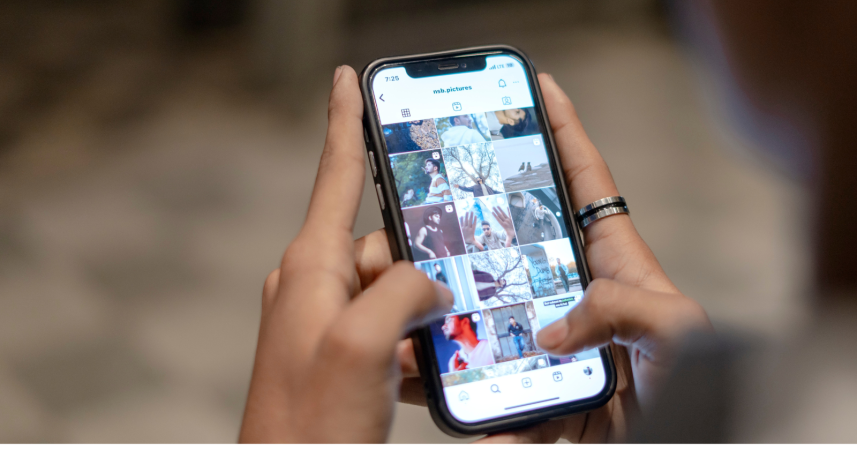
If it needs a blue check, a lounge selfie, or a rented Lambo to look rich, it’s not status - it’s insecurity with good lighting
I was scrolling late one night after a long writing day when a video flashed by of a guy stepping out of a rented Lamborghini to announce his “five streams of passive income.”
The caption had rockets and money bags.
The comments were full of “bro you inspire me.” I almost kept going, but the analyst in me paused. Who is the audience for this kind of signal? Not the people who already feel secure.
It is pitched to the anxious middle, folks hungry for proof that they are climbing. I know that hunger. I grew up lower-middle-class, and for a long time I confused noise with status.
Here is the tricky part. The internet rewards big, shiny, and immediate. Real status tends to be quiet, durable, and slow. So a lot of what reads as “winning” online is really marketing to our oldest insecurities.
Below are ten online status symbols that mostly appeal to the lower-middle-class mindset, not because people are foolish, but because the platforms are designed to poke at our fear of not being enough.
If you recognize yourself, no shame.
Think of this as a guide to spending your attention on signals that actually improve your life.
1) The blue-check worship
Do you know someone who introduces themselves as “verified” before they tell you what they do? The blue check used to signal identity verification. Now it is often a paid feature or the residue of a past system. Treating it like nobility says, “I crave gatekeeper approval.”
Why it appeals: it looks like entry into a private room.
How it reads to people with real leverage: as a subscription, not substance.
Try instead: let your work be the proof. Publish useful things consistently. If you have a check, fine. If not, fine. Either way, show outcomes.
2) Follower-count screenshots
Posting a story that says “We hit 50K!” or “Road to 100K” can be fun once. Turning milestones into your main product is different. Screenshots of counts appeal to the scoreboard part of our brains. They do not tell anyone what changed because of your work.
Why it appeals: numbers feel like safety.
How it reads to people who hire or invest: as vanity unless tied to impact.
Try instead: pair reach with results. “50K followers and 120 people landed interviews with this free resume template. Here is the template.” Now the number has a job.
3) Airport lounge and business-class flexes
Nothing says “I escaped coach” like a glass of bubbly and a lounge selfie. Frequent flyer tiers used to be insider currency. Younger people and those with options often see it as compensation for missed sleep and junk air.
Why it appeals: it whispers elite access.
How it reads to people with real time freedom: as a trade-off they try to avoid.
Try instead: talk about the trip’s purpose or the work it enables. Or skip the post. A well-rested mind is better status than a seat number.
4) The luxury unboxing parade
Glossy boxes, tissue paper, a logo reveal that could be a magic trick. Unboxing videos are engineered dopamine. When your feed leans heavy on high-end hauls, it reads like accumulation theater, not taste.
Why it appeals: it feels like proof of arrival.
How it reads to people who know quality: as brand worship over material, craft, or use.
Try instead: review one item after six months of real wear. Show repairs. Talk about why you chose this maker. Quiet expertise beats fresh packaging.
5) Rented lifestyle content
Supercars for the hour. Mansions for the day. “Private jet” photo bays at airports. Staged luxury is a full industry. The giveaway is always the caption energy. Lots of “someday,” “manifest,” and “we out here” without a story of the actual work.
Why it appeals: it compresses the distance between now and dream.
How it reads to people who have built something: as cosplay.
Try instead: document the unglamorous middle. The classiest content is the system that gets you somewhere, not the prop at the end.
6) Hustle-porn schedules and grindset quotes
“Up at 4, gym by 5, 3-hour deep work, 12 calls, 0 excuses.” The timeline full of alpha-font quotes and black-and-gold carousels sells effort as identity. Anyone who has actually created enduring work knows the rhythm looks different.
Why it appeals: it promises control and virtue.
How it reads to people with sustainable output: as compensation for lack of leverage, rest, and focus.
Try instead: show your constraints and how you design around them. Share one system that saved you an hour. People who matter care about repeatable process, not performance art.
7) Crypto, NFT, and next-thing flex avatars
There are technologists doing serious work in these spaces. This point is not about them. It is about the person whose identity is a changing avatar of whatever token, discord, or drop could 10x next week. The vibe is “I knew first,” not “I built value.”
Why it appeals: it hints at insider status and sudden wealth.
How it reads to people managing real portfolios or companies: as volatility worship.
Try instead: share a thesis, a risk management plan, and what you are willing to lose. Or talk about what you are building that lasts through cycles.
8) Affiliate-link forests and coupon-code personas
“Use my code AVERY20 for 20 percent off” has its place. When every story is a carousel of consumption and every caption ends with a code, your brand becomes shopping. That can feel like security in a shaky economy. It also trains your audience to expect discounts, not depth.
Why it appeals: it is a low-friction income stream that looks like access.
How it reads to discerning buyers: as a middleman play.
Try instead: if you recommend, do it sparingly and with receipts. “I used this knife for a year in a vegan kitchen. It sharpens well and never rusted. Link here. No code, no kickback.” Trust compounds.
9) Title stuffing and award-chasing on LinkedIn
“Top 1 percent voice, 8x founder, best-selling co-author, Forbes insert-list-of-the-week.” Some awards are meaningful. Many are pay-to-play or vanity algorithms. Stacking them tells a story, but not the one you think.
Why it appeals: it scratches the institutional validation itch.
How it reads to operators who hire: as fog hiding a light resume.
Try instead: lead with one clear value proposition and evidence. “I help nonprofits raise more with lean analytics. Last year we lifted donations 23 percent at X org.” That sentence opens doors.
10) Celebrity adjacency and event badge peacocking
Photos with famous people. Lanyards front and center. Panels where the topic is clouded by buzzwords and the audience is other panelists. Celebrity adjacency is older than the internet. Online it just scales faster.
Why it appeals: proximity feels like power.
How it reads to people who have real networks: as a borrowed jacket.
Try instead: show the relationship that matters. “I mentored 5 students who landed their first roles.” Or “Here is what I learned from organizing an event that paid the speakers on time.” Quiet reliability is a flex.
Let me pause and say the quiet thing
These symbols hook us because they promise to soothe status anxiety. If you grew up lower-middle-class, status was not just about ego. It was about safety. The big house meant stability. The logo meant durability. The airline tier meant you were important enough to be cared for. Online, the same signals get flattened into content.
I am not telling you to stop posting joy. Celebrate. Share. Just notice when the post is trying to convince strangers you are safe instead of making you safer. There is a difference.
A few filters I use before I share anything that smells like status:
- Does this help someone else do something better, cheaper, or kinder?
- Will this matter to me in six months?
- Am I showing the system or just the surface?
- If this disappeared tomorrow, would my actual life be any worse?
If the answers are thin, I skip it. Attention is currency. I try not to spend it where it does not compound.
Here are some online signals that read as genuinely high status across classes because they are anchored to value:
- You publish consistently useful work, with receipts.
- You teach your process instead of selling a miracle.
- You give specific credit to collaborators, staff, and mentors.
- You change your mind in public when better data shows up.
- You answer questions in the comments with patience and links.
- You show stewardship: repaired gear, maintained tools, long-haul projects.
- You protect privacy and ask consent before sharing others’ stories.
That list is not sexy. It is earned. Which is the point.
A quick anecdote from my offline life that changed how I post. At the farmers’ market where I volunteer, the growers do not flex. They lift crates, remember names, and talk about the soil.
When they share online, it is planting dates, frost warnings, and recipes that use the whole bunch. That content does not always go viral. It builds a community that shows up in the rain. That is status I can use.
If you want a gentle detox, try this for two weeks:
- Mute five accounts that make you feel like you are behind.
- Follow five accounts that teach you something specific.
- Replace one “look at me” post with a “here is how” post.
- Share one quiet win without a number attached. “Slept eight hours. Wrote a clean paragraph. Called my grandmother.”
Notice how your body feels. Less jangly. More grounded. That shift is the tell that you are moving from outsourced status to internal standard.
Final thoughts
Online status symbols are loud because loud sells.
Blue checks, follower counts, lounges, unboxings, rented sets, grind posters, token avatars, link forests, trophy titles, and celebrity selfies promise membership in a room that might not exist.
They mostly appeal to the part of us that is afraid. The part that wants a shortcut to being chosen.
You do not need a shortcut. You need a practice. Publish things that help. Build systems that outlast trends. Care for the people who make your work possible. Fix your stuff. Sleep. Learn. Share what you learn without treating your audience like a funnel.
When in doubt, ask if the post is a mirror or a window. Mirrors are fine sometimes. Windows are better. They let other people see out of their current room and into a path.
That is the kind of status that does not expire when the algorithm changes. It is the kind that makes your real life better, which is the only metric that matters.
If You Were a Healing Herb, Which Would You Be?
Each herb holds a unique kind of magic — soothing, awakening, grounding, or clarifying.
This 9-question quiz reveals the healing plant that mirrors your energy right now and what it says about your natural rhythm.
✨ Instant results. Deeply insightful.