The happiest relationships don’t shout—they reveal themselves in tiny, everyday moments you might be overlooking.
Sometimes it’s not the big moments, but the quiet ones that help you see yourself more clearly—because someone else already does.
You’re lying on the couch after a long day, not saying much, not even sure what you need.
And then, your partner looks at you and offers exactly what you didn’t know how to ask for. No fuss. No performance. Just presence.
It’s easy to overlook moments like that. They’re not loud or dramatic. There’s no cinematic score or sweeping declarations.
But something inside you settles—you feel safe, seen, and understood.
And that’s when it hits you: maybe the happiest relationships don’t come with fireworks, but with the kind of ease that doesn’t need to announce itself.
Having spent years analyzing patterns—first in finance, now in human behavior—I’ve come to believe the strongest indicators of lasting love are often the quietest.
So in this post, we’re skipping the fairy-tale fluff and digging into seven subtle, science-backed signs you might already be in the happiest relationship of your life.
1. You turn toward each other (literally and emotionally)
Psychologist Dr. John Gottman coined the term “bids for connection”—those small moments when we reach out for attention, affection, or affirmation.
Think: “Hey, look at this meme,” or “Did I tell you what happened at work?”
Happy couples respond to these bids with curiosity or warmth 86% of the time. Unhappy couples? Just 33%.
That doesn’t mean you never miss a cue—it means you try to catch as many as you can.
These mini-moments are like emotional deposits. Over time, they create the kind of relationship that feels like home, even on a Tuesday at 4 p.m. when no one’s shaved.
2. You balance the tough stuff with five doses of good
Conflict happens. It’s not the presence of conflict that predicts relationship health—it’s the ratio.
Research shows that in stable marriages, there’s at least a 5:1 ratio of positive to negative interactions during conflict.
That doesn’t mean forcing toxic positivity. It means that kindness still flows during tension: a reassuring hand on a knee, a shared glance that says “we’re in this,” a respectful pause before speaking.
In my old spreadsheet brain, I used to track wins versus problems. Now? I tally laughter in hard moments.
That’s the quiet glue that holds it together.
3. You say thank you for things you could take for granted
Gratitude is the silent MVP of relationship health.
In one study of 468 married participants, spousal gratitude came out as the most reliable indicator of marital satisfaction.
It’s easy to assume your partner knows you appreciate them. But hearing “thanks for doing the laundry” or “I really love how you handled that call with your mom” hits different.
It’s not performative. It’s connective.
This is something I’ve had to unlearn from my own upbringing—where emotional economies ran tight and “not complaining” passed for love.
Gratitude is a better currency.
4. You protect each other from sarcasm and contempt
Contempt—think sarcasm, eye-rolling, and sneering—is the top predictor of divorce. Which is wild when you consider how often those behaviors get normalized as “just how we joke.”
If your relationship is a greenhouse, contempt is like mold: sneaky, corrosive, and quick to spread.
My partner and I used to “banter” our way through stress until we realized it made us both subtly defensive. These days, we save the snark for group chats and keep our inside jokes gentle.
5. You make small, consistent contact
Physical affection doesn’t need to be cinematic. It can be a palm on the back while passing in the hallway, brushing knees under the table, or pulling someone’s hood up when it’s raining.
According to Dr. Ran D. Anbar, even non-sexual touch increases satisfaction and reduces stress hormones. It literally calms your nervous system.
To me, these are like micro-doses of safety. You don’t have to earn touch, and you don’t have to ask for it.
It’s offered freely, like oxygen.
6. You hype each other up—even when no one else is around
Psychologists call it “capitalization”—celebrating each other’s wins, big or small. Whether it’s “You crushed that client call” or “That soup was next-level,” this kind of validation builds trust and emotional investment.
It also expands joy.
I once read that sharing a win with a supportive partner makes the joy last longer.
It’s like reheating a really good dinner—different, but still nourishing.
7. You have your own weird rituals (and prioritize time together)
Research from the National Marriage Project found that couples who regularly had date nights were significantly more likely—by 14 to 15 percentage points—to say they were “very happy” in their marriages.
But “date night” doesn’t have to mean dressing up and dropping cash. Our version is a 9 p.m. floor picnic with leftover noodles and a new playlist.
Consistency matters more than grandeur.
It’s less about the activity and more about the message: You matter. I want to know you, even in your bathrobe.
Final words
Here’s the thing—happy relationships don’t usually announce themselves.
They hum. They pulse gently in the background. They show up in forehead kisses, inside jokes, and silence that feels soft, not sharp.
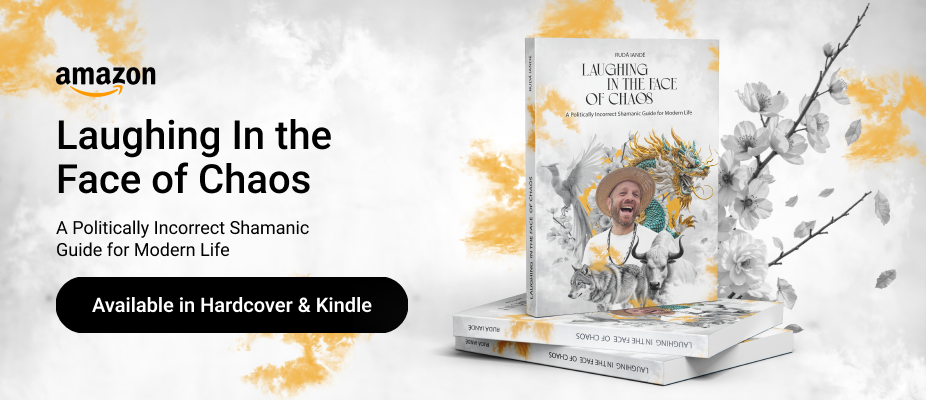
Reading Rudá Iandê’s new book Laughing in the Face of Chaos reminded me of this in a deeper way. His insights nudged me to let go of the pressure to do relationships “perfectly” and instead start showing up more real.
As he writes, “When we let go of the need to be perfect, we free ourselves to live fully—embracing the mess, complexity, and richness of a life that's delightfully real.”
That line landed like a cup of warm tea on a cold morning.
Because maybe the happiest relationships aren’t the ones that look perfect from the outside—but the ones where you can be your full, flawed, unfiltered self, and still be met with love.
And if you’ve got that? Even just in flashes, even if you're both still learning?
Then yes—you’re probably in the happiest relationship of your life.