The viral post haunted me for weeks because it perfectly captured the cruel irony I've lived with: how the very qualities people admire most about us—our resilience, our independence, our ability to handle anything—become the invisible walls that keep them from ever truly knowing us.
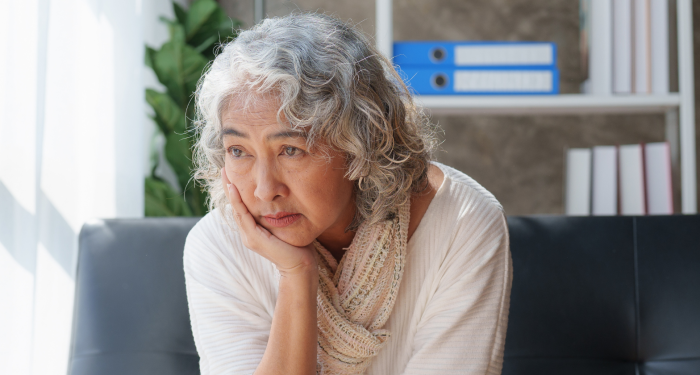
Three weeks ago, I was sitting on the couch rereading a text my friend had forwarded me — a screenshot of that line, the one in the title — when I noticed the apartment was completely silent. Not peaceful silent. The kind of silent that presses against you. I set my phone down and just sat there, letting the words turn over in my head, and I realized I couldn't remember the last time someone had been in this room with me.
The person who wrote that post captured something I've been trying to articulate for years. That peculiar ache that comes from being seen as unbreakable when what you really are is alone. The way strength becomes a shield that keeps people at a comfortable distance, admiring you from afar but never quite stepping close enough to see the cracks.
When strength becomes your identity
You know what's fascinating about being labeled strong? Once it happens, it becomes almost impossible to be anything else. People start coming to you with their problems because you're the one who "has it all together." You become the rock, the advisor, the shoulder to cry on.
I remember after my burnout at 38, when I was literally picking up the pieces of my life, a colleague called me for advice about her own career crisis. There I was, barely holding myself together, and she was telling me how much she admired my courage to start over. The irony wasn't lost on me.
But here's what happens when you're always the strong one: people forget you might need support too. They assume you've got everything handled. They don't think to check in, not really. They ask how you are, but they're already expecting the answer to be "great."
And we play along, don't we? We smile, we nod, we offer wisdom. We become so good at the performance that sometimes we fool ourselves into thinking we don't need what everyone else needs. Connection. Vulnerability. Someone to tell us it's okay to not be okay.
The price of independence
Independence is celebrated in our culture. We applaud the self-made, the resilient, the ones who don't need anyone. But what if that independence is just loneliness wearing a prettier dress?
I think about my late twenties, when a serious relationship ended because my partner couldn't handle my ambition. At the time, I wore that breakup like a badge of honor. Look at me, choosing my career over compromise. Look at me, strong enough to walk away.
But was I strong, or was I just afraid of being seen as someone who might actually need another person? Was I independent, or was I building walls and calling them boundaries?
When I transitioned from finance to writing, I lost most of my former colleagues as friends. The ones who stayed showed me who was authentic, but the exodus was telling. Had these relationships always been this shallow, or had I kept them at arm's length with my carefully maintained image of having everything under control?
The loneliness of being childless by choice
Not having children adds another layer to this conversation about strength and solitude. People see it as either a brave choice or a selfish one, but rarely do they see it for what it sometimes is: another form of being alone with your decisions.
I've spent years working through the societal pressure and self-judgment about this choice. And yes, it was a choice, mostly. But explaining that choice over and over again, defending it, celebrating it publicly while sometimes questioning it privately, that takes a particular kind of strength. The kind that looks a lot like loneliness when you're the only one at the dinner table who doesn't have kid stories to share.
There's this assumption that if you don't have children, you must have so much free time, so much freedom. And sure, there's truth to that. But there's also the reality of having fewer built-in connections, fewer forced social interactions, fewer people who have to show up for you because, well, you're family.
What we mistake for strength
Here's what I've learned: we often mistake coping mechanisms for strength. The ability to handle everything alone isn't necessarily strength. Sometimes it's just fear dressed up in competence.
Real strength might actually look like admitting you're struggling. It might look like asking for help. It might look like letting people see you cry, or fail, or doubt yourself.
I used to measure my worth in dollars, thinking financial success meant I was doing life right. When that framework crumbled, I had to rebuild my entire self-concept. You know what I discovered? The things I thought made me strong were actually keeping me isolated.
My ability to solve my own problems meant I never learned how to let others in. My financial independence meant I never had to be vulnerable about my needs. My reputation as the together one meant I never got to be messy, human, real.
The gift hidden in the compliment
When someone calls you the strongest person they know, they're giving you a compliment wrapped in a burden. They're telling you they admire you, but they're also telling you they see you as someone who doesn't need what they need.
This is the paradox of strength. The more we display it, the more alone we can become. People don't offer help to those who seem to have it all figured out. They don't check in on the ones who are always checking in on others. They don't think to include the independent ones who seem perfectly content on their own.
But here's the thing: that daughter who called her parent strong? She was seeing something true. She was honoring years of showing up, pushing through, surviving. That's not nothing. The tragedy isn't in being strong. The tragedy is when strength becomes a prison that keeps us from the very connections that could make us feel less alone.
Finding a different kind of strength
These days, I'm learning to redefine strength. Maybe it's strong to admit when you're lonely. Maybe it's strong to reach out first, to say you're struggling, to acknowledge that independence has its limits.
I've started telling people when I need support, even though every fiber of my being wants to handle it myself. I've started sharing my doubts about my choices, including the big ones like not having children. I've started letting people see that behind the career change success story is someone who still questions if she made the right choice.
You know what's surprising? The more I let people see these less polished parts of me, the less alone I feel. Turns out, vulnerability creates connections that strength never could.
Final thoughts
That social media post haunts me because it captures something so many of us experience but rarely name. The loneliness of being seen as someone who doesn't need anybody. The isolation that comes from being too good at being okay.
I keep coming back to that daughter's words. She meant them as love. She meant them as admiration. And her parent smiled and said thank you, because that's what strong people do. They accept the compliment. They don't correct it.
But I wonder about the space between what the daughter saw and what the parent felt. Whether being truly known by someone — not as the strongest person, but as the lonely one, the tired one, the one who wishes someone would just show up without being asked — whether that would have felt like a lesser compliment or a greater one. I honestly don't know. I suspect the parent sitting alone that night didn't know either.