
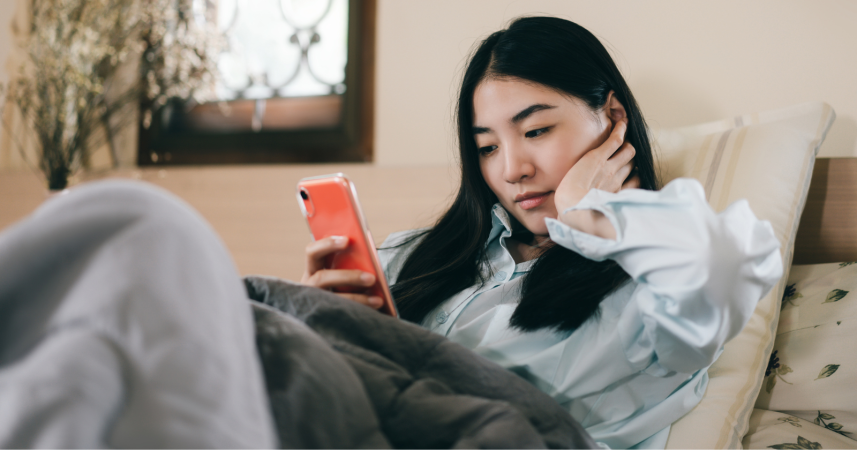
After years of silently scrolling through everyone else's lives while keeping my own completely hidden, I discovered my social media invisibility wasn't about being an introvert — it was a protective mechanism I'd been perfecting since childhood, rooted in the exhausting performance of always having to appear perfect.

Add VegOut to your Google News feed. 
I spent three years scrolling through Instagram every single day without posting a single photo.
Not one. I watched friends share their morning coffees, vacation sunsets, and weekend adventures while I remained completely invisible online.
At first, I told myself I was just shy, or maybe I didn't have anything interesting to share. But after years of working through this pattern, I realized something much deeper was happening.
It wasn't about shyness at all. It was about a complex relationship with visibility that I'd been cultivating since childhood, and I'm willing to bet many of you have been wrestling with the same thing without even knowing it.
The comfort of invisible observation
There's something deeply safe about being able to watch without being watched. You get to see everyone's lives unfold, form opinions, feel connected to the conversation, all while maintaining complete control over your own visibility.
No one can judge your photos, misinterpret your captions, or leave you hanging without a like.
I remember sitting in coffee shops, scrolling through post after post, feeling simultaneously connected and completely disconnected. I knew everything about my acquaintances' lives, but they knew nothing about mine.
It felt like having a superpower, this ability to be present without actually being present.
But here's what took me years to understand: This wasn't just casual browsing. It was a protective mechanism I'd developed long before social media even existed.
The gifted child syndrome connection
Growing up, I was labeled "gifted" in elementary school. That label came with expectations, pressure to be perfect, and a constant awareness that people were watching my performance.
Every test, every project, every interaction became an opportunity to either maintain that gifted status or disappoint everyone who believed in my potential.
By the time social media rolled around, I'd already spent decades managing visibility. I'd learned to control exactly what parts of myself people could see, carefully curating my public persona while keeping my real self hidden. Sound familiar?
Social media became the ultimate arena for this old pattern. The difference was, this time I could choose complete invisibility. No performance required. No risk of falling short of expectations.
When comparison becomes paralyzing
The Journal of Education, Humanities and Social Sciences found that "passive social media use significantly increases upward social comparison, which negatively affects social self-efficacy. This suggests that passive browsing can lead to feelings of inadequacy and lower self-esteem."
This hit home for me. Every scroll session became a masterclass in all the ways I wasn't measuring up. Everyone else seemed to have their lives together, posting confidently about their achievements, their relationships, their perfectly plated brunches.
Meanwhile, I was sitting in my pajamas at 2 PM on a Saturday, wondering why I couldn't even manage to post a simple photo of my garden.
The more I watched, the less worthy I felt of participating. It became this vicious cycle: Scroll, compare, feel inadequate, decide not to post, scroll some more. Each day of silence made the next day of posting feel even more impossible.
The performance anxiety nobody talks about
Here's something I've discovered through countless conversations with other chronic scrollers: We're not afraid of social media. We're afraid of performing incorrectly.
Will this caption sound trying too hard? Is this photo good enough? What if nobody responds? What if the wrong people respond? What if I accidentally reveal too much about who I really am?
For those of us who grew up constantly managing our visibility, social media feels like walking onto a stage where everyone has a microphone and the ability to record your performance forever. No wonder we choose to stay in the audience.
The loneliness paradox
Baylor University research indicates that "both active and passive social media use are associated with increased feelings of loneliness over time.
This highlights that extensive engagement with social media, regardless of interaction type, may not alleviate loneliness and could intensify it."
I felt this deeply. Despite spending hours "connecting" with people online, I felt more isolated than ever.
My friends didn't know what was happening in my life because I never shared it. I knew everything about them, but our relationships became increasingly one-sided. I was performing friendship without actually experiencing it.
During one particularly rough patch, a close friend asked why I never shared anything online anymore. "I feel like I don't know what's going on with you," she said. That's when it hit me: My invisibility wasn't protecting me. It was isolating me.
Breaking the pattern starts with understanding it
The Journal of Computer-Mediated Communication published a study showing that "the effects of browsing on well-being depend on individual susceptibilities to envy, inspiration, and enjoyment.
This suggests that passive use impacts users differently based on personal traits."
This research helped me understand that my scrolling pattern wasn't just about social media. It was about my specific relationship with visibility, achievement, and the fear of not being enough.
Once I recognized this, I could start addressing the real issue.
I began taking regular digital detox weekends, not to punish myself for scrolling, but to reset my relationship with technology. During these breaks, I noticed how much mental energy I'd been spending on maintaining my invisibility. It was exhausting.
Finding your way back to authentic sharing
The path back to visibility isn't about suddenly becoming an oversharer or forcing yourself to post daily selfies. It's about understanding why you've chosen invisibility and gently questioning whether it's still serving you.
Start small.
Maybe it's responding to a friend's story instead of just watching it. Maybe it's sharing something in a close friends group before posting publicly. Maybe it's just acknowledging to yourself that your fear of visibility is real and valid, but it doesn't have to control you forever.
For me, the breakthrough came when I stopped trying to perform and started trying to connect. I posted a photo of my disaster of a garden bed with a caption about how I'd accidentally killed every plant except the weeds. No filter, no profound message, just honesty.
The response was overwhelming. People related, shared their own gardening failures, and suddenly I remembered why social sharing could actually be social.
The real freedom in choosing your visibility
Today, I post when I want to, not because I feel obligated to maintain a presence or prove anything to anyone. Sometimes I still go weeks without sharing anything, and that's okay too.
The difference is that now it's a choice, not a compulsion driven by fear.
If you recognize yourself in this story, know that your relationship with visibility is valid, whatever it looks like. Maybe you're working through your own gifted child syndrome, your own achievement addiction, your own fear of being seen as imperfect. That's okay.
The goal isn't to become someone who posts constantly or shares everything. The goal is to understand why you've chosen invisibility and to make sure that choice is still serving who you are today, not who you were taught to be years ago.
Your visibility, or lack thereof, tells a story. Make sure it's the story you actually want to tell.
What’s Your Plant-Powered Archetype?
Ever wonder what your everyday habits say about your deeper purpose—and how they ripple out to impact the planet?
This 90-second quiz reveals the plant-powered role you’re here to play, and the tiny shift that makes it even more powerful.
12 fun questions. Instant results. Surprisingly accurate.












