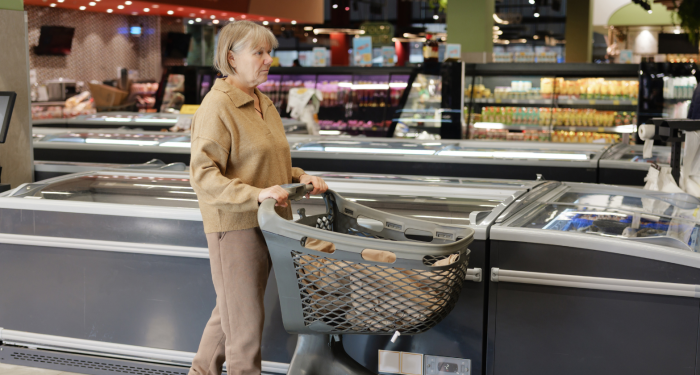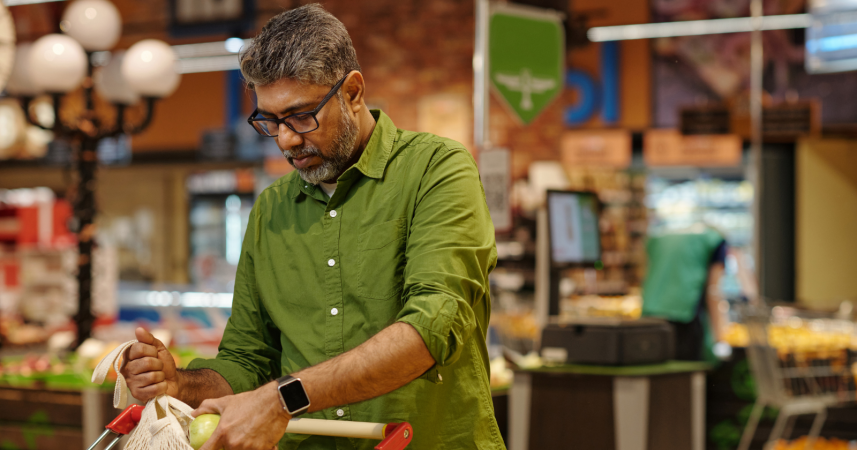
Your meticulously arranged grocery cart isn't just personal preference—it's your brain's survival mechanism against decision fatigue, which explains why watching someone randomly toss items into your cart triggers the same stress response as someone rearranging your desk drawers.

Add VegOut to your Google News feed. 
Have you ever watched someone else load your grocery cart and felt your stress levels spike?
Last week at the farmers' market where I volunteer, I watched a woman nearly have a meltdown when her teenage son started tossing items randomly into their cart. "The frozen stuff goes together!" she said through gritted teeth. The kid rolled his eyes, muttering something about his mom being a control freak.
But here's what struck me: she wasn't being controlling. She was doing something our brains naturally crave when faced with complexity.
The way you organize your grocery cart reveals a fascinating psychological strategy that most of us use without even realizing it.
We're not just being picky about where the bread goes. We're actually engaging in something psychologists call spatial pre-planning, a cognitive tool that helps our brains manage the overwhelming amount of information we process during a simple shopping trip.
Your brain on grocery shopping
Think about what happens when you walk into a grocery store. You're bombarded with thousands of products, bright colors, strategic layouts, and endless decisions. Should you buy organic? Is that sale actually a good deal? Did you remember everything on your list?
All of this creates what psychologists call cognitive load, basically the amount of mental effort you're using at any given moment. And here's where it gets interesting: research shows that when we're under cognitive load, we naturally look for ways to simplify our decision-making process.
A study titled "Consumer Preference for Food Bundles under Cognitive Load: A Grocery Shopping Experiment" found that consumers prefer food bundles under cognitive load, as they require less cognitive effort to process, simplifying the grocery shopping experience.
This same principle applies to how we organize our carts. By creating a system, whether it's grouping frozen items together or placing fragile items on top, we're essentially creating mental shortcuts that reduce the burden on our brains.
I noticed this myself during my weekly meal prep shopping. I always arrange my cart the same way: produce in the front, grains and dry goods in the middle, frozen items tucked in the back corner. At first, I thought I was just being particular.
But then I realized this system meant I could unload at checkout without thinking, pack my reusable bags efficiently, and unpack at home on autopilot. My brain could focus on other things, like mentally planning which vegetables to roast for the week ahead.
Why letting others load your cart feels wrong
Ever wondered why it feels so uncomfortable when someone else puts items in your cart? You're not being difficult. Your brain has created a spatial map of where everything "should" go, and when that map gets disrupted, it actually increases your cognitive load instead of reducing it.
This happens because our brains use spatial memory as an organizational tool. When you place bananas in the upper left corner of your cart every single time, you're creating a mental anchor.
You know exactly where they are without looking. You can reach for them at checkout without searching. This predictability frees up mental resources for other tasks.
But when someone else loads your cart, they're essentially scrambling your mental map. Now, instead of operating on autopilot, you have to actively search for items, remember what you've already grabbed, and reorganize everything in your head. No wonder it feels stressful!
The checkout gauntlet and why organization matters
Dr. Lena Torres, a Behavioral Economist at the University of Chicago, points out that "Retailers don't sell products at the checkout—they sell micro-moments of pleasure. And our brains are wired to say yes when tired."
This is exactly why pre-organizing your cart becomes a protective strategy. By the time you reach checkout, you've made dozens if not hundreds of micro-decisions.
Your cognitive resources are depleted. If your cart is organized, you can move through checkout more efficiently, reducing the time you spend in that impulse-buy danger zone.
I've found that when my cart is organized by how I'll unpack at home, cold items together, pantry items grouped, produce in one spot, I spend less time at checkout and less mental energy figuring out what goes where in my bags. This leaves me with just enough cognitive reserve to resist those strategically placed candy bars.
Making peace with your cart organization habits
So the next time someone calls you controlling for arranging your cart just so, you can smile knowing you're actually demonstrating sophisticated cognitive management. You're not being rigid; you're being strategic about your mental resources.
Want to make your shopping even more efficient? Try these approaches:
Create zones in your cart that match your home storage. If all your freezer items are together in the cart, they'll naturally end up in the same bag, making unpacking faster.
Load heavy items first, not just for structural reasons, but because it creates a consistent base layer that your brain can map reliably every time.
Keep items you'll need first at home easily accessible in your cart. Planning to cook dinner right when you get home? Keep those ingredients where you can grab them quickly.
Accept that your system is your system. If someone offers to help load your cart, it's perfectly fine to say, "Thanks, but I have a system that helps me stay organized." You're not being difficult; you're protecting your cognitive resources.
Final thoughts
Understanding the psychology behind our cart organization habits has been liberating for me. I used to feel slightly embarrassed about rearranging items after someone handed them to me. Now I recognize it as my brain's way of creating order in a chaotic environment.
The truth is, we're all trying to navigate an increasingly complex world with limited mental resources. Those seemingly quirky habits, like organizing your grocery cart in a specific way, are actually brilliant adaptations that help us function more efficiently.
So embrace your cart organization strategy, whatever it may be. It's not about control; it's about cognitive survival in the modern world. And if that means your frozen peas always go in the back right corner? Well, there's some pretty solid psychology backing you up.
What’s Your Plant-Powered Archetype?
Ever wonder what your everyday habits say about your deeper purpose—and how they ripple out to impact the planet?
This 90-second quiz reveals the plant-powered role you’re here to play, and the tiny shift that makes it even more powerful.
12 fun questions. Instant results. Surprisingly accurate.