From marathon bike rides to nowhere and firefly lanterns that glowed beside their beds, the 1960s gave children a kind of wild freedom that seems almost alien in today's world of GPS trackers and scheduled playdates.

Add VegOut to your Google News feed. 
Remember those long, lazy summer days when kids disappeared after breakfast and didn't come home until the streetlights came on? When adventures weren't scheduled, supervised, or shared on social media?
Growing up in Melbourne, I spent countless hours listening to my dad's stories about his 1960s childhood summers. The freedom, the simplicity, the raw connection to the world around him. As I watch my baby daughter grow, I can't help but wonder what experiences she'll miss out on that defined an entire generation's childhood.
The 1960s weren't just a different time; they were a different universe for kids. No screens, no structured activities every hour, no constant supervision. Just pure, unfiltered childhood.
Here are seven summer experiences from that era that today's children will never know existed.
1) The art of doing absolutely nothing
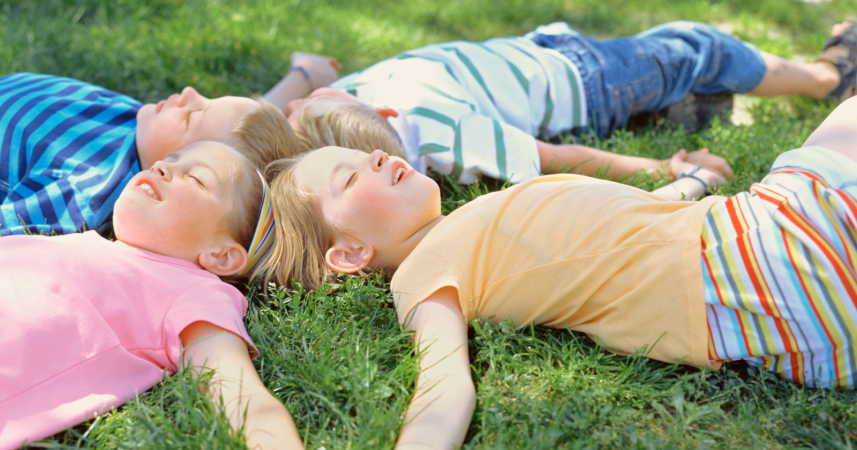
Can you imagine a child today lying on the grass for hours, watching clouds drift by without once reaching for a device?
In the 1960s, boredom wasn't something to be fixed or feared. It was just part of summer. Kids would spend entire afternoons doing what we'd now consider "nothing" - lying under trees, making up stories about cloud shapes, or just daydreaming about impossible adventures.
This wasn't seen as wasted time. Parents didn't rush to fill every moment with activities or entertainment. There were no summer camps every week, no scheduled playdates, no enrichment programs.
The beauty of this "nothing" time was that it taught kids to be comfortable with their own thoughts. To create their own entertainment. To let their minds wander without structure or purpose.
Today's children rarely experience true boredom. There's always a screen, an activity, a distraction. But in losing boredom, we've also lost the creativity and self-reliance that comes from having to entertain yourself with nothing but imagination.
2) Neighborhood tribes without parental oversight
Picture this: twenty kids from the same street, ages ranging from 5 to 15, roaming the neighborhood like a pack. No adults in sight. The older kids watching out for the younger ones. Everyone playing together until dark.
This was standard in the 1960s. Children formed their own social hierarchies, resolved their own conflicts, and created their own games. Parents weren't hovering nearby with snacks and band-aids. They were inside, trusting that the neighborhood itself would keep their kids safe.
These unsupervised tribes taught kids crucial life skills. How to negotiate. How to stand up for yourself. How to compromise. How to deal with unfairness without an adult referee.
In my book Hidden Secrets of Buddhism: How To Live With Maximum Impact and Minimum Ego, I write about the importance of learning through experience rather than instruction. These neighborhood tribes were the perfect example of this principle in action.
Today's carefully orchestrated playdates and constant supervision mean kids rarely get to navigate social dynamics on their own terms.
3) The penny candy store pilgrimage
Every 1960s neighborhood had one: the local corner store where a handful of coins could buy you a paper bag full of sugary treasures.
Kids would save their pennies all week, then make the sacred journey to the candy store. Swedish fish for a penny. Wax bottles filled with colored sugar water. Candy cigarettes that would horrify today's parents. Pixie sticks that were literally just flavored sugar in a straw.
The store owner knew every kid by name. There was no rush. Kids could stand there for twenty minutes, carefully calculating how to maximize their five cents. Two pieces of bubblegum or three jawbreakers? The decision felt monumentally important.
This wasn't just about candy. It was about independence. About making your own choices with your own money. About learning the value of saving and the sweet satisfaction of delayed gratification.
Modern kids might have more money and more options, but they've lost that simple, pure joy of the neighborhood candy store experience.
4) Drive-in movie magic under the stars
Imagine watching a movie from your family car, under the stars, with a speaker hooked to your window and the smell of popcorn drifting through the summer air.
Drive-in theaters in the 1960s were more than just a place to watch movies. They were social events, family traditions, and teenage rites of passage all rolled into one. Families would arrive early to get the best spots. Kids in pajamas would play on the playground beneath the giant screen before the movie started.
The double features would run late into the night. Parents would set up lawn chairs beside their cars. Teenagers on dates would fog up windows. Younger kids would fall asleep in the backseat, occasionally waking to catch glimpses of the giant images flickering above.
There was something magical about that communal experience. Hundreds of people watching the same movie, but each in their own private space. The honking horns during exciting scenes. The shared gasps during scary moments.
Today's home theaters and streaming services offer convenience, but they can't replicate that unique blend of public and private, that feeling of being part of something bigger while still in your own bubble.
5) The marathon bike adventures
In the 1960s, a bike wasn't just transportation. It was freedom incarnate.
Kids would leave after breakfast with nothing but a bike and maybe a sandwich wrapped in wax paper. They'd explore parts of town they'd never seen. Create elaborate bike races and obstacle courses. Ride to the next town over just to see what was there.
No GPS trackers. No cell phones for emergencies. No predetermined routes approved by parents. Just pure exploration.
These bikes took kids to secret hideouts, to fishing spots, to construction sites that became impromptu playgrounds. They'd build ramps from scrap wood and dare each other to jump increasingly dangerous gaps.
When something broke, kids fixed it themselves with whatever they could find. A playing card in the spokes for sound effects. A stick to prop up a broken chain guard. These weren't obstacles; they were opportunities for innovation.
6) Swimming hole sovereignty
Before every pool had lifeguards and liability insurance, there were swimming holes. Natural bodies of water claimed by local kids, with rope swings, muddy banks, and absolutely no adult supervision.
These weren't pristine, chlorinated pools with lane dividers and depth markers. They were murky ponds, river bends, and quarries where you couldn't see the bottom and nobody really knew how deep they were.
Kids created their own safety systems. Everyone knew who the strong swimmers were. Older kids taught younger ones how to gauge the current. There were unspoken rules about not swimming alone and watching out for each other.
The rope swings were legendary. Some kid's dad would tie a thick rope to a sturdy branch, and that single rope would provide endless summers of entertainment. The first jump was a rite of passage. The biggest swing was a badge of honor.
In my travels exploring mindfulness practices, I've noticed how disconnected we've become from natural water. The 1960s swimming holes represented something primal - a direct connection to nature that no public pool can replicate.
7) The firefly jar phenomenon
As darkness fell on summer evenings in the 1960s, a magical ritual would begin. Kids would grab mason jars, poke holes in the lids, and venture out into the twilight to catch fireflies.
This wasn't organized or planned. It just happened, spontaneously, whenever the fireflies appeared. Children would run barefoot through yards, cupping their hands gently around the glowing insects, transferring them carefully to jars.
They'd create lanterns of living light, comparing whose jar glowed brightest. Some kids would try to use them as reading lights. Others would fall asleep watching the gentle pulsing glow beside their beds.
And here's the beautiful part: they always let them go before morning. It was an unspoken rule. You could borrow the magic for a night, but it belonged to the summer air.
Today's children might see fireflies (if they're lucky enough to live where they still exist), but the ritual of catching them, that patient waiting for dusk, that gentle handling of something so delicate - it's largely lost.
Final words
Looking at these lost experiences, I'm not suggesting the 1960s were perfect or that we should abandon all modern progress. Child safety matters. Structure has its place. Technology brings incredible opportunities.
But in gaining so much, we've also lost something profound: unstructured time, unsupervised adventures, and the chance for kids to discover their own limits and capabilities.
As I watch my daughter grow, I find myself searching for ways to give her glimpses of that freedom within today's world. Maybe she won't know the exact experiences of the 1960s, but perhaps we can find new ways to capture that same spirit of independence, creativity, and wonder.
The question isn't how to turn back time. It's how to move forward while preserving the best of what we've left behind.
What’s Your Plant-Powered Archetype?
Ever wonder what your everyday habits say about your deeper purpose—and how they ripple out to impact the planet?
This 90-second quiz reveals the plant-powered role you’re here to play, and the tiny shift that makes it even more powerful.
12 fun questions. Instant results. Surprisingly accurate.