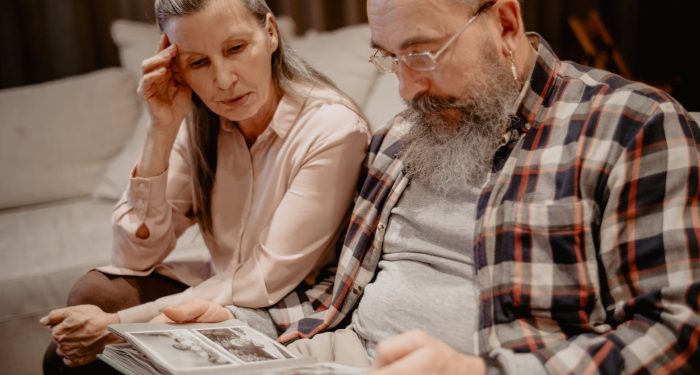
From handwritten letters to spontaneous coffee klatches, these cherished weekend traditions reveal what we've sacrificed for convenience—and why your parents still get that distant look every Saturday morning.

Add VegOut to your Google News feed. 
Do you ever catch yourself scrolling through your phone on a Saturday morning and feel like something's missing?
I was volunteering at the farmers' market last week when an older gentleman stopped by my booth.
While I was helping him pick out some organic tomatoes, he mentioned how different Saturday mornings used to feel. "We actually had time to breathe," he said, and something about his wistfulness struck me.
That conversation got me thinking about the Saturday morning rituals that defined the 1960s. The more baby boomers I talk to, the more I realize they're quietly mourning the loss of these simple practices that once anchored their weekends.
Sure, technology has given us convenience, but at what cost?
Growing up with parents who came of age in that era, I witnessed firsthand how those rituals shaped their approach to life.
My father, an engineer, would often reminisce about the unhurried pace of those Saturday mornings. My mother, a teacher, would describe them with an almost reverent nostalgia.
Here are seven Saturday morning rituals from the 1960s that boomers miss more than they'll probably ever admit out loud.
1) Reading the actual newspaper over breakfast
Remember when getting the news meant spreading out a physical newspaper across the kitchen table?
In the 1960s, Saturday mornings started with the rustle of newsprint and the smell of fresh coffee. Families would pass sections back and forth, commenting on stories, doing the crossword together, or arguing about the editorial page.
It was a shared experience that created natural conversation.
Today's digital news feeds are efficient, but they're also isolating. We scroll alone, algorithms decide what we see, and there's no natural endpoint.
The newspaper had boundaries. When you finished it, you were done. You could move on with your day without that nagging feeling that you're missing something.
What boomers really miss isn't just the newspaper itself. It's the ritual of slowing down, the tactile experience of turning pages, and the sense of being fully informed without being overwhelmed.
2) Listening to the radio while doing chores
Saturday mornings in the 1960s had a soundtrack, and it came from the kitchen radio.
While Mom cleaned and Dad tinkered in the garage, the radio provided a communal backdrop. Everyone heard the same songs, the same DJs, the same local announcements. It created a shared cultural experience that connected households across neighborhoods.
These days, we've got personalized playlists and podcasts, which are great. But there was something special about not having total control. You couldn't skip songs you didn't love. You learned to appreciate them anyway, or at least tolerate them while you scrubbed dishes.
The anticipation of hearing your favorite song made it special when it finally played. That little burst of joy when "your song" came on? That's what they miss. The surprise, the patience, the communal experience of everyone in town humming the same tune.
3) Going to the bank and actually talking to the teller
Banking used to be a Saturday morning social event. Can you imagine?
In the 1960s, you'd get dressed properly, drive to the bank, and stand in line with your neighbors. The teller knew your name, asked about your kids, remembered that you'd been saving for that new washing machine. Financial transactions were human interactions.
Sure, online banking saves time. But boomers miss the personal connection, the face-to-face accountability, and honestly? The excuse to get out of the house and see people. Those brief conversations at the bank were threads in the social fabric of the community.
There was also something psychologically different about handling physical money. Watching the teller count out your cash made spending feel more real. Maybe that's why so many boomers still struggle with digital payments feeling like "real" money.
4) Kids playing outside unsupervised until lunch
Saturday mornings meant freedom for 1960s kids. After breakfast, they'd disappear into the neighborhood, only returning when Mom rang the dinner bell or shouted from the porch.
Parents didn't track their kids' every move through apps. There were no scheduled playdates or structured activities every hour. Kids made their own fun, resolved their own conflicts, and learned independence through trial and error.
What boomers miss isn't just their own childhood freedom. It's watching that same independence develop in their children and grandchildren. They see today's kids scheduled and supervised every minute, and they wonder what we've lost in the name of safety.
The unstructured time taught resilience, creativity, and social skills that couldn't be learned any other way. That's what they're really mourning when they say kids today don't play outside anymore.
5) The ritual of the weekly grocery shop
Grocery shopping in the 1960s was an event, usually done on Saturday mornings when Dad could watch the kids.
Women would dress up for it. They'd meet friends in the aisles, exchange recipes by the produce, catch up on neighborhood news by the meat counter. The butcher knew how you liked your steaks cut. The grocer would set aside the good strawberries for regular customers.
Today's grocery pickup and delivery services are undeniably convenient. But boomers miss the social aspect, the sensory experience of choosing their own produce, the unexpected discoveries while browsing aisles.
There was also a rhythm to it. One big shop per week meant meal planning, list making, and living with your choices. No quick runs to grab whatever you're craving. That limitation fostered creativity and reduced decision fatigue in a way our endless options don't allow.
6) Writing actual letters and paying bills by hand
Saturday mornings often included "desk time" where adults would sit down with their checkbook, stamps, and a stack of bills.
This ritual seems tedious now, but it served a purpose beyond financial management. Writing checks forced you to confront your spending. Addressing envelopes slowed you down. Buying stamps meant another human interaction at the post office.
Letter writing was part of this ritual too. People maintained long-distance relationships through handwritten correspondence.
The anticipation of receiving a reply, the joy of recognizing someone's handwriting in your mailbox, the tangible evidence of relationships you could hold in your hands and reread.
Auto-pay is convenient, but boomers miss the intentionality of sitting down, taking stock, and actively managing their affairs. There was a sense of control and accomplishment in completing that stack of bills.
7) The sacred coffee klatch with neighbors
Perhaps no Saturday morning ritual is more missed than the informal coffee gathering.
Neighbors would drift into each other's kitchens without formal invitation. Someone would put on a pot of coffee, maybe set out some coffee cake, and conversation would flow naturally.
These weren't planned social events. They were spontaneous connections that built real community.
These gatherings served as informal support groups, news exchanges, and problem-solving sessions. Got a leaky faucet? Someone's husband would stop by later. Need a recipe? Three neighbors would share their versions. It was crowdsourced life support before we had the internet.
What boomers miss most is the assumption of welcome. The open door policy. The knowledge that connection was just a kitchen away. Today's text-first culture feels formal by comparison. Even our casual interactions require scheduling.
Bringing it back
After talking to that gentleman at the farmers' market, I've been thinking about what we can learn from these lost rituals.
We can't turn back time, and honestly, who would want to give up all our modern conveniences? But maybe we can reclaim some of what made Saturday mornings special.
The unhurried pace. The human connections. The clear boundaries between activity and rest.
I've started implementing my own version of some of these rituals. My Sunday trail runs have become my phone-free time, similar to how reading the newspaper used to create boundaries.
At the farmers' market each Saturday, I make an effort to really chat with customers and vendors, creating those small connections that used to happen naturally.
The lesson isn't that the 1960s were better. Every generation faces trade-offs between convenience and connection, efficiency and experience.
But listening to boomers' nostalgia for these simple rituals reminds me that progress isn't always linear. Sometimes what we gain in speed, we lose in soul.
Maybe it's time to intentionally slow down our Saturday mornings again. To create space for spontaneous connection. To embrace a little inefficiency in service of community.
Because if there's one thing boomers know that we might be forgetting, it's that the best parts of life rarely happen at high speed.