Growing up lower-middle class teaches you about limits, but also about the possibility of “later.”
There's a scene I keep coming back to from a conversation I had a few years ago at a farmers' market. A woman I'd just met mentioned offhandedly that she'd grown up poor. Her friend nodded sympathetically and said, "Same. We never had the latest sneakers either."
The first woman went quiet. The kind of quiet that says everything.
Because there is a world of difference between not having the newest Air Jordans and lying awake as a kid wondering if the electricity would still be on in the morning. Between clipping coupons and rationing meals. Between a family that budgeted carefully and one that had no budget to speak of, because there was simply nothing to budget.
People who grew up in lower-middle-class households often sit in a strange in-between. They know what financial stress looks like up close. They watched their parents stretch every dollar. But they also know, instinctively, that their experience was not the same as being truly poor, even if outsiders lump them together.
These ten distinctions are ones they tend to notice immediately, and that people raised in other classes frequently miss entirely.
1) The difference between "we can't afford it right now" and "we can't afford it, ever"
Lower-middle-class kids often heard "we can't afford that" in response to wants, not needs. The word "right now" was usually implied, even if unspoken. There was usually a next month, a birthday, a Christmas on the horizon where the thing might appear.
For kids growing up in genuine poverty, the answer was just no. Not deferred. Not budgeted for later. Just no, with a finality that didn't invite further questions. That distinction might sound subtle, but it shapes a child's entire relationship with hope and future-planning in ways that follow them into adulthood.
2) Whether food scarcity was about quality or quantity
Lower-middle-class families often ate simply, heavily, cheaply. Pasta five nights a week. Generic brands. Whatever was on sale. But there was food.
True food insecurity is something else entirely. It's skipping meals. It's kids who go to school hungry not because they're picky but because there was nothing to eat. It's a parent quietly not eating so that the children can. These are experiences that leave physiological marks, not just memories, and conflating them with "we didn't eat fancy food" does real harm to people who lived it.
3) Housing instability vs. modest housing
Growing up in a small house, a cramped apartment, or a neighborhood that wasn't exactly desirable is a lower-middle-class story many people share. But the house was there. The rent got paid. The family didn't move every few months.
Poverty can mean evictions. It means couch-surfing between relatives. It means a child who has been to four schools by fourth grade because stability just wasn't possible. The psychological toll of not knowing where you'll be sleeping is categorically different from growing up in a modest but consistent home.
4) The role of debt
Lower-middle-class families often carried debt, sometimes significant debt. Credit cards, car payments, maybe a mortgage that stretched too far. But that debt usually meant they had access to credit in the first place. Someone had decided they were creditworthy.
For families in poverty, credit is often out of reach entirely. That means payday loans with predatory interest rates. It means borrowing from family. It means no safety net when an unexpected expense hits, because the usual buffers simply don't exist. The ability to go into debt is, paradoxically, a privilege many don't recognize as one.
5) Whether there was always a working adult in the home
In lower-middle-class households, at least one parent was typically employed. Maybe working long hours at a job they hated. Maybe juggling two jobs. But employed. The family's stress was about making enough, not about whether any income was coming in at all.
Poverty is often tied to chronic unemployment, underemployment, or work that disappears without warning. A single health crisis could wipe out months of income. A lost job wasn't a setback to recover from, it was potentially catastrophic. That precariousness breeds a very different kind of anxiety than the lower-middle-class experience of living paycheck to paycheck while remaining employed.
6) Access to "crisis buffers"
When something went wrong in a lower-middle-class family, there was usually somewhere to turn. Maybe not easily, but somewhere. A grandparent with a spare room. A relative who could lend money. A family friend who could help with car repairs. The social safety net wasn't formal, but it existed.
Families in poverty often lack this informal network entirely, because everyone around them is just as stretched. There's no cousin who can spot you two hundred dollars. There's no parent with a couch to sleep on. When things go wrong, they go wrong without a cushion. That absence of a backstop fundamentally changes how risk feels in daily life.
7) Shame vs. survival mode
I think about this one a lot. Kids who grew up lower-middle class often carry shame about money. They didn't want their friends to know they bought clothes at discount stores, or that their family vacation was a road trip, not a flight somewhere.
But shame is a luxury of sorts. It means you had enough that there was something to hide, something to compare. Children in deep poverty are often in survival mode, which doesn't leave much room for social comparison. The worry isn't about appearances. It's about whether basic needs will be met. That's a fundamentally different psychological weight to carry.
8) The presence, or absence, of structure and routine
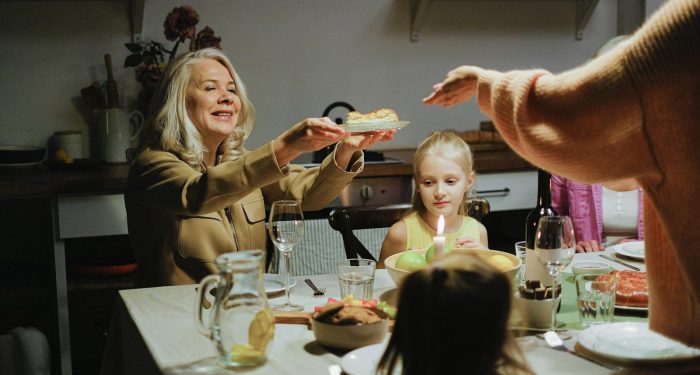
Lower-middle-class families, even under financial pressure, often maintained structure. Dinner at the table. Homework time. Bedtimes. These routines were possible because the adults in the home, whatever their stress levels, had enough stability to maintain them.
Severe poverty often dismantles routine. A parent working a night shift and a day shift has no bandwidth for consistent structure. A family that's just been evicted can't maintain homework routines in a shelter. Research consistently shows that unpredictability in childhood has lasting cognitive and emotional consequences, and it's one of the clearest fault lines between these two experiences.
9) What "future planning" looked like
Growing up lower-middle class often meant that college was discussed as a plan, even if funding it required sacrifice and loans. There was an assumption, however imperfect, that the future was something you could work toward and shape.
In poverty, the future can feel inaccessible. When survival is immediate, long-term planning becomes abstract in a way that's hard to describe unless you've lived it. It's not a lack of ambition. It's the rational result of an environment where tomorrow is uncertain. This is something I've seen reflected in behavioral economics research, specifically around how scarcity narrows cognitive bandwidth and makes future-thinking genuinely harder, not just less motivated.
10) The intergenerational piece
Lower-middle-class families often had some generational foothold: parents or grandparents who had worked their way into stability, even if that stability was fragile. There were stories of upward mobility, even if the current generation felt like they were sliding back.
Generational poverty looks different. It's the absence of those stories. It's no family member who navigated the system successfully to serve as a guide. It's inheriting not just financial scarcity but a scarcity of access to networks, institutions, and information about how to move through the world. That's a structural barrier, not a personal failure, and it's one that gets completely erased when the two experiences are treated as the same thing.
Final thoughts
None of this is about ranking suffering or deciding whose childhood was harder. Pain isn't a competition, and financial stress at any level leaves marks.
But conflating these experiences does real damage, especially when it shows up in conversations about policy, privilege, and social support. When someone who grew up in a modest but stable household claims the same experience as someone who grew up in poverty, it makes it harder to understand what poverty actually requires to address.
People who grew up lower-middle class often have an intimate view of financial struggle. That perspective is valuable. But part of holding it honestly is recognizing where the line is, even when it's uncomfortable to do so.
Being willing to say "my experience was hard, and it was still not the same" takes a certain kind of intellectual honesty. It's the kind I'm still working on myself.