If your home feels like it’s shouting at you, you’re not imagining it. Visual noise drains focus as much as sound does.
If your home feels like it’s shouting at you, you’re not imagining it.
Visual noise—busy surfaces, clashing colors, cords, and packaging—jacks up our cognitive load and quietly drains our focus. I’ve felt it, too.
Years ago, I brought my old analyst brain home: spreadsheets by day, and at night… living room shelves arranged like a pivot table.
Neat? Sure. Warm? Not even close.
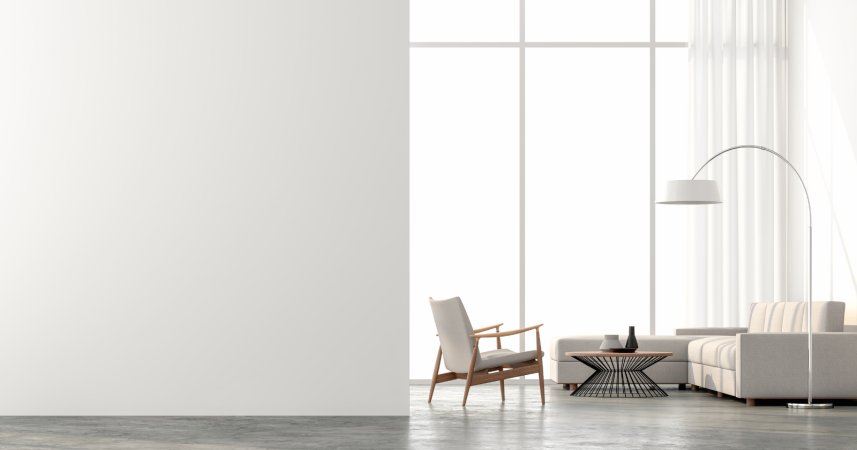
What helped wasn’t going full white-cube museum. It was a handful of simple, warm-leaning tweaks that turned down the volume without draining the soul out of the room. Here’s exactly what worked—six moves you can make in an afternoon or two.
Before we dive in, a grounding reminder I come back to often: “Minimalism is the intentional promotion of the things we most value and the removal of anything that distracts us.” — Joshua Becker
Ready?
1. Curate the “first glance”
What do you see the moment you step into the room? That first glance sets the emotional tone more than anything else. I start here because it’s quick wins territory.
Pick one main surface (coffee table, console, kitchen island) and run a 3-step reset:
-
Clear everything off—yes, everything.
-
Choose 1–3 items that feel like you (a ceramic bowl, a small stack of favorite books, a plant).
-
Corral the loose ends onto a single tray to create one visual “unit,” not six.
Why a tray? Our brains read grouped items as one object, which means less visual chatter. If you’re worried about sterility, let one piece be a little imperfect—handmade pottery, a dog-eared book, a candle with a lived-in edge.
“The details are not the details. They make the design,” said Charles Eames. A single warm detail can keep the whole scene from feeling staged.
On shelves, try the 10–10–80 rule for a test week: 10% empty space, 10% personality (photos, travel finds, small art), 80% function (books, boxes). The emptiness is your breathing room; the personality is your warmth.
2. Tame labels and cords (the sneaky noise)
If you only do one thing this week, do this. Packaging and wires create more visual noise than almost anything else.
-
Decant bright packaging. In kitchens and baths, move everyday items into simple, repeatable containers or baskets. Choose materials you’d enjoy touching—glass jars, matte ceramic pumps, woven seagrass bins. Repetition reads as calm. Texture reads as cozy.
-
Hide the logos. If decanting isn’t for you, face labels to the wall or tuck them into a drawer. It takes seconds and the difference is immediate.
-
Tackle cords. Use a slim cord channel along the baseboard, a cable box (the kind that hides the power strip), and a few velcro ties. Run a single neutral power cord where you can instead of five loose snakes.
I still remember the first night after I corralled our TV cables. Same furniture, same art—yet the room felt two decibels quieter. Clutter, as productivity expert Barbara Hemphill says, is often “postponed decisions.”
Cords and labels are where those postponed decisions like to hide.
3. Warm up the palette with materials, not just color
Minimalism gets a bad rap for being all-white and chilly. It doesn’t have to be. The trick is to limit your palette while deepening your materials.
Try this framework:
-
Choose one base neutral (warm white, greige, or soft clay).
-
Add two grounding materials (light or mid-tone wood and one tactile textile like linen, bouclé, or washed cotton).
-
Introduce a natural accent (terracotta pot, aged brass, stone coaster, wool throw).
That’s it. Three materials plus a neutral will carry a room. And if you crave color, bring it in via muted tones that play well with skin—rust, olive, ochre, dusty blue. These shades feel more human and less “gallery.”
If you’re testing paint, look at undertones next to your floors and a favorite sweater in natural light. Cool whites can go blue and sterile fast; warmer off-whites do a better job of hugging the objects in the room instead of spotlighting them.
4. Layer your lighting (2700–3000K is your friend)
Cold light makes even the loveliest room feel like a dentist’s office. Warm minimalism lives or dies by lighting layers.
-
Aim for three points of light in any space: overhead (if you must), mid-level (floor/table lamps), and sparkle (a candle, a small picture light, or a low-glow night light).
-
Choose warm bulbs in the 2700–3000K range. Dimmable if you can.
-
Diffuse the glow. Fabric shades, frosted glass, and paper lanterns soften edges and make surfaces look gentler.
-
Bounce light off walls by angling a lamp toward a corner. It turns a harsh point source into a calm wash.
As I learned after one too many late nights squinting at spreadsheets, light either fuels or fights you. The right temperature and diffusion will flatten the “visual spikes” that cause fatigue while keeping faces and objects looking natural.
5. Bring in curves, plants, and patina
Minimal doesn’t mean boxy. If your room feels stiff, add a few soft shapes and living textures.
-
Curves: a round side table, an arched mirror, a lamp with a globe shade. Even a single curved object can puncture the grid and relax the space.
-
Plants: you don’t need a jungle; you need a pulse. One sturdy medium plant (rubber plant, snake plant) or a simple branch in water adds movement and micro-shadows that make the room feel alive. As a weekend gardener, I’ll cut a branch of herbs and drop it in a glass by the sink—it smells good and looks friendly.
-
Patina: choose one object with a little history (a worn wood stool, a vintage rug runner, a clay pot with limey edges). That hint of age keeps the room from feeling like it was just unboxed.
This is where restraint and personality shake hands. As Dieter Rams famously put it: “Less, but better.” Fewer objects, more soul.
6. Set small systems that run on autopilot
Visual calm needs maintenance, but it shouldn’t become a part-time job. Build micro-systems that make “tidy” the path of least resistance.
-
The 10-minute evening reset. Set a timer. Clear surfaces back to their “first glance” state. Return remotes to the tray, toss mail into a single inbox, hang the bag on the same hook. The point isn’t perfection; it’s the ritual.
-
One-in, one-out. If something new comes in, something old leaves. Keep a donation bag in a closet you actually open. When it’s full, it goes.
-
Room anchors. Give every high-traffic item (keys, headphones, water bottle, library books) a obvious home near the door. Hooks beat hangers; bowls beat boxes. Friction down, follow-through up.
If you share your space, involve everyone in choosing the “homes.” When people help design a system, they’re more likely to honor it. And if an area keeps erupting into chaos (hello, entryway), it’s a signal the system isn’t right yet—not that you’ve failed.
Put it all together (and keep it warm)
Here’s an easy weekend plan:
-
Friday: Do the first-glance reset and kill the cords.
-
Saturday: Decant or hide labels in one zone (kitchen or bath) and adjust your lighting to 2700–3000K.
-
Sunday: Edit your palette with one new tactile element (linen pillow, woven basket, wood tray) and add a curve or plant.
Then live in it for a week. Notice what feels effortless. Notice what still bugs you. Iterate. Small changes compound.
A quick personal note: the first time I tried these tweaks, I kept a few more objects out than I “needed”—a bowl of limes, a dog toy, a mug that lives on the counter because I use it hourly. That choice was the difference between “styled” and “mine.”
Minimalism that ignores your real life isn’t minimalism; it’s theater. Let your every day be visible in a few places. Just give it a home.
And if you stall out, return to Becker’s line: promote what you value, remove what distracts. Start with a single surface, a single cord, a single light bulb. Progress, not punishment.
Your home doesn’t need to be quieter because you live less. It can be quieter so you can live more.
What’s Your Plant-Powered Archetype?
Ever wonder what your everyday habits say about your deeper purpose—and how they ripple out to impact the planet?
This 90-second quiz reveals the plant-powered role you’re here to play, and the tiny shift that makes it even more powerful.
12 fun questions. Instant results. Surprisingly accurate.