Cooking feels harder than it is when your only knife couldn’t slice a tomato without crushing it.
Let’s get something out of the way first: this isn’t about shaming your kitchen—or you.
Class is complicated. What I’m really interested in are patterns.
As a former financial analyst, I learned that tiny, repeated choices tell bigger stories than any one big purchase. Kitchens make those choices visible.
When I look around my own counters, I can tell whether I’m in a season of time poverty, stress, or stability. If you recognize some of the “tells” below, take a breath. None of them are destiny.
Each one is fixable with small, practical shifts.
1. A fridge door crowded with takeout sauce packets
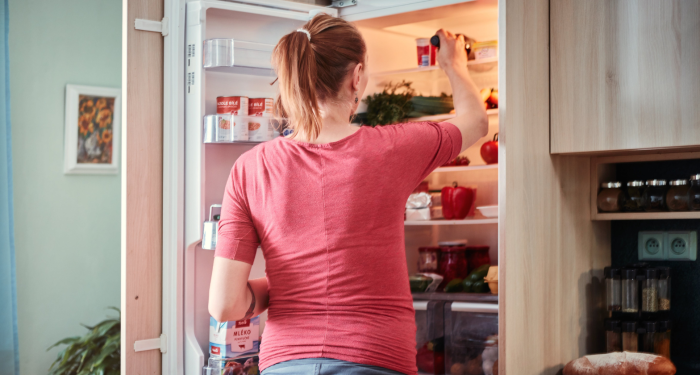
Open your fridge. Do the door shelves look like a museum of soy sauce, ketchup, and hot sauce packets?
I’ve been there—especially after deadline weeks. Those little packets are the residue of a convenience cycle: when time feels tight, we outsource meals.
It starts as a treat or a stopgap and turns into a default.
The problem isn’t a few packets; it’s the hidden math. Delivery fees, tips, and markups quietly raise your average cost per meal. Over a month, the “just this once” becomes a budget line item you never planned for.
A simple reset: claim the packets (I toss them into a zip-top bag) and assign them to one deliberate “leftovers stir-fry” night each week.
Then set a delivery limit—say, two orders a week—and make it visible. I keep a sticky note on the fridge.
Constraints don’t have to feel punitive; they can feel like structure.
2. A single dull chef’s knife doing everything
If your go-to knife couldn’t slice a tomato without squashing it, cooking will always feel harder than it needs to.
Dull tools add friction, and friction sends us back to takeout. I see it at the farmers’ market where I volunteer: the shoppers who cook consistently almost always have one sharp, reliable knife.
You don’t need a fancy set. One 8-inch chef’s knife, kept sharp, changes the whole experience.
If buying new isn’t in the cards right now, get your current knife sharpened (many markets host an affordable mobile sharpener), learn to use a honing rod, and add a rubber cutting board mat for safety.
Lower the effort and the habit follows.
3. A drawer of mismatched containers and lid chaos
The lid drawer is where good intentions go to die.
When every container requires a scavenger hunt, leftovers look like a chore—and more food ends up in the trash.
Most households waste more food than they realize, and the cost isn’t just environmental; it’s a direct hit to your grocery budget.
The USDA has a whole page on food loss and waste, which is a sobering read if you’ve ever tossed slimy greens or mystery leftovers you meant to eat.
Here’s what helped me: standardize. Pick one or two container sizes with the same lids. Recycle or donate the rest.
Keep lids upright in a file organizer so you can grab them without digging. Put tape and a marker in that drawer, and date everything.
These tiny systems turn leftovers into tomorrow’s lunch instead of next week’s guilt.
4. A pantry stacked with ultra‑processed “just add water” meals
Boxed sides, instant noodles, powdered sauces—these save time, but they also keep you dependent on someone else’s recipe and margin.
When most of your pantry calories come pre-flavored, you pay for salt, sugar, and marketing. As Michael Pollan put it: “Eat food, not too much, mostly plants.”
I’m not asking you to become a from-scratch purist. I’m asking you to build a base pantry that lets you cook fast, tasty meals without the packet.
A couple of examples: canned beans + canned tomatoes + chili powder; quick-cook grains + frozen vegetables + a splash of soy sauce and sesame oil.
Once you learn two or three “house formulas,” the boxed stuff becomes plan B, not plan A.
5. Single‑use novelty appliances gathering dust
Cake-pop maker. Quesadilla press. Hot-dog toaster (yes, it exists).
These gadgets whisper promises of fun and ease, but they steal space and attention. And because we spent money on them, we keep them—classic sunk-cost thinking.
I used to shove mine to the back of the cabinet and then feel vaguely annoyed every time I reached for a real pan.
Try this: put all novelty appliances in a box, label it with today’s date, and stash it in a closet. If you don’t pull an item out within 60 days, donate or sell it.
Keep tools that earn their footprint: a sturdy sheet pan, a cast-iron skillet, an electric kettle, maybe a slow cooker if you truly use it.
Fewer tools, used often, beat a parade of gimmicks.
6. Scratched nonstick pans and warped baking sheets
If your eggs cement themselves to the skillet or your cookies bake unevenly because the sheet is warped, cooking will make you feel incompetent even when you’re doing everything right.
That’s not you; that’s your equipment working against you.
You don’t need a full refresh. Replace the worst offender first—usually the peeling nonstick.
A basic stainless-steel or cast-iron skillet is durable, versatile, and often cheaper over time than cycling through new nonstick every year.
Add one new half-sheet pan and treat it kindly (parchment helps).
Better results are motivating; motivation strengthens the habit.
7. Bulk‑size condiments you never finish
I love a warehouse store deal as much as anyone, but jumbo mayo and gallon jugs of dressing are like gym memberships—we love the idea of “value.”
Then we toss half a container months later and swear we’ll do better. This is a classic unit-price trap: the per-ounce looks cheaper, but the “per ounce actually eaten” can be higher if you can’t finish it.
The fix is counterintuitive: buy big on staples that store well (rice, oats, beans) and small on condiments that spoil or you only use occasionally.
If you’re experimenting with a new sauce, try the smallest bottle first. Track the few things you routinely waste and stop buying them for a month.
You’ll be surprised how quickly your grocery spend tightens up.
8. A case of soda or energy drinks parked by the door
When the first thing you see walking into the kitchen is a tower of cans, you’ve created a visual default: drink this.
Defaults matter because they reduce decision-making. If the goal is to stretch your budget and your energy, flavored sugar (or its artificially sweet counterpart) is a double drain.
I’m not anti-fun. I am pro-intention. Move the stash out of sight. Put a water pitcher on the counter with lemon or cucumber slices. Keep chilled herbal tea in the fridge.
If you want a soda, you can still have one—just don’t make it the easiest option.
9. Paper plates and plastic cutlery as everyday defaults
“How we spend our days is, of course, how we spend our lives.” Annie Dillard’s line lives on my bulletin board because it turns small habits into something bigger.
If disposables are your daily norm, you’re signaling to yourself that meals are chores to get through rather than moments worth setting a place for.
I get the time crunch. On weeks when I’m juggling projects and volunteering at the farmers’ market, dishes pile up faster than a summer storm.
What helps is designing a tiny ritual that makes real dishes feel doable: two extra plates so you’re never “out,” a 10-minute “wash as you go” timer while something simmers, and a drying rack that actually drains.
Save disposables for parties and camping; let your everyday setup reflect the value of the everyday meal.
A quick reality check—and what to do next
If you recognized yourself, welcome to the club. These nine things are not moral failings; they’re signals—of time scarcity, decision fatigue, or marketing pressure.
They thrive in cluttered environments and in seasons when energy is low. That’s most of us, most of the time.
Here’s how I approach it with clients and in my own kitchen:
-
Pick one upgrade this week. Sharpen a knife. Standardize containers. Move the soda.
-
Make the best choice the easy choice. Put the skillet on the stove instead of in the cabinet. Pre-wash greens so salad is five minutes away.
-
Think in replacements, not overhauls. When something breaks or runs out, replace it with the better version. That’s how kitchens evolve without blowing up a budget.
-
Let your kitchen tell a new story. Not of deprivation, but of capability. The moment dinner feels winnable, you’ll cook more. When you cook more, you spend less. And when you spend less on autopilot choices, you free up money for the things you actually care about.
I’m a pragmatist at heart. I run trails, I garden, and I spend a lot of Saturdays chatting with people about produce.
The throughline is the same: make it simple to do the thing you want to do. Your kitchen doesn’t need to look “fancy.” It needs to work for the life you’re building.
Start with one shelf, one pan, one habit. The rest follows.