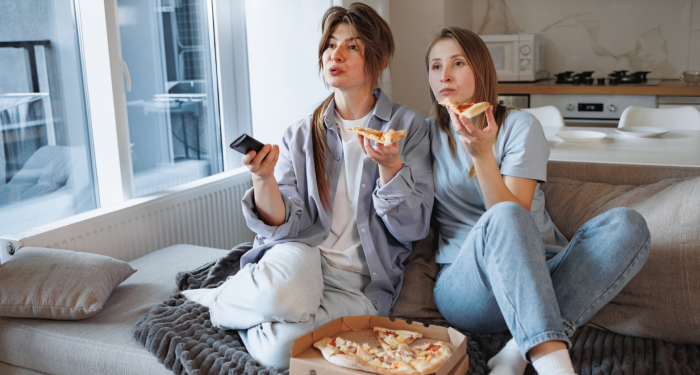
While millennials and Gen Zers cherish family time, they're secretly exhausted by boomer parents who insist on turning Christmas into an elaborate performance of matching sweaters, marathon gift-opening ceremonies, and enough food to survive an apocalypse.
The holidays are supposed to be magical, right? Yet every year, I hear the same exhausted refrain from friends my age: "I love my parents, but Christmas with them is just... a lot."
Last week, my friend texted me after spending Thanksgiving with her in-laws: "They're already planning the Christmas marathon. Seven different houses, matching sweaters, and enough food to feed a small country. I'm tired just thinking about it."
Sound familiar?
Look, I adore the holiday spirit, and I genuinely appreciate the effort our parents' generation puts into making Christmas special. But somewhere between the third hour of opening presents one by one and the fifth reminder to write thank-you cards by hand, many of us younger folks are secretly counting down the minutes until we can escape to our own homes.
After years of navigating holiday expectations with my own parents (who still insist on certain traditions from my childhood), I've noticed some patterns. Here are eight Christmas traditions that boomers can't seem to let go of, even when they leave younger generations completely drained.
1. The marathon gift opening ceremony
Remember sitting in a circle, opening presents one at a time while everyone watches and comments? What started as a sweet childhood tradition has morphed into a three-hour production that tests everyone's patience.
My parents still insist on this ritual. Each person opens one gift, we all ooh and ahh, take photos, discuss where it was purchased, and then move to the next person. With extended family, this can stretch well into the afternoon. Meanwhile, my cousins' kids are melting down, adults are checking their phones, and everyone's secretly wondering when we can move on to dinner.
The younger generation tends to prefer a more relaxed approach: open your gifts at your own pace, share the highlights, and actually enjoy the rest of the day together. But suggesting this to my parents? You'd think I was proposing we cancel Christmas entirely.
2. Sending physical Christmas cards to everyone they've ever met
Every November, my mother pulls out her address book (yes, an actual book) and begins the annual Christmas card marathon. She hand-addresses approximately 150 cards, includes a printed newsletter about our family's year, and tracks who sends cards back.
When I mentioned that most of my friends just post a holiday photo on social media, she looked at me like I'd suggested burning down the Christmas tree. "But how will people know we're thinking of them?" she asked, genuinely bewildered.
The truth is, maintaining relationships through obligatory annual cards feels performative to many of us. We'd rather have meaningful digital connections throughout the year than participate in this paper-intensive tradition that often feels more like an obligation than genuine connection.
3. Decorating every square inch of the house
Walking into my parents' house between Thanksgiving and New Year's is like entering a Christmas explosion. There are themed villages on every surface, multiple trees, animated figures, and enough lights to be seen from space.
Setting it all up takes weeks. Taking it down takes just as long. And guess who gets recruited to help when we visit?
While I appreciate festive decorations, the sheer volume can be overwhelming. My generation tends to prefer a more minimalist approach: maybe one tree, some tasteful lights, and decorations that don't require renting a storage unit for eleven months of the year. We value experiences over elaborate displays that create more stress than joy.
4. Insisting on formal dining for every holiday meal
China plates, cloth napkins, the good silverware, assigned seating with place cards... Every Christmas meal at my parents' house requires the full formal dining experience. This means hours of setup, careful handling of heirloom dishes, and even more hours of hand-washing everything afterward because "the good china doesn't go in the dishwasher."
I recently hosted a holiday dinner where I used nice disposable plates and encouraged people to serve themselves buffet-style. My mother's horror was palpable. But you know what? Everyone relaxed, nobody stressed about breaking Great Aunt Martha's serving platter, and we actually spent time together instead of fussing over table settings.
5. The guilt-driven gift reciprocity tracking
My father keeps a notebook. In this notebook, he tracks what he gives everyone for Christmas and what they give in return. Not for any mean-spirited reason, but to ensure "fairness" and reciprocity.
This transactional approach to gift-giving exhausts younger generations who often prefer simpler arrangements: Secret Santa, charitable donations, or even no-gift policies. But suggesting we scale back? That conversation usually ends with concerns about "ruining Christmas" or "not caring about family."
The mental load of maintaining gift equilibrium across extended family, remembering who gave what, and ensuring nobody feels slighted? It's a part-time job that many of us simply don't have bandwidth for in our already packed lives.
6. Multiple celebration obligations
"Christmas Eve at Grandma's, Christmas morning at home, Christmas dinner at Aunt Susan's, and don't forget the neighborhood cookie exchange on the 23rd!"
Boomers often expect attendance at every single holiday gathering, treating each as a mandatory command performance. They grew up when families lived closer together and work schedules were more predictable.
Today's reality? We're scattered across the country, working gig economies, managing complex custody arrangements, or simply trying to create our own traditions. The expectation to attend multiple celebrations, often requiring significant travel and time off work, leaves many of us starting the new year exhausted rather than refreshed.
7. Cooking enough food for an army
Every Christmas, my mother prepares enough food to feed thirty people, even when only eight are attending. There's turkey AND ham, six side dishes, three desserts, and enough appetizers to constitute a meal on their own.
When I gently suggested maybe we could scale back, she responded as if I'd proposed fasting for Christmas. The result? Days of leftovers that nobody really wants, food waste that makes my environmentally-conscious heart hurt, and exhaustion from cooking (and cleaning up after) this feast.
My generation tends to prefer potluck-style gatherings where everyone contributes something, reducing the burden on one person and allowing for more dietary variety. But this collaborative approach often gets dismissed as "lazy" or "not traditional."
8. Forced family photo sessions
The matching outfits have been purchased. The photographer has been hired. Everyone must smile through multiple outfit changes and posed arrangements while pretending we're having the time of our lives.
These photo sessions, often scheduled during the busiest time of year, create stress rather than capturing genuine joy. Kids have meltdowns, adults grow impatient, and what should be a fun memory becomes an obligation to perform happiness for the camera.
We younger folks prefer candid moments captured on phones throughout the celebration. But to our parents' generation, if it's not a formal portrait suitable for framing, it doesn't count as a "real" Christmas photo.
Finding middle ground
Here's what I've learned after years of negotiating holiday expectations: our parents aren't trying to exhaust us. These traditions represent stability, family connection, and their vision of what makes Christmas special. They're holding onto customs that brought them joy and hoping to pass that joy along.
But times have changed. Our lives are more complex, our energy is limited, and our values around consumption and obligation have shifted. The key isn't abandoning all traditions but finding ways to adapt them.
Maybe we open presents in smaller groups. Perhaps we alternate years for big gatherings. We might embrace potlucks or simpler decorations. The goal is creating celebrations that honor the spirit of togetherness without leaving everyone depleted.
This year, I'm having honest conversations with my parents about which traditions truly matter to our family and which ones we can let evolve. Because ultimately, the best Christmas tradition is one where everyone actually enjoys being together, rather than simply enduring it for the sake of tradition.