
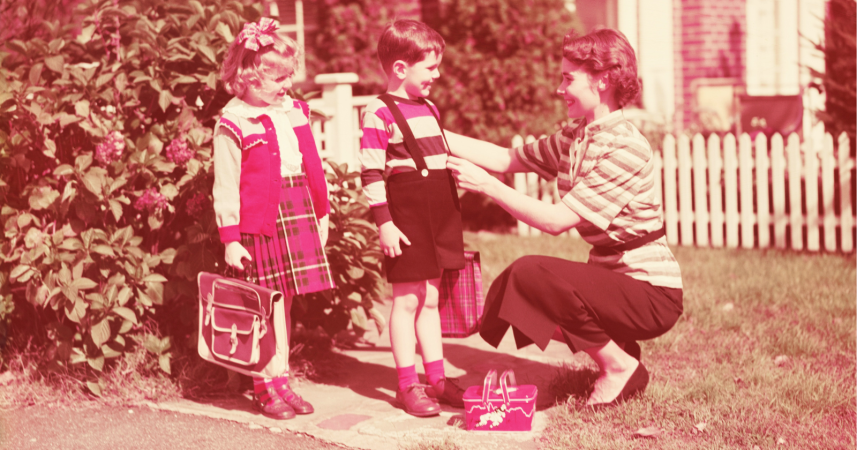
From being forced to sit at the dinner table until every last Brussels sprout was gone to waiting in terror for Dad to come home and deliver punishment, the standard parenting rules of the 70s and 80s would have today's child development experts calling protective services.

Add VegOut to your Google News feed. 
Growing up, my friend's kids couldn't believe the stories I told them about childhood in the 70s and 80s. "Wait, you couldn't leave the table until you cleaned your plate? Even if you hated it?" They looked at me like I'd described medieval torture. What seemed normal to those of us raised by boomer parents now sounds downright harsh to younger folks.
The generational divide in parenting approaches has never been more obvious. Rules that shaped millions of us are now viewed as outdated at best, and psychologically damaging at worst. But here's the thing: these weren't evil parents. They were doing what they thought was right, following the playbook handed down from their own childhoods.
Let's look at seven household rules that were standard practice back then, but would probably get you side-eye at a modern parenting group.
1. Children should be seen and not heard
Remember sitting at the adult table during family gatherings, expected to stay quiet unless directly addressed? This wasn't just a suggestion in many boomer households. It was law.
Adults had conversations. Kids listened. Period. Speaking up meant interrupting, and interrupting meant disrespect. I spent countless dinners listening to my parents discuss work, politics, and family drama while I pushed peas around my plate in silence.
Today's parenting experts would have a field day with this one. We now know that children develop crucial communication skills through conversation. They learn to express themselves, build confidence, and feel valued as family members. Modern parents encourage their kids to share opinions, ask questions, and participate in discussions.
The shift makes sense, but I sometimes wonder if we've swung too far the other direction. There's value in teaching kids when to listen and observe, though forcing complete silence probably isn't the answer.
2. Finish everything on your plate or no dessert
"There are starving children in Africa who would love that food!"
If you grew up in a boomer household, you've heard this phrase. Maybe it was starving children in China or India, but the message was clear: waste nothing. You sat at that table until every last bite was gone, even if it meant staring at cold Brussels sprouts for an hour.
My parents meant well. Having grown up with parents who lived through the Depression, they understood scarcity. Food was precious. Wasting it was practically a sin. But forcing kids to override their natural hunger cues? That's a recipe for disordered eating.
Nutrition experts now emphasize teaching children to listen to their bodies. Full means full. Kids should learn to take appropriate portions and try new foods without being forced to clear their plates. The goal is developing a healthy relationship with food, not creating anxiety around mealtime.
3. Crying will give you something to cry about
This one makes me wince just writing it. How many times did we hear "Stop crying or I'll give you something to cry about"? Emotions, especially "negative" ones like sadness or frustration, were seen as weakness or manipulation.
Boys had it especially rough with "Big boys don't cry" added to the mix. The message was clear: stuff those feelings down. Deal with them privately or not at all.
Fast forward to today, and we're all in therapy trying to unlearn this stuff. Emotional intelligence is now recognized as crucial for success in life. Parents are taught to validate their children's feelings, help them name emotions, and develop healthy coping strategies.
The boomer approach created generations of adults who struggle to express or even identify their emotions. We learned to power through, but at what cost?
4. Because I said so
Questions were not welcome in many boomer households. "Why do I have to go to bed at 8?" Because I said so. "Why can't I watch that movie?" Because I said so. End of discussion.
This wasn't laziness. It was about authority. Parents were in charge, and children needed to learn to follow rules without questioning everything. Respect meant obedience.
Growing up as an only child with high-achieving parents, I learned quickly that challenging their decisions was pointless. My teacher mother and engineer father had reasons for everything, but explaining them to a child? That wasn't part of the program.
Modern parenting emphasizes explanation and understanding. Kids are encouraged to ask why, and parents try to provide age-appropriate reasons. This builds critical thinking skills and helps children understand cause and effect. Sure, sometimes the answer still needs to be "because it's bedtime," but the automatic shutdown of curiosity? That's largely gone.
5. Wait until your father gets home
The threat hung over many households like a storm cloud. Mom might handle minor infractions, but serious misbehavior meant waiting in dread for Dad's return. He was the enforcer, the final authority, the one who delivered real consequences.
This setup did nobody any favors. Moms were undermined as authority figures. Dads became the bad guys, associated more with punishment than affection. And kids? We learned to fear rather than respect.
Today's approach emphasizes united fronts and immediate consequences. Both parents share disciplinary duties. The goal is teaching and guiding, not instilling fear. Partners work together, supporting each other's decisions rather than playing good cop/bad cop.
6. You'll sit there until bedtime
Punishment in boomer households often meant isolation and boredom. Sent to your room with no TV, no toys, no books. Just you, four walls, and time to "think about what you've done."
Some kids faced the corner for what felt like hours. Others got the silent treatment, a withdrawal of affection that could last days. The message was clear: misbehave and you'll be cast out, at least temporarily.
Child development experts now recognize this as potentially harmful. Time-outs have evolved to be brief and age-appropriate. The focus has shifted from punishment to teaching. Natural consequences replace arbitrary isolation. Connection and communication trump banishment.
7. Physical discipline was just part of parenting
This is the big one, the rule that makes younger generations gasp. Spanking wasn't controversial. It was Tuesday. Wooden spoons, belts, switches from the yard - these were parenting tools as common as timeout chairs are today.
"Spare the rod, spoil the child" wasn't just a saying. It was philosophy. Physical punishment was seen as necessary for raising respectful, well-behaved children. Love and discipline weren't opposites; they were partners.
The research is now crystal clear: physical punishment doesn't work and often causes lasting harm. It teaches that violence solves problems and that might makes right. Countries have banned it. Pediatricians condemn it. What was once standard practice is now considered abuse in many circles.
Final thoughts
Looking back at these rules, it's easy to judge our parents harshly. But context matters. They were products of their time, doing their best with the information they had. Many of us turned out okay despite (or because of?) these approaches.
The real lesson here isn't that boomers were cruel or that modern parents are soft. It's that parenting evolves as we learn more about child development, psychology, and what actually helps kids thrive. Each generation tries to improve on the last, keeping what worked and changing what didn't.
Those of us caught between these worlds have a unique opportunity. We can acknowledge the pain some of these rules caused while appreciating the values behind them. We can teach respect without demanding silence, encourage healthy eating without food battles, and set boundaries without crushing spirits.
What rules from your childhood would horrify today's parents? And more importantly, how are you choosing to parent differently?
What’s Your Plant-Powered Archetype?
Ever wonder what your everyday habits say about your deeper purpose—and how they ripple out to impact the planet?
This 90-second quiz reveals the plant-powered role you’re here to play, and the tiny shift that makes it even more powerful.
12 fun questions. Instant results. Surprisingly accurate.












