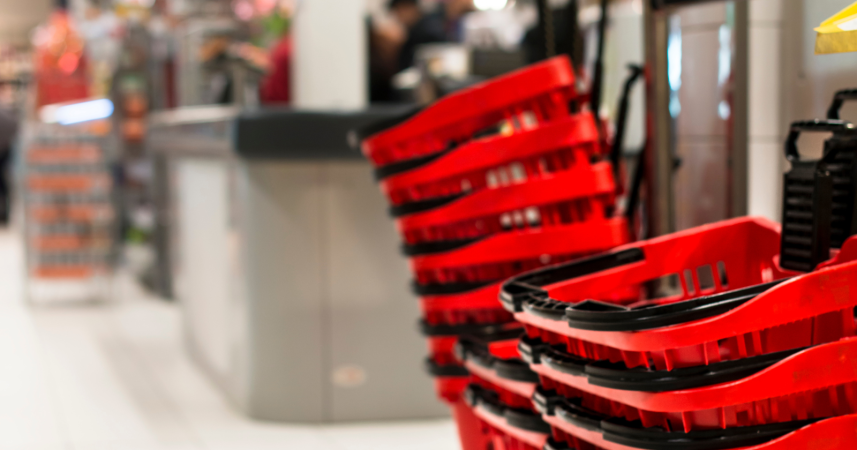
When “just toothpaste” turns into $47 of cozy chaos, it might be time for a basket instead of a cart—and a timer on your phone.

Add VegOut to your Google News feed. 
Ever walk in for toothpaste and somehow roll out with a sherpa blanket, a ceramic pumpkin, and a novelty spatula shaped like a ghost? Same. It’s almost a rite of passage in the red-cart universe.
I’m a big believer that our habits tell us who we are—especially the ones that feel invisible because we’ve practiced them for so long. After years as a financial analyst, I notice patterns. And after many laps around those bright aisles, I notice very specific Target patterns.
If you’re curious about your own, here are seven habits I see in people (raises hand) who are just a little too at home under the bright lights and bullseye banners—and what to do instead if you want to spend, save, and shop with intention.
1. Treating the store like a second living room
You know that “ahhh” feeling when the doors whoosh open and the air smells faintly like popcorn and possibility?
For many of us, Target isn’t just a store—it’s a mood reset. We stroll. We wander. We browse endcaps the way some people browse art galleries.
The tricky part? “Ambient shopping” dissolves time. A quick 10-minute trip turns into an hour-long hangout. When time gets fuzzy, money usually does too.
What helps me: I run a tiny “mission briefing” in the parking lot. What’s the objective? What aisle gets me there fastest? I set a 20-minute timer on my phone and promise myself I’ll be done when it buzzes—even if I’m mid-aisle.
A hard stop creates a boundary where comfort would otherwise expand.
Try this: start with a basket, not a cart. If your hands are full, your spending usually isn’t.
2. Making the latte the starting gun
There’s a reason the in-store café is right up front. A warm drink in hand signals “I’m here for a while.” And while I love a good oat-milk latte, I’ve noticed that a drink becomes a ritual, and a ritual becomes a longer, looser shopping session.
Longer sessions equal more “why not?” items: another throw pillow, a cute notebook, a seasonal candle you swear smells like fresh-baked cookies (it doesn’t, but we keep trying).
What helps me: I flip the order. I shop first, then coffee on the way out—reward, not runway. If I still want the drink after I’ve checked out, great. If not, I skip both the caffeine and the extra wander.
Micro-swap: bring your own water bottle. Sipping something familiar keeps the “linger” impulse low.
3. Doing “one more aisle” laps
Comfortable Target shoppers are expert loopers. One last pass through home storage. One quick look at clearance. Maybe baby clothes? Even if there’s no baby. The loop is where impulse buys live—and where your carefully curated basket grows suspiciously heavy.
If I ask myself, “What do I hope to find on this lap?” and the answer is “a surprise,” I know I’m not shopping, I’m treasure hunting. And treasure hunting at big-box stores usually means paying retail for a dopamine hit.
What helps me: I map an intentional route before I start. In and out. If I must browse, I cap it at two “curiosity aisles” max. I also park on the side of the building closest to what I need—less time to wander, less temptation to loop.
Bonus: photograph your list. Seeing the handful of items on your screen anchors you to the plan when you’re face-to-face with 24 shades of beige storage bins.
4. Treating the Dollar Spot like a mandatory checkpoint
Raise your hand if you’ve lost seven minutes and $17 to mini ceramic houses, seasonal trinkets, and “teacher supplies” even if you don’t teach. The Dollar Spot (aka Bullseye’s Playground) is a masterclass in micro-indulgence. “It’s only three dollars!” becomes ten small yeses you didn’t plan for.
Comfort makes this worse because we stop evaluating. We toss, we chat, we move on. But tiny spends are sneaky; they add up faster than we think.
What helps me: a three-question test I have to answer out loud before anything from that zone goes in my basket:
-
Where will this live in my home?
-
What will it replace (so I’m not just adding)?
-
Will I still use it in three months?
If I can’t answer clearly, it goes back. No guilt, no drama—just a loving boundary with my future self.
5. Chasing “savings” instead of value
“Save 20% today!” “Buy two, get one free!” Sale signage is a lullaby for those of us who like to feel smart while spending.
As a former analyst, I love a good discount. But I’ve also caught myself buying three when I only needed one, or grabbing a “deal” that wasn’t on my list.
Here’s the quiet truth: comfort can turn me into a coupon-chaser instead of a value seeker. When the bullseye feels like home, I start justifying—not deciding.
What helps me: I switch to “price-per-use” thinking. That $30 throw blanket I’ll use nightly all winter has a better return than a $10 novelty mug I’ll forget after Halloween.
I also institute a “deal delay”: if I wouldn’t pay full price, I’m not allowed to buy it on sale. It’s amazing how many “must-haves” vanish when the sale goggles come off.
Tactic: on stock-up items, write the last price you paid on the box with a Sharpie. It becomes your personal benchmark, and you’ll stop over-valuing mediocre discounts.
6. Collecting a new self every season
Fall arrives and suddenly I’m a person who hosts soup nights and needs seven amber glass jars. Spring? I apparently require lemon-printed everything.
Target is brilliant at selling micro-identities by season: cozy hostess, organized mom, backyard minimalist, “that summer picnic friend.”
There’s nothing wrong with seasonal refreshes. But if comfort has me treating décor as a personality subscription, I’m shopping for a feeling instead of creating one.
What helps me: I do a five-minute “shop my house” sweep before I go. I pull out a couple of items I already own that can scratch the seasonal itch—a throw, a candle, a vase. Then I give myself a single upgrade rule: one new item per season that I truly love and will use for years. This keeps me in the realm of curation, not accumulation.
If sustainability matters to you (hello, VegOut community), consider swapping new-for-new with a friend or checking your local buy-nothing group first. That “new vibe” buzz is available for free.
7. Using the store to self-soothe
This one’s tender. Many of us use a familiar store to regulate stress. It’s safe. Predictable. Pretty.
After a hard day, wandering aisles we know by heart feels like control—especially when home feels chaotic. The cart becomes a wheeled coping mechanism.
No shame here. But it’s helpful to name the habit honestly: am I shopping to solve a problem, or to feel different for 30 minutes?
What helps me: I make a menu of alternate resets that are just as accessible. Ten-minute walk. Quick stretch. Call a friend. Water my plants. Read two pages. If I still want to go after one reset, I probably actually need something. If not, I let the urge pass without white-knuckling it.
Another anchor: switch to Drive Up or order pickup when you’re in an emotional storm. You still get the “I handled life” feeling without the “I also bought three scented brooms and a sweater for a dog I don’t have” aftermath.
A pocket plan for more mindful Target runs
Think of this as a checklist you can screenshot:
-
Parking-lot plan: What three items am I here for?
-
Basket first, cart if I truly need it.
-
Two curiosity aisles, tops.
-
Dollar Spot three-question test.
-
Deal delay: Would I pay full price?
-
Price-per-use > % off.
-
One seasonal upgrade, not a seasonal identity.
-
If I’m stressed, choose Drive Up or a non-shopping reset first.
And because small structures reduce friction, try this: keep a standing “Target list” in your notes app that everyone in your household can add to. When it’s time to go, you’re fulfilling planned needs instead of inventing them under fluorescent lights.
Why this matters (beyond money)
Spending less is great. But the real win is autonomy. When I’m too comfortable anywhere, I stop noticing my choices. Target is a delightful place to lose track of time; it’s also an easy place to lose track of myself.
As with any habit, the goal isn’t to never browse or never buy. It’s to choose on purpose. To know when I’m collecting clutter because my brain wants a treat—and to have other ways to give it one. To walk in with a plan and walk out with my values intact.
So the next time those doors whoosh open and the siren song of throw blankets and color-coded pantries calls your name, take a breath. Ask the simplest question: what did I come here for?
If the answer is toothpaste, let it be toothpaste. And if it’s comfort, let’s get that somewhere softer than a red shopping cart.
You’ve got this. And if you see me bee-lining past Bullseye’s Playground with a basket and a timer, give me a little nod. We’re practicing a new kind of comfort—the kind that comes from being the boss of our choices.