
Some of the highest-impact home upgrades cost under $15 and live under your sink or behind your toothbrush.

Add VegOut to your Google News feed. 
We’re all pretty good at replacing the obvious stuff—printer ink when it streaks, lightbulbs when they burn out. But a surprising number of small, high-impact items quietly expire long before we notice.
Out of sight, out of mind… and sometimes out of date.
As someone who spent years as a financial analyst, I think of these as “stealth costs.”
Ignore them and you pay with fuzzy thinking (hello, poor sleep), repeat illnesses, or wasted time scrubbing something that should’ve been retired months ago. As a trail runner and gardener, I also think about what supports daily energy—clean air, good sleep, safe food prep. The items below touch all of that.
If you’ve been meaning to “get around to it,” consider this your nudge.
1. Kitchen sponges
Let’s start with the humble sponge. It works hard, it lives damp, and it hangs onto anything it meets.
Even if you’re rinsing and wringing it, a sponge can become a tiny apartment complex for grime and odors faster than you think.
My rule of thumb? Rotate and replace aggressively. I keep a small stack under the sink and label them with a marker: Mon/Tue/Wed.
Each day gets its own sponge, and at the end of the week they retire to “dirty duty” (baseboards, patio furniture) before I finally say goodbye. If you prefer cloths, toss them in a hot wash after each day’s use.
When is it time? If it smells, sheds, or looks tired even after a good clean, it’s not doing you any favors. Swap weekly or every two weeks at most.
For a greener approach, try compostable cellulose sponges or washable microfiber cloths and still keep the same brisk replacement pace.
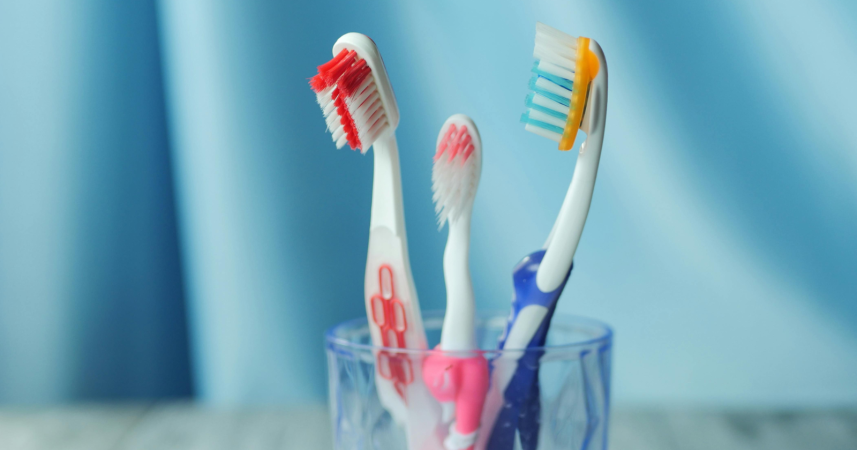
2. Toothbrushes and brush heads
Have you ever noticed how you press harder when bristles start to splay? That’s your sign.
Worn bristles don’t clean well, and pressing harder can be tough on gums. For manual brushes, I replace every three months—or sooner if the bristles flare. For electric brushes, I treat the heads the same way.
One tiny habit that helps: I stash a spare brush head in my travel kit and another in the bathroom drawer. When I pack for a trip or open the drawer and see the spare, it reminds me to swap.
You can also set a recurring calendar reminder every 90 days or align changes with the change of seasons.
Bonus points: pop a date on the handle with a fine-tip marker. It’s amazing how our memory shortens when it comes to “How long have I been using this?”
3. Water filters (pitcher and fridge)
I used to think water filters were “set it and forget it.” Then I noticed my tea tasting a bit off and the fridge dispenser running slower.
Filters trap what you don’t want to drink; the better they are at catching, the sooner they fill. Most pitcher filters need replacing every 2–3 months depending on usage and water quality; fridge filters are often around the six-month mark.
If you drink a lot (go you), cook with filtered water, or live where the water has more mineral content, you’ll likely be on the earlier side.
Practical approach: write the install date on the filter with a Sharpie. Many brands have subscription options—if that fits your budget and helps you stay consistent, it’s a mental load off. If not, set a reminder with your estimated cadence and just order the replacements a week before you’ll need them.
And don’t ignore the clues: a change in taste, visible particles, or slower flow are your water’s way of saying “help.”
4. Pillows
If you’re waking up with a stiff neck or headaches, your pillow might be past its peak. Over time, pillows collect sweat, skin cells, and dust—plus they lose the loft that actually keeps your neck aligned.
Try the fold test: fold your pillow in half. If it doesn’t spring back, it’s probably done. For most synthetic and down pillows, I replace every 1–2 years; specialty foams vary but they also break down and trap heat and moisture over time.
Pillow protectors are a game-changer here: they cut down on what gets into the pillow itself and extend the useful life.
My simple routine: wash pillowcases weekly, protectors monthly, and pillows themselves every few months if the care tag allows.
Sunlight is a natural refresher—on a dry day, give your pillow a few hours outside. If allergy season hits hard, replacing sooner may be the best money you spend on quality sleep this year.
5. Cutting boards
Those charming knife marks? Not so charming when they trap food juices.
Deep grooves are like tiny canyons that are tough to fully clean, and once a board warps or gets furrowed, it’s time for a change.
Here’s how I make boards last longer: I use a color or material system to avoid cross-contamination—one board for produce, another for proteins.
For wood boards, I oil them monthly with food-safe mineral oil so they don’t dry out and crack.
For plastic boards, I pop them in the dishwasher (if the manufacturer says it’s safe) and inspect them under bright light; when I see clusters of deep cuts that won’t scrub clean, they’re demoted to craft projects or gardening tasks and I bring in a new one.
If this feels wasteful, remember: the goal is safe food prep and less scrubbing. Buying one resilient end-grain wood board for prep you do daily and a few lightweight mats for quick jobs can be a frugal, sanitary combo. Replace proactively and your future self won’t be chiseling away at stubborn smells with lemon and salt.
6. Smoke and carbon monoxide alarms
This one isn’t glamorous, but it’s safety 101. Alarms don’t last forever. The sensors age, and over about a decade they simply don’t detect as well.
Batteries are one thing (replace them on a schedule if yours aren’t sealed), but the alarm units themselves also have expiration dates—usually stamped on the back. If you can’t find a date, assume it’s time.
A quick checklist I follow at home:
-
Test alarms monthly. It takes thirty seconds and a finger.
-
Replace 9-volt batteries once a year (I do it in January, right after the holidays, while I’m putting away the boxes).
-
Replace the entire unit at the 10-year mark—or earlier if it chirps and won’t cooperate after a fresh battery and reset.
-
If possible, go for interconnected alarms so one sounding alerts the whole home. Especially important if you sleep on a different floor from the kitchen.
If you rent, it’s still worth asking your landlord when the last replacement happened. If you own, add the install date to a note inside your utility cabinet so it lives where you’ll see it.
A quick psychology note
Why do we avoid replacing these things? A few reasons. There’s status quo bias—we prefer the familiar, even when it’s subpar. There’s optimism bias—“It’s probably fine.” And there’s friction—finding the right model, remembering the date, ordering replacements.
The fix is to lower the friction and time-box the decision. Subscriptions, reminders, and sticker-dating each new item create an external brain that helps you act before problems stack up.
A low-lift plan you can copy
-
Pick one category per week for six weeks. Start with the riskiest (alarms), then move through the rest.
-
Date your replacements. Marker on the toothbrush, sticker under the cutting board, Sharpie on the water filter.
-
Batch your buys. Add a multi-pack of sponges and extra brush heads to your next order. Extras reduce procrastination.
-
Build a “use out” box. When something rotates out of kitchen duty, it becomes a cleaning tool and then it’s gone.
-
Recycle thoughtfully. Textile recycling for flat pillows, mail-in programs for brush heads if available, compost for cellulose sponges. Do what’s doable, not perfect.
Final thoughts
A healthier home is built on unglamorous habits.
Replacing small things on time is one of them. You don’t have to overhaul your life—just make today the day you pick one item and reset the clock.
Your future self (the one who sleeps better, cleans faster, and doesn’t drink weird-tasting tea) will be grateful.
And remember: this isn’t about guilt. It’s about alignment—between what you value and what you actually do in the spaces you live in every day. Small swaps, big lift.
What’s Your Plant-Powered Archetype?
Ever wonder what your everyday habits say about your deeper purpose—and how they ripple out to impact the planet?
This 90-second quiz reveals the plant-powered role you’re here to play, and the tiny shift that makes it even more powerful.
12 fun questions. Instant results. Surprisingly accurate.












