
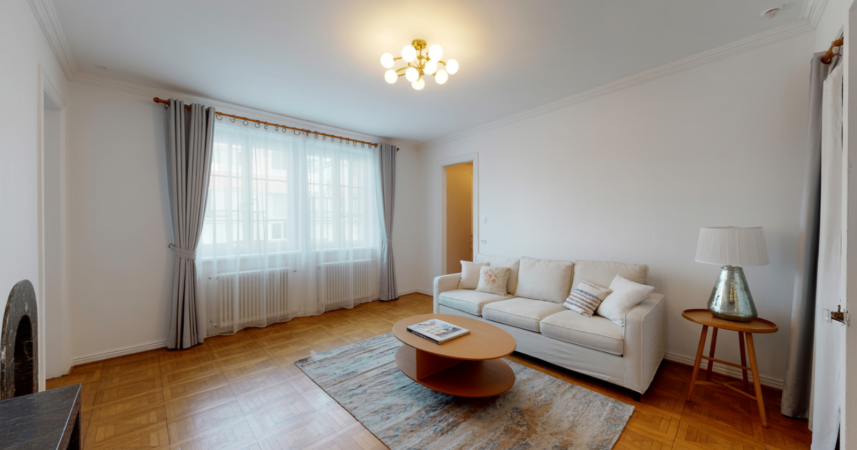
You might be surprised at how much impact these small changes can make. And once you start seeing the difference, you'll probably find yourself noticing—and fixing—these details everywhere.

Add VegOut to your Google News feed. 
You've invested in beautiful furniture, carefully chosen paint colors, but something still feels...off about your space.
Maybe you've scrolled through those picture-perfect Instagram homes and wondered why yours doesn't quite measure up, even though you've put in the effort and money?
Here's what I've learned from years of trial and error (and more than a few decorating mistakes): your home might have all the right pieces but still lack that polished, expensive look we're all after.
The culprit? It's often tiny details that scream "budget decorating" louder than a clearance sale sign.
The good news? These are simple swaps and tweaks that make a huge impact.
Let's dive into the five sneaky decorating decisions that might be undermining your home's potential.
1. Using overhead lighting as your main light source
Do you flip on that ceiling light the moment you walk into a room and call it a day?
I used to be guilty of this too. For the longest time, I thought good lighting just meant having enough brightness to see what I was doing.
But here's the thing—relying solely on harsh overhead fixtures instantly makes any space feel more like a doctor's office than a welcoming home.
The problem with ceiling lights is that they create unflattering shadows and give everything a flat, one-dimensional look. It's like putting Instagram's worst filter on your carefully decorated room.
So what should you do?
Well a recent study found that "warm-toned floor and table lamps (2700K) achieved the highest ratings for perceived warmth and relaxation, highlighting their suitability for creating a cozy, inviting atmosphere for socializing and leisure".
Translation: get some warm lamps.
Trust me, your space will instantly feel more expensive and inviting.
2. Ignoring the power of proper proportion and scale
Ever walked into a room where something just felt awkward, but you couldn't put your finger on what?
Nine times out of ten, it's a scale issue.
I learned this lesson the hard way when I bought what I thought was the perfect coffee table for my living room. It looked great in the store, but once I got it home, it was so tiny compared to my sectional that it looked like dollhouse furniture.
Here's what happens: when your furniture pieces don't relate well to each other size-wise, everything looks cheap and haphazard. A huge sofa with a teeny side table, or massive artwork on a small wall—these mismatched proportions scream amateur hour.
Your coffee table should be about two-thirds the length of your sofa. Your area rug should extend at least partly under all your main furniture pieces. Art should fill roughly two-thirds to three-quarters of the wall space above a piece of furniture.
Getting the proportions right makes everything look intentional and professionally designed, even if you're working with budget pieces.
3. Choosing decor that lacks visual cohesion
This was my biggest decorating mistake for years. I'd fall in love with a throw pillow here, a vase there, maybe a cute picture frame somewhere else.
Each piece was nice on its own, but together? Total chaos.
The issue is that without any connecting thread—whether it's color, texture, or style—your decor starts looking like you just grabbed whatever was on sale. And let's be honest, that's probably exactly what happened.
The solution isn't buying everything in matching sets (that's actually worse). Instead, pick a cohesive color palette or stick to similar materials and finishes. Maybe it's all warm metals, or perhaps you lean into natural textures like wood and linen.
When your pieces relate to each other, even budget finds look intentional and expensive.
4. Skipping the finishing touches that matter
I used to think decorating was about the big stuff—the couch, the dining table, the bed frame. But after years of wondering why my spaces felt incomplete, I realized I was ignoring the small things that actually tie everything together.
Charles Eames (a man who knew a thing or two about design!) captured this perfectly when he said, "The details are not the details. They make the design".
We're talking about things like switch plates that don't match your decor, visible cords snaking across the floor, or bare light bulbs hanging from fixtures. Maybe it's picture frames that are all different colors, or curtains that are too short for your windows.
These might seem insignificant, but they're the difference between looking polished and looking rushed.
Start small: hide those cords with cord management solutions, swap out builder-grade switch plates for something that matches your style, and make sure your curtains hit the floor. Replace any burned-out bulbs and consider upgrading to fixtures with actual shades or covers.
Trust me, once you start noticing these details, you can't unsee them.
5. Neglecting texture and layering
A few months ago, I visited a friend's apartment that looked like it belonged in a magazine, even though I knew she was on a tight budget.
The secret? Every surface had multiple textures working together—a chunky knit throw over smooth leather, a jute rug under a glossy coffee table, matte ceramic vases next to a shiny lamp base.
Here's what I see in most homes: flat surfaces everywhere. A leather couch with nothing on it. A wooden coffee table that's completely bare. Windows with just blinds and no curtains. It's clean, sure, but it also feels sterile and cheap.
Texture is what makes spaces feel rich and expensive, regardless of how much you actually spent. It's the difference between a hotel room and a home.
Start layering: add a throw blanket to your sofa, mix different pillow textures, put a runner on your dining table, or hang curtains over your blinds. Even something as simple as switching out smooth ceramic accessories for ones with interesting textures can transform your space.
Making your home feel expensive doesn't require expensive solutions
Here's what I wish someone had told me years ago when I was frustrated with my decorating efforts: the difference between a space that feels cheap and one that feels polished often comes down to paying attention.
It's not about having the biggest budget or the most expensive pieces. Some of the most beautiful homes I've been in were decorated on a shoestring, but the owners understood that thoughtfulness trumps price tags every time.
The beauty of these fixes is that most of them cost very little—or nothing at all. Moving furniture around, swapping out a few accessories, or simply being more intentional about the details you choose can completely transform how your space feels.
Start with just one area that's been bothering you. Maybe it's that living room that never quite feels finished, or the bedroom that lacks personality. Pick one of these tweaks and see what happens.
You might be surprised at how much impact these small changes can make. And once you start seeing the difference, you'll probably find yourself noticing—and fixing—these details everywhere.
Your home should feel like the best version of you. Sometimes it just takes a few small adjustments to get there.
What’s Your Plant-Powered Archetype?
Ever wonder what your everyday habits say about your deeper purpose—and how they ripple out to impact the planet?
This 90-second quiz reveals the plant-powered role you’re here to play, and the tiny shift that makes it even more powerful.
12 fun questions. Instant results. Surprisingly accurate.












