
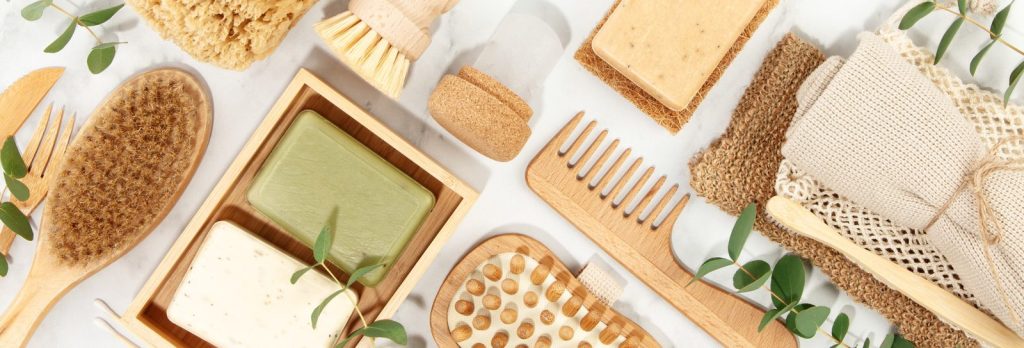
Every morning, I stand in front of my bathroom mirror and go through the motions. Cleanser, toner, moisturizer, sunscreen. It's such an automatic ritual that I barely think about it anymore. My hands move from bottle to bottle, each one promising something different: hydration, glow, protection, youth.
But lately, I've been pausing mid-routine to really look at what I'm doing. Not just at my reflection, but at the products themselves. The plastic bottles lined up on my shelf. The ingredient lists I can barely pronounce. The packaging that'll outlive me by several centuries.
It hit me one morning as I squeezed out my favorite cleanser: this simple act I perform twice a day, this thing I do without thinking, is connected to so much more than just my skin. My beauty routine, I realized, tells a story. And I'm not sure I like everything that story says.
The hidden footprint of looking good
I grew up watching my mom prepare homemade face masks in our kitchen. She'd mix gram flour with yogurt and a pinch of turmeric, the same way her mother taught her back in Pakistan. To my young eyes, it seemed so old-fashioned compared to the glossy products my friends were using.
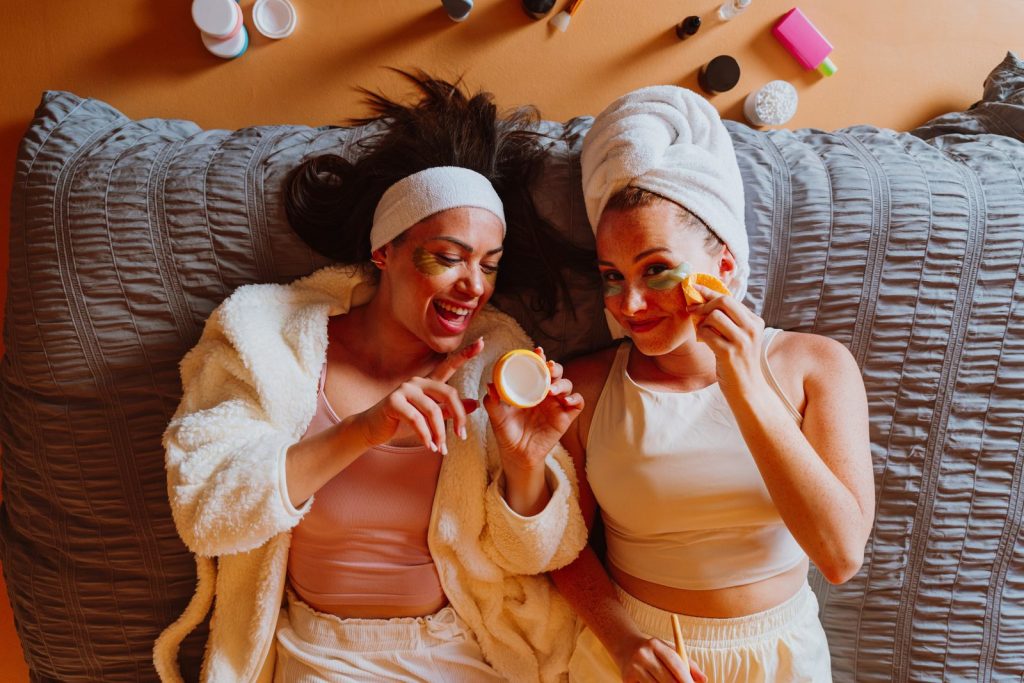
What I didn't appreciate then was how much simpler and cleaner her approach was compared to what most of us use now.
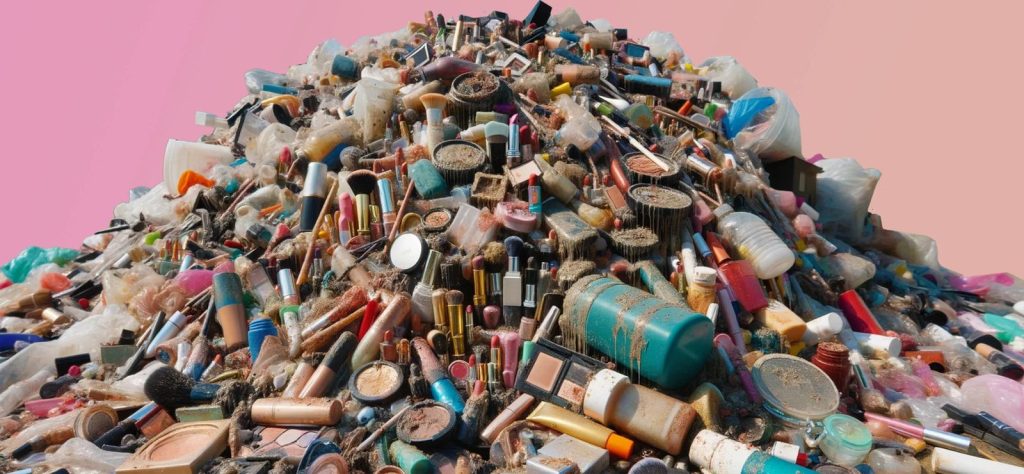
Beauty packaging creates a substantial waste problem, especially when pumps, mirrors, labels and mixed materials make an item difficult to sort or recycle. Widely repeated global estimates are not backed by a transparent industry-wide dataset, so this article no longer states a precise annual unit count.
That moisturizer I love?
Its ingredients and packaging may involve palm-derived materials, synthetic polymers, glass, metal or virgin plastic. The responsible questions are specific: Can the brand trace high-risk ingredients? Does the formula contain intentionally added microplastics? Can the empty package actually be processed in the local recycling system?
A 2004 Environmental Working Group survey of more than 2,300 people estimated that women in its sample used an average of 12 personal-care products containing 168 unique ingredients each day. Ingredient count is a measure of use, not proof of danger or bodily absorption. In the United States, most cosmetics and ingredients do not receive FDA premarket approval, except colour additives; manufacturers remain legally responsible for product safety.
The supply chains behind beauty products are often murky at best.
Mica can carry a child-labour risk when it comes from informal or illegal mines in parts of India. The U.S. Department of Labor reports children aged 5 to 17 collecting mica in three major producing states. That does not mean there is a 'good chance' every mica product was child-mined. It means brands should be able to trace and audit high-risk sourcing rather than relying on a natural label.
I'm not saying this to be depressing. I'm saying it because once you know, you can't unknow. And that knowledge changes how you shop.
Why these rituals matter
Despite all of this, I'm not about to give up my beauty routine entirely. And I don't think you should either.
Because there's something deeper happening when we care for ourselves in this way. It's not just vanity or superficiality, no matter what some people might say.
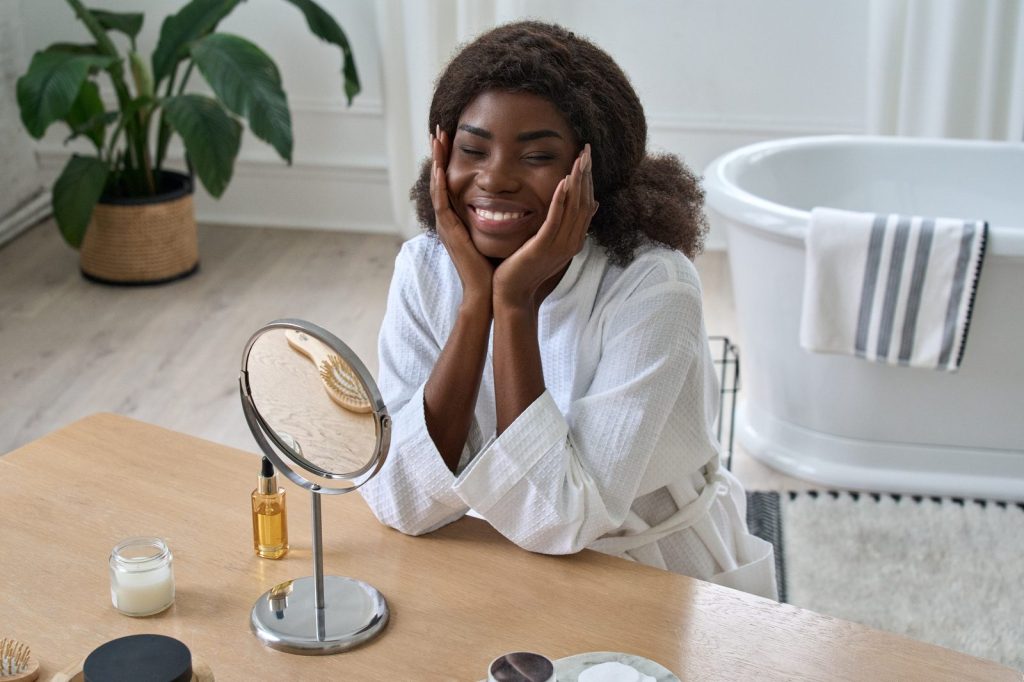
My morning routine is one of the few moments in my day that belongs entirely to me. Before I check my phone, before I think about work deadlines, I have these ten minutes where I'm just present with myself. The cool water on my face. The scent of my favorite oil. The gentle pressure of my fingertips as I massage in moisturizer.
For some people, a familiar self-care ritual can feel calming or grounding. That personal effect is reason enough to value it; the routine should not be presented as a treatment that reliably reduces stress or improves wellbeing for everyone.
I've noticed this especially on difficult days. When I'm feeling anxious or overwhelmed, going through my skincare routine grounds me. It's predictable, controllable, familiar. There's something meditative about it.
Beauty routines create space for reflection. They're not frivolous or shallow - they're acts of presence in a world that constantly demands we be somewhere else, thinking about something else.
But here's where it gets interesting. If these routines are truly about care, about honoring ourselves, shouldn't they also honor everything else?
Shouldn't caring for our skin include caring for the planet that gives us the ingredients to do so?
A different kind of beautiful
Small, intentional choices in your routine can lighten your footprint - one ritual at a time.
I started shifting my routine about a year ago. Not all at once, but gradually. As products ran out, I replaced them with more conscious alternatives.
The first thing I learned is that lower-impact choices do not automatically require sacrificing quality. Some brands provide refill systems, lighter packaging, sourcing information or clearer ingredient disclosures. Each claim still needs scrutiny: 'biodegradable,' 'ethical,' 'clean' and 'transparent' are not interchangeable guarantees.
I will not pretend this is always as convenient as grabbing whatever is on the shelf. Reading labels and checking packaging options takes time, and a label alone cannot ensure a product is safe for every person or harmless to the planet. Patch testing, professional advice when needed, and verifiable environmental information are more useful than broad marketing claims.
I switched to a refillable moisturiser from a brand that says it uses ocean-bound plastic for its containers. My cleanser now comes in a glass bottle with a reusable pump. I also found a sunscreen marketed as reef-conscious that works for my skin, while recognising that 'reef-safe' is not a guarantee and that the environmental effects of UV filters remain an active area of research.
But I have also embraced some old practices. I finally started making the turmeric face mask my mom swore by, and I enjoy the ritual. Evidence about curcumin's biological properties does not prove that a homemade mask treats a skin condition, and turmeric can irritate or stain some skin. My grandmother would still laugh if she knew I had come around to her methods after years of dismissing them as outdated.
The shift has been surprisingly freeing. I used to think I needed twenty different things for twenty different concerns. Now I focus on multi-use products that actually work. Fewer steps, less waste, more intentionality.
There's something powerful about knowing that the routine I use to care for myself isn't simultaneously harming something else. My morning mirror moment feels different now. More aligned. More whole.
Redefining what beauty means
I think we're at this interesting crossroads with beauty. On one side, we have more access to products and information than ever before. We can address skin concerns our grandparents just had to live with.
On the other side, we are paying more attention to the costs of production and disposal. Beauty packaging contributes to plastic waste, but this article cannot support a specific share of global ocean leakage. Ingredient sourcing, labour conditions, packaging design and chemical pollution all require product- and supply-chain-specific evidence.
But I don't think the answer is choosing one or the other. I think it's all about finding balance, being thoughtful instead of mindless, and demanding better from the companies that profit from our desire to feel good about how we look.
Real beauty isn't just about what we see in the mirror. It's about the whole picture. The routine that makes you feel grounded and cared for but doesn't require planetary harm to achieve. The products that work for your skin without working against the environment. The companies that value people and planet alongside profit.
Every morning when I stand at my mirror now, I'm still performing the same ritual. But it means something different. It's become an act of care that extends beyond just me. And somehow, that makes me feel more beautiful than any product ever could.
And maybe that's what we've been missing all along. The acceptance that true beauty isn't found in perfection or transformation. It lives in harmony. With ourselves, with each other, with the world we're all trying to live in together.
Infographic: Reading Your Beauty Labels
CRUELTY-FREE — 01
What it means: The product and all of its ingredients were not tested on animals at any stage of development.
What it doesn't guarantee: Ingredients are ethically or sustainably sourced; the product is vegan; the brand's parent company is cruelty-free.
Common logos: Leaping Bunny · PETA · Choose Cruelty Free
VEGAN BEAUTY — 02
What it means: The product contains no animal-derived ingredients (e.g., beeswax, lanolin, collagen, carmine).
What it doesn't guarantee: No animal testing; sustainable packaging; fair or transparent labor practices; ethical ingredient sourcing.
Tip: For full assurance, look for BOTH "vegan" and "cruelty-free."
ORGANIC / CERTIFIED ORGANIC — 03
What it means: Ingredients are grown without synthetic pesticides, fertilizers, or GMOs.
What it doesn't guarantee: Low carbon footprint; ethical or fair labor; biodegradable or environmentally safe formulas; plastic-free packaging.
Common certifications: USDA Organic · COSMOS Organic · Soil Association
FAIR TRADE — 04
What it means: Ingredients come from producers who receive fair wages, safe working conditions, and community support.
What it doesn't guarantee: Lower emissions; plastic-free or minimal packaging; organic farming.
Common certifications: Fairtrade International · Fair for Life
REEF-SAFE / REEF-FRIENDLY — 05
What it means: Usually a marketing claim that a sunscreen omits selected UV filters, often oxybenzone and octinoxate. NOAA notes that several UV filters can harm aquatic life in laboratory and field research, while ecological risk varies by chemical, concentration and environment.
What it doesn't guarantee: A regulated or standard definition; no effect on reefs; suitability for every user; sustainable packaging; no microplastics; or low-emission production. Check active ingredients and use sun-protective clothing and shade alongside an effective sunscreen.
FSC-CERTIFIED PACKAGING — 06
What it means: Packaging (usually paper or cardboard) is sourced from responsibly managed forests that prioritize biodiversity, conservation, and ethical forestry practices.
What it doesn't guarantee: Biodegradable or compostable plastics; clean or responsibly sourced ingredients; low carbon footprint.
"CLEAN BEAUTY" (UNREGULATED TERM) — 07
What it means: Whatever the brand wants it to mean. Typically marketed as "non-toxic," "natural," or "safe," but there is no industry-wide definition or regulation.
What it doesn't guarantee: Protection against greenwashing; synthetic fragrances disguised as "parfum"; vague or incomplete ingredient lists; plastic-heavy packaging; lack of third-party testing or oversight.
Red flag: If a brand uses the word "clean" but does not publish specific ingredient standards, sustainability policies, or testing guidelines, view it with caution.
CIRCULAR / REFILLABLE SYSTEMS — 08
What it means: The packaging is designed for reuse, refilling, or closed-loop recycling, significantly reducing waste and the need for new raw materials.
What it doesn't guarantee: Ethical ingredient sourcing; clean formulations; fair labor practices; low carbon transportation.
Greenwashing Red Flags
- Overuse of green, leaves, plants on packaging
- Claims like "eco-friendly," "non-toxic," or "gentle" with no third-party validation
- Hidden ingredient lists
- "Clean" with no standards
- Fake symbols that look like certifications
What Makes a Product Truly Sustainable?
- Ingredients sourced ethically
- Transparent supply chain
- Minimal or refillable packaging
- Low-waste manufacturing
- Renewable energy production
- Biodegradable or safe-to-waterway formulas
- Verified third-party certifications
Correction (14 September 2026): Unsupported packaging and ocean-plastic figures were removed. Claims about cosmetic approval, mica, sunscreen labels and homemade skincare were corrected and sourced.