A restaurant that is comfortable in its skin does not need a thesaurus at the table.
You can spot a restaurant that’s peacocking within the first five minutes of sitting down.
I spent my twenties in luxury dining, learning how great service feels in your bones.
The best rooms anticipate, edit, and mmake things easy.
When a place is compensating, the giveaway usually is the words your server has been coached to say.
Here are seven lines that raise my eyebrows every time, plus what they reveal and what to do instead as a guest who wants a good meal, not a performance:
1) "Trust me, the chef knows best."
I love chefs, and I also love choosing my dinner.
When a server tells me, “The chef prefers you take it medium rare,” that is a power move dressed as expertise.
Sometimes, it is valid if the dish genuinely collapses outside a certain doneness or if an allergen is involved.
However, most of the time it is a script.
Real hospitality is collaborative.
A thoughtful server will say, “Most guests enjoy this medium rare for texture. If you like it more done, we can rest it to keep it juicy.”
That keeps your palate at the center.
The tell here is rigidity; if a restaurant turns your preference into a lecture, they value the narrative over your experience.
2) "Our water is triple-filtered, ionized, and structured."
Water service can be elegant, but it can also be an upsell disguised as wellness.
When someone recites a science-y monologue about pH and crystals, you’re not being educated.
You’re being nudged; it is the same energy as a gym tour that spends ten minutes on the towel program.
If you want sparkling or still, order it, but if you are happy with tap, say so with confidence.
Great spots say, “Still or sparkling, or would you like tap?” and move on.
The places that linger are selling a vibe, not hydration.
3) "Everything is designed for sharing."
I enjoy family-style eating.
When a server says the menu is “meant for sharing” and then suggests four small plates per person, you’re in theater.
The kitchen may be built on snacks and sides because it photographs well, but you are left managing portion math and plate logistics.
A pro server will calibrate to your appetite and price sensitivity.
“Two smalls and a large per two guests is usually perfect. We can add more if you’re still hungry.”
Clarity calm beats hype every time.
4) "It’s not spicy, it’s flavor-forward."
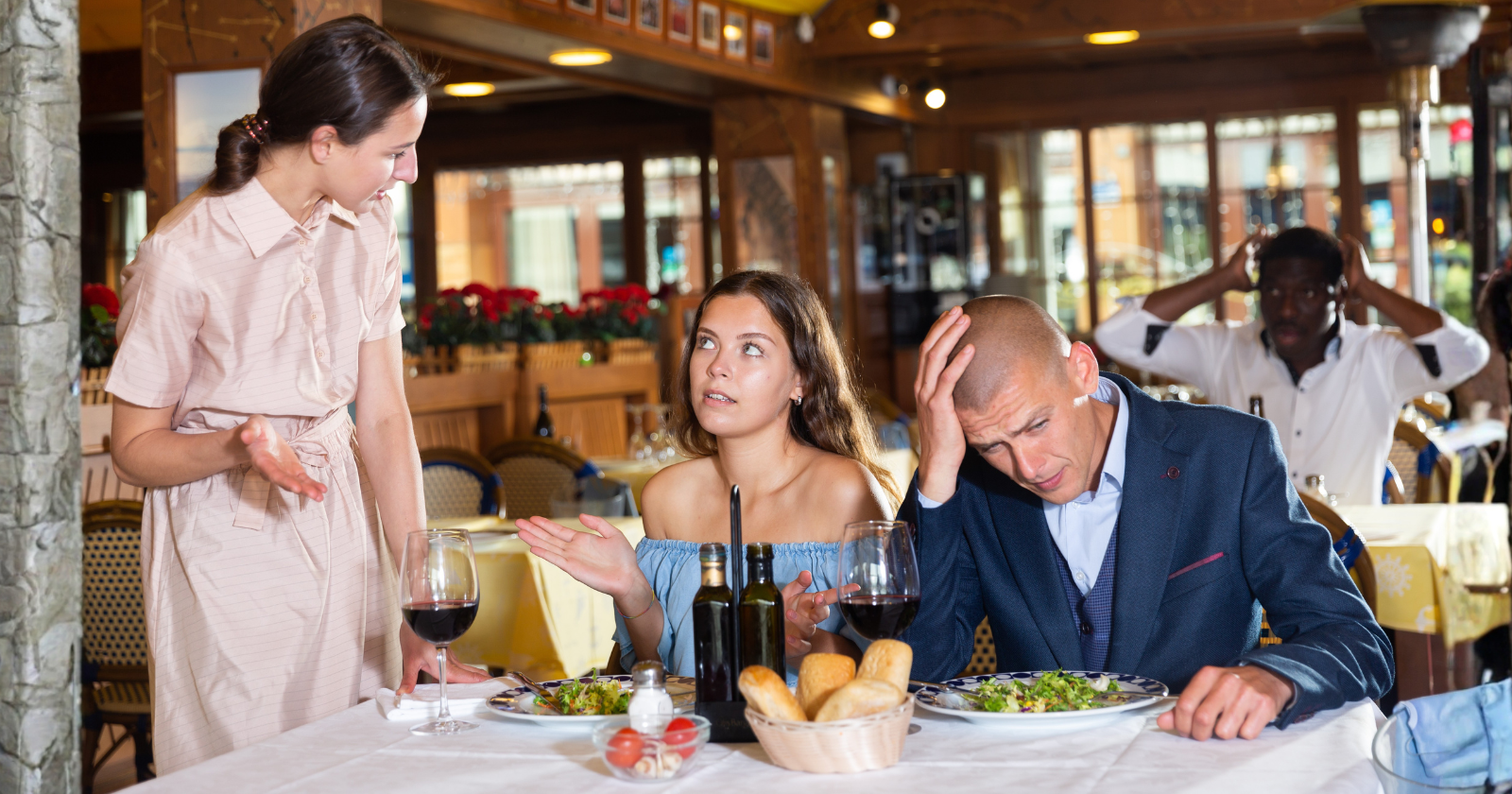
Translation: We did not taste this for heat the way you asked us to.
The phrase “flavor-forward” is a dodge, like a corporate email that says “circling back” when the answer is no.
Ask for a straight scale.
A good reply sounds like, “On a 1 to 10, it’s a 6. We can serve the chile oil on the side.”
That is adaptation, and anything else is branding.
If you get hedging, you’re probably in a room that values their concept more than your comfort.
5) "The chef is doing something really playful with truffle oil."
You hear this and you can almost see the quotation marks around “truffle.”
Real truffles are glorious and fleeting, and truffle oil is usually a lab-created aroma that steamrolls nuance.
When a server leans into how “playful” or “elevated” it is, I start wondering what the kitchen is covering up.
Old mushrooms? Bland mash? A $9 side now priced at $19?
If you love the scent, order it.
However, watch for one-note dishes that all smell the same, and ask a simple question: “Is it real truffle shaved, or truffle oil?”
A confident answer signals integrity, while a tap dance signals perfume.
6) "We don’t do modifications."
There are honest reasons to limit changes: Tight kitchens, prix fixe pacing, and allergy risk.
Yet “we don’t do modifications” as a blanket statement is hospitality dressed as gatekeeping.
It tells me the restaurant values control more than care.
The respectful version is specific.
“We can omit nuts, but the sauce is made ahead with butter.” Or, “We can’t swap proteins, yet we have a dairy-free option I think you’ll enjoy.”
Constraints paired with solutions help you feel seen.
The absolutist version is posture.
7) "This is our most Instagrammable dish."
Finally, the line that makes me want to order a plain roast chicken out of protest.
When a server leads with “Instagrammable,” they’re telling you the priorities: spectacle first, flavor second.
I am not against a bit of drama—a flaming cheesecake can be fun—but if the pitch is about likes, the algorithm is the audience.
Ask what makes the dish special to eat, not to photograph.
A genuine answer will go straight to texture, balance, and sourcing, not the size of the smoke cloche.
I learned this the hard way on a trip when I let a server talk me into a cloud-like dessert that vanished on contact.
It made a great boomerang, and it also tasted like sweet air.
Ten minutes later I was downstairs at the corner bakery eating a perfect cookie and laughing at myself.
The bottom line
A restaurant that is comfortable in its skin does not need a thesaurus at the table.
If you hear a phrase that feels more like a sales pitch than a service step, pause and ask for the concrete version.
Buy the dish that sounds delicious, not the one that would look good on your story.
You are not difficult for wanting clarity; you are a great guest, the kind who helps the best kind of restaurants do their best work.
If You Were a Healing Herb, Which Would You Be?
Each herb holds a unique kind of magic — soothing, awakening, grounding, or clarifying.
This 9-question quiz reveals the healing plant that mirrors your energy right now and what it says about your natural rhythm.
✨ Instant results. Deeply insightful.