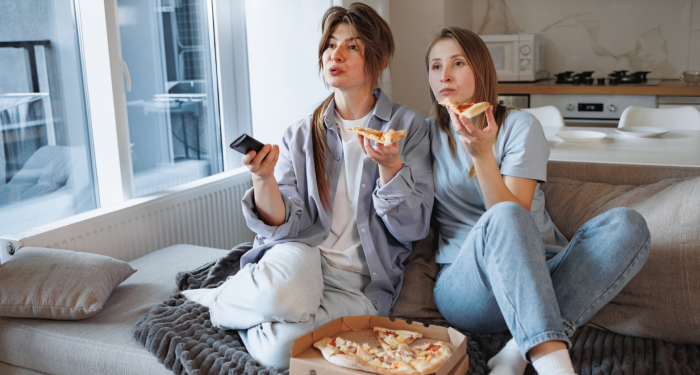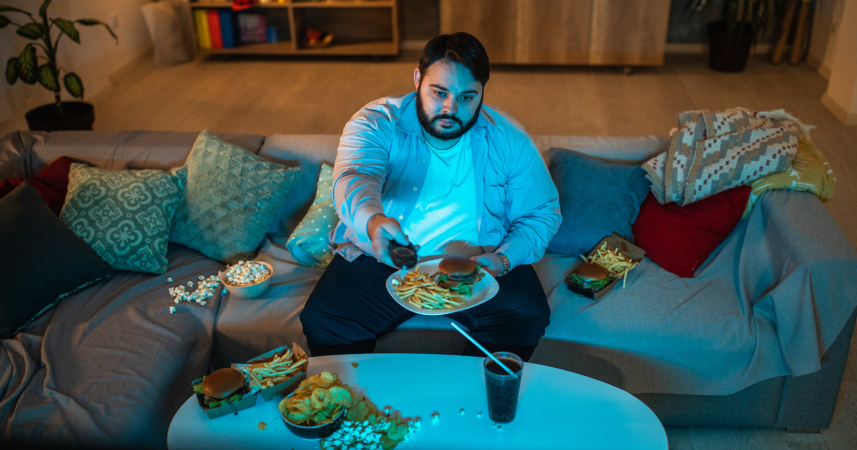
The modern ritual of scrolling through Netflix with rapidly cooling food reveals more about personality than you'd think.
There's a specific modern paralysis: food cooling while you scroll endlessly through streaming options, unable to commit to eating or watching without the other. This isn't indecision—it's a behavioral pattern revealing how certain personalities navigate comfort, stimulation, and the blurred line between necessity and entertainment.
Those who can't eat without watching aren't multitasking. They're demonstrating specific ways of processing experience, managing discomfort, and creating meaning from routine. These seven traits appear consistently in the food-plus-screen personality.
1. They have high sensitivity to understimulation
Eating alone without distraction feels like sensory deprivation. Just eating—tasting, chewing, swallowing—isn't enough stimulation. They need layered experiences to feel engaged.
This isn't boredom; it's optimal arousal theory. Their baseline stimulation needs are higher. Quiet meals register as uncomfortable emptiness, not peaceful mindfulness. They're not avoiding food—they're avoiding understimulation anxiety. Same people who need podcasts for cleaning, music for walking, background TV for sleeping. Silence isn't golden; it's threatening.
2. They're unconscious experience architects
These people don't eat dinner—they create dinner experiences. Shows must complement meal moods. Comedy for takeout, drama for home-cooked, reality TV for snacks. They're curating without knowing it.
This reflects high environmental sensitivity—awareness that context shapes experience. They understand food tastes different depending on what you're watching, that leftover pizza needs different programming than Sunday brunch. They're not picky; they're precise. Every meal becomes a micro-event requiring proper staging. Dinner isn't just dinner—it's production.
3. They struggle with transitional moments
The gap between activities—work ending, dinner starting—feels uncomfortable. They need bridges between life segments. Eating-watching serves as reliable transition ritual.
People who can't eat without watching struggle with liminal spaces generally. Undefined moments create anxiety. Watching while eating isn't procrastination—it's transition management. Moving from work-brain to rest-brain through dinner-and-show buffers better than simply stopping and starting. They're not avoiding; they're bridging.
4. They're secret optimizers
Eating while watching feels efficient—two needs met simultaneously. They've convinced themselves this saves time, though twenty-minute scrolling suggests otherwise.
This reflects productivity anxiety where even relaxation needs optimizing. Just eating feels wasteful. Just watching feels indulgent. Together, they cancel each other's guilt. It's eating salad to justify dessert—creating permission structures for pleasure through perceived efficiency. Optimization as anxiety management.
5. They have ritualistic comfort needs
The eating-watching combo isn't random—it's precisely calibrated comfort. Same spot, same setup, same scroll. Disrupting this ritual genuinely distresses them.
This indicates high need for predictable comfort. They're inflexible about relaxation—needing it delivered in specific packages. The ritual matters more than components. Bad food with good shows works. Good food without shows doesn't. They've created emotional regulation disguised as dining preference.
6. They're prone to analysis paralysis
Choosing what to watch takes forever because it feels monumentally important. Wrong choice ruins dinner. This pressure creates the paralysis that leaves food cooling.
This reveals perfectionist tendencies applied to low-stakes decisions. They've elevated entertainment selection to unusual importance. Fear of choosing wrong—wasting meal and viewing time—creates paralysis. They'd rather scroll with cooling food than commit to imperfect pairing. Stakes feel inflated because they've made routine sacred.
7. They experience eating as vulnerable
Eating without distraction feels exposing. Chewing sounds, consumption mechanics, bodily needs—all become hypervisible without entertainment's cover.
Even alone, they feel watched by themselves. Watching while eating provides cognitive distance from bodily functions. It's not about mindless eating—it's about avoiding mindful eating's intensity. They're not distracted from food; they're distracted from themselves eating. The screen provides necessary separation.
Final thoughts
These traits aren't flaws—they're adaptations to modern life's overwhelming options and constant stimulation. People who can't eat without watching have developed strategies for managing comfort, transition, and the strange vulnerability of meeting basic needs alone.
This pattern reflects broader anxieties: about productivity, silence, the body, choice. The food-screen ritual solves multiple psychological problems simultaneously. Creates structure in structureless time, provides stimulation for understimulated minds, offers predictable comfort.
The revelation isn't that some need entertainment while eating—it's what this reveals about living in an era of infinite choice and constant connection. These aren't people who can't be alone; they're people who've found being alone requires management strategies.
Maybe the question isn't why they can't eat without watching, but why eating alone, in silence, doing nothing else, has become so deeply uncomfortable. The food-screen ritual isn't the problem—it's the solution to problems we haven't named yet.
What’s Your Plant-Powered Archetype?
Ever wonder what your everyday habits say about your deeper purpose—and how they ripple out to impact the planet?
This 90-second quiz reveals the plant-powered role you’re here to play, and the tiny shift that makes it even more powerful.
12 fun questions. Instant results. Surprisingly accurate.