My carnivorous family happily ate 27 veggie burgers.
My brother-in-law Doug was flipping ribeyes on his new Traeger when I rolled up with a cooler full of plant-based patties. "You bringing fake meat to my real BBQ?" he asked, that particular brand of Texas skepticism dripping from every word. Behind him, my nephew Tyler was already setting up what he called the "veggie quarantine zone" on the far corner of the grill.
I'd volunteered to bring burgers to our annual Fourth of July reunion in Cedar Park, just outside Austin—35 relatives spanning three generations, most of whom consider brisket a food group. What I hadn't mentioned was that every single burger would be plant-based. Some made from black beans and quinoa. Others engineered to "bleed" like beef. A few wildcards that promised to taste exactly like the real thing.
I wanted to see what would happen when you put vegan burgers next to their beef counterparts without the baggage of labels and expectations.
By 2 PM, the temperature had hit 97 degrees and the coolers were running low on Lone Star. That's when I started my experiment.
The $127 lineup that started a family controversy
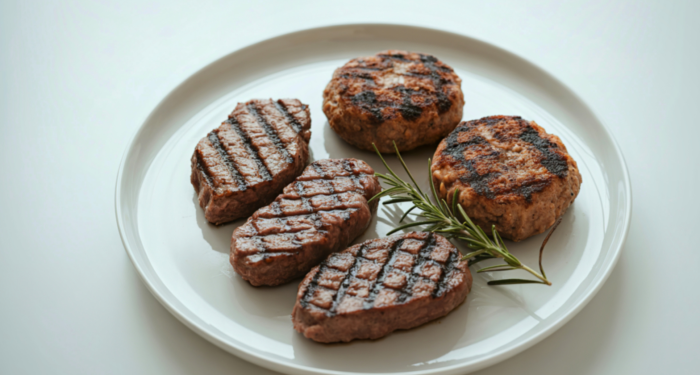
I'd bought twelve different varieties of veggie and vegan burgers from H-E-B, Whole Foods, and Aldi, spending $127 total. Plus, I'd made eight homemade mushroom-walnut burgers the night before—my secret weapon. The cheapest option: Aldi's Earth Grown at $2.99 for two patties. The priciest: Beyond Meat at $8.99 for two patties—more expensive per pound than the grass-fed beef Doug was grilling.
My system was simple. Each burger went on the grill at 375 degrees for four minutes per side, then got a numbered toothpick. No labels, no brands visible. I tracked everything in a spreadsheet on my phone: which ones people finished, which got abandoned after one bite, and the increasingly colorful commentary from my relatives.
The crucial distinction, I learned, wasn't between vegetarian (containing eggs or dairy) and vegan (purely plant-based). It was between burgers trying to imitate meat and those embracing their vegetable identity.
Beyond Meat: the struggling giant fails the taste test
I'd bought two packages of Beyond Burgers, partly for name recognition and partly out of curiosity.
My cousin Jennifer took one bite of burger number 4 and winced. "This tastes like disappointment with a weird metallic finish." She wasn't alone. Three other relatives independently mentioned an "off" aftertaste.
Only one of eight Beyond patties got eaten. The rest sat on the warming tray like evidence of the plant-based bubble deflating in real time.
The dark horse from Dr. Praeger's
While everyone avoided the Beyond Burgers, something unexpected was happening at the other end of the grill. My dad—who once famously declared ketchup a vegetable serving—was reaching for his third burger.
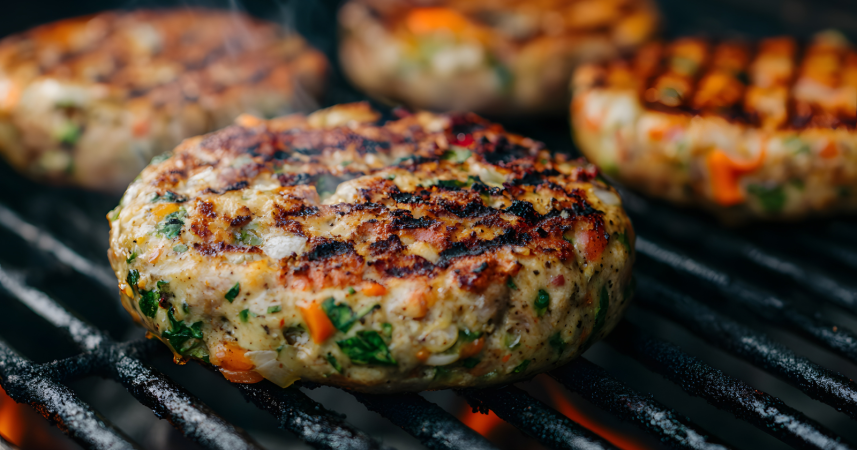
"What number is this?" he asked, pointing at the patty with visible chunks of carrot, corn, and peas.
It was number 7: Dr. Praeger's California Veggie Burger—$5.99 for four patties at H-E-B. Nothing fancy. No bleeding technology. No venture capital funding. Just vegetables, grains, and some egg whites formed into a patty. The kind of veggie burger that's been around since 1994 and doesn't pretend to be anything other than what it is.
Dr. Praeger's has always been my favourite. At our BBQ, the California variety disappeared fastest, with only two of eight patties remaining. The Black Bean Quinoa variety (number 9) also performed well, especially after my sister-in-law Maria discovered it held up to her aggressive topping strategy.
The MorningStar Farms comeback story
"Wait, is this the same black bean burger Mom used to force on us in middle school?" my younger brother asked, somehow making it sound like both an accusation and a compliment.
It was. MorningStar Farms Spicy Black Bean burgers have been around since the late '90s, outlasting dozens of trendy competitors. They've maintained their spot as the best-selling frozen black bean burger for a reason: that slightly spicy, smoky flavor works perfectly with pepper jack and chipotle mayo.
My teenage nieces Emma and Sofia demolished three of them, loading each with enough jalapeños to concern their mother. "These actually taste good," Emma said, genuine surprise in her voice. "Like, I'd eat these even if they weren't free."
At $6.49 for four patties, they cost less than half of what Beyond charges per burger.
The shocking Aldi upset
Nobody expected Aldi's Earth Grown Southwest Black Bean Chipotle Burger to be a contender. At $2.99 for two patties, it was our cheapest option. Doug literally laughed when I unwrapped them. "Those look like hockey pucks from the clearance freezer."
But Texas BBQ culture primes people for bold, spicy flavors. The Aldi burgers, with their chipotle kick and visible black beans, fit perfectly into that flavor profile. They developed a nice char on the grill, held together well, and had enough heft to feel substantial on a bun.
My aunt Linda, who drives past three grocery stores to shop at Aldi, ate two complete burgers—more than she'd eaten of Doug's ribeyes. "These are from Aldi? My Aldi?" she kept asking, as if there might be some fancier Aldi she didn't know about.
Only one of four patties remained by evening.
The homemade wildcard that almost stole the show
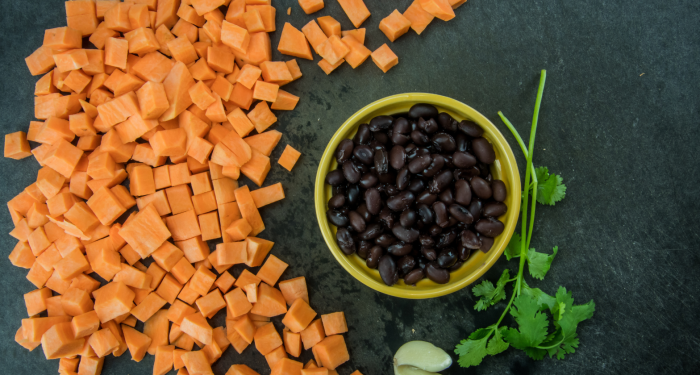
Between batches of store-bought patties, I snuck in my own creation—a mushroom-walnut burger I'd perfected over months of testing (get the recipe here). I'd made eight patties the night before, mixing cremini mushrooms, toasted walnuts, black beans, and smoked paprika into something that held together without being dense.
"Number 11 tastes homemade," my sister-in-law Maria said, immediately suspicious. "Nobody sells burgers with this much actual texture."
She was right. The homemade batch disappeared faster than anything except the Dr. Praeger's, with people asking if I'd brought more. My mom even took out her phone to photograph one, assuming it was some premium brand she needed to remember.
But here's what stopped me from declaring total victory: each patty took 45 minutes to make, cost about $2.25 in ingredients, and required cleaning my entire kitchen. Plus, I'd burned a batch the week before and nearly gave up entirely.
The 3 PM shift: from skepticism to seconds
Around 3 PM, the dynamic changed. People stopped asking which burgers were "the fake ones" and started requesting specific numbers. "Give me another number 7" became the afternoon's refrain.
Even Doug, self-appointed guardian of meat tradition, tried one. He took a bite of the Dr. Praeger's California, chewed thoughtfully, then took another bite. "It doesn't taste like beef," he finally said. "But it doesn't taste like it's trying to be beef either. It just tastes... good."
My mother-in-law, watching from her lawn chair, offered her own analysis: "The ones that look like vegetables are going faster than the ones trying to look like meat."
She was right.
The complete consumption data
By 6 PM, when we started cleaning up, here's what my spreadsheet showed:
The Winners (>75% consumed):
- Homemade Mushroom-Walnut Burger: 7 of 8 eaten
- Dr. Praeger's California Veggie Burger: 6 of 8 eaten
- MorningStar Farms Spicy Black Bean: 5 of 8 eaten
- Aldi Earth Grown Southwest Black Bean Chipotle: 3 of 4 eaten
The Middle Ground (25-50% consumed):
- Dr. Praeger's Black Bean Quinoa: 4 of 8 eaten
- Gardein Chipotle Black Bean: 2 of 6 eaten
- Impossible Burger: 2 of 8 eaten
The Failures (<25% consumed):
- Beyond Burger: 1 of 8 eaten
- Boca Original Vegan: 0 of 4 eaten
- Simple Truth Plant-Based: 0 of 4 eaten
- Field Roast FieldBurger: 1 of 4 eaten
- Sweet Earth Awesome Burger: 0 of 4 eaten
- 365 Plant-Based Burger: 0 of 4 eaten (never opened)
The pattern becomes clear
The winners shared three characteristics: visible vegetables or beans, bold seasoning that complemented rather than masked their plant base, and prices under $2 per patty (except for the homemade version). The store-bought winners averaged $1.50 per burger.
The losers were trying to replicate beef's texture and color, relied on pea protein isolate and mysterious "natural flavors," and cost over $3 per patty—averaging $4.25 per burger.
The homemade burger proved that with effort, you could beat anything store-bought. But as Doug had pointed out, that effort made it special-occasion food, not a weeknight solution. The real sweet spot was finding store-bought options that came close enough to homemade quality without the time investment.
When people know they're eating a veggie burger, they prefer ones that taste like vegetables. The uncanny valley effect of almost-but-not-quite meat proves more off-putting than honest vegetables.
The revelation during cleanup
As we packed up leftovers, I finally revealed that all twelve burger varieties had been plant-based. The reactions ranged from disbelief ("Even number 7?") to mild betrayal ("I ate THREE vegetarian burgers?") to practical acceptance ("Well, they were free").
Doug stood there holding his beer, processing this information. "You know what actually bugs me?" he said. "It's not that they were vegetarian. It's that the best ones were the cheap ones that look like vegetables, and the worst ones were these expensive ones pretending to be meat."
He pulled out his phone and started looking up Beyond Meat. "Says here they're in financial trouble. Down 98% from their peak." He scrolled further. "Maybe if they spent less time trying to make plants bleed and more time making them taste good, they wouldn't need a billion dollars in debt."
The Texas verdict, three weeks later
The real test came in the follow-up. My dad called to ask where to buy "those number 7 burgers with the corn pieces." Doug added MorningStar Farms black bean burgers to his latest Costco run—"for variety," he insisted. Maria started buying the Aldi ones for weeknight dinners. Three people asked for my homemade burger recipe, though I suspect only one will actually make them.
Nobody's giving up beef. This is still Texas. But they're adding these veggie burgers into their rotation, not as meat substitutes but as their own category. The same way you might choose a portobello mushroom not because it's pretending to be a steak, but because a grilled portobello with balsamic is delicious on its own terms.
What this means for the plant-based industry
The backyard experiment revealed something the plant-based industry might not want to hear. After years and millions in R&D spending to replicate meat, the winners at a Texas BBQ were simple veggie burgers that have been around for decades.
The surprise wasn't which burgers survived the meat-eaters. It was why they survived. In a state where beef is practically religion, the plant-based winners weren't the ones genuflecting at the altar of meat. They were the ones confident enough to be vegetables, priced reasonably enough to try without commitment, and tasty enough to request by number at your next family BBQ.
Even if that number is hand-written on a toothpick by your sister-in-law who's definitely documenting everything for her own amusement.