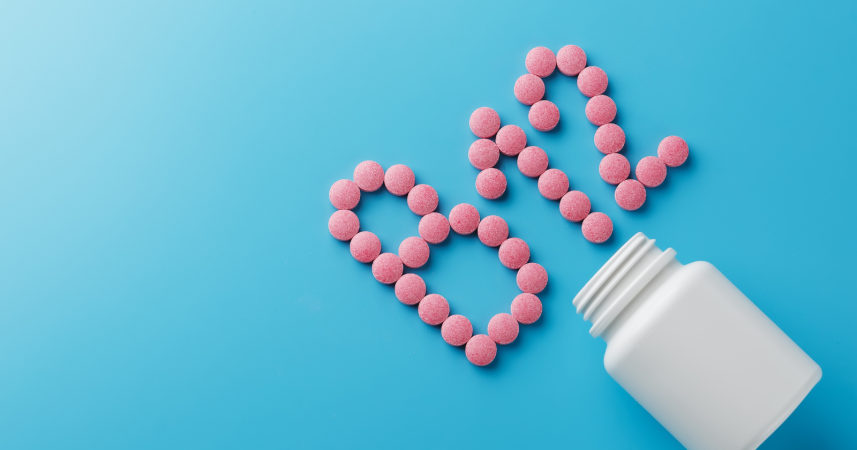
Understanding B12 isn't about fear or deficiency panic; it's about taking ownership of your health with the same intention you bring to every other part of your vegan journey.

Add VegOut to your Google News feed. 
Five years into my vegan journey, I found myself sitting in my doctor's office, staring at bloodwork results that told a story I hadn't expected. My B12 levels were low.
Not dangerously so, but enough to explain the foggy thinking I'd been attributing to stress and the fatigue I'd blamed on my running schedule. I'd been so focused on getting enough protein and iron that I'd let B12 slip through the cracks.
That moment became a turning point. Not because it shook my commitment to veganism, but because it reminded me that caring for ourselves requires attention and intention.
B12 isn't complicated once you understand it, but it does demand that we show up for our health with the same thoughtfulness we bring to our ethics.
What B12 actually does in your body
Vitamin B12 is one of those nutrients that works quietly behind the scenes until something goes wrong. It plays a critical role in forming red blood cells, supporting neurological function, and synthesizing DNA.
Without adequate B12, your body can't produce healthy red blood cells, leading to a type of anemia that leaves you exhausted and weak.
The neurological piece is what concerns me most. B12 helps maintain the myelin sheath that protects your nerves. When levels drop too low for too long, you might experience tingling in your hands and feet, difficulty with balance, or cognitive changes like memory problems and difficulty concentrating.
According to the National Institutes of Health, neurological damage from B12 deficiency can sometimes be irreversible if not caught early. That's not meant to scare you. It's meant to underscore why this particular nutrient deserves your attention.
Why vegans need to pay special attention
Here's the reality: B12 is produced by bacteria, and in our modern food system, the most reliable sources are animal products where B12 has accumulated. Plants don't make B12.
Some fermented foods and certain algae contain B12 analogs, but these aren't reliably absorbed by the human body and may even interfere with true B12 absorption.
This doesn't mean veganism is nutritionally incomplete. It means we live in a world where supplementation makes sense. Think about it this way: even the animals raised for food are often supplemented with B12 because industrial farming has disrupted natural bacterial exposure.
We're all navigating the same modern reality. We're just being more direct about it.
Have you ever stopped to consider how many nutrients in the standard diet come from fortification rather than the food itself? Iodine in salt, vitamin D in milk, folic acid in bread. Supplementing B12 as a vegan is simply another form of intentional nutrition.
How much you actually need
The recommended daily intake for adults is 2.4 micrograms, but absorption is where things get interesting.
Your body can only absorb a small amount of B12 at a time through a process that requires intrinsic factor, a protein made in your stomach. This means that taking a single large dose isn't as efficient as you might think.
Most vegan health experts recommend one of two approaches: either take a daily supplement of at least 25 to 100 micrograms, or take a weekly supplement of 2,000 micrograms. The higher doses account for the limited absorption rate.
Research published in the European Journal of Clinical Nutrition suggests that vegans who don't supplement consistently show significantly lower B12 levels than those who do, regardless of how many fortified foods they consume.
What does your current approach look like? Are you relying on fortified foods alone, or have you built supplementation into your routine?
Fortified foods versus supplements
Fortified foods can absolutely contribute to your B12 intake. Nutritional yeast, plant milks, breakfast cereals, and some meat alternatives are commonly fortified. The challenge is consistency.
You'd need to consume fortified foods two to three times daily to meet your needs, and fortification levels vary widely between products and brands.
I think of fortified foods as a helpful layer rather than a complete solution. They're wonderful for maintaining levels once you've established a good baseline, but relying on them exclusively requires more vigilance than most of us can realistically maintain. Life gets busy.
We travel, we change our eating patterns, we forget to check labels.
Supplements offer simplicity. A daily or weekly pill, sublingual tablet, or spray removes the guesswork. Cyanocobalamin is the most studied and cost-effective form, though methylcobalamin is also popular. Both work. Choose whichever fits your life and budget.
Getting tested and knowing your numbers
One of the most empowering things you can do is get your B12 levels tested. A simple blood test can measure serum B12, though this test has limitations.
It can appear normal even when your body's stores are depleted. For a more accurate picture, ask your doctor about testing methylmalonic acid (MMA) levels, which rise when B12 is functionally low.
I get my levels checked annually now, usually alongside my regular bloodwork. It takes the mystery out of the equation and lets me adjust my approach based on actual data rather than guesswork.
The Harvard T.H. Chan School of Public Health recommends that vegans monitor their B12 status regularly, especially those who have been plant-based for several years.
When was the last time you had your B12 checked? If you can't remember, it might be worth scheduling.
Final thoughts
Taking B12 seriously isn't an admission that veganism is lacking.
It's a recognition that we live in bodies that have specific needs, and meeting those needs is an act of self-respect. I've come to see my daily supplement as no different from my morning meditation or my evening stretches. It's simply part of how I take care of myself.
The goal isn't perfection. It's awareness. Once you understand what your body needs and build simple systems to provide it, B12 becomes one less thing to worry about.
And that frees up mental space for everything else that matters: the meals you share, the trails you run, the life you're building one intentional choice at a time.
What’s Your Plant-Powered Archetype?
Ever wonder what your everyday habits say about your deeper purpose—and how they ripple out to impact the planet?
This 90-second quiz reveals the plant-powered role you’re here to play, and the tiny shift that makes it even more powerful.
12 fun questions. Instant results. Surprisingly accurate.