When my doctor handed me a list of heart-healthy substitutions, I mentally prepared for a life of bland deprivation—I couldn't have been more wrong.

Add VegOut to your Google News feed. 
Last spring, my annual checkup delivered news I wasn't expecting.
Despite being vegan for nearly a decade and running trails most weekends, my cholesterol numbers had crept into concerning territory.
My cardiologist, a patient woman who's seen it all, reminded me that genetics plays a significant role and that even plant-based eaters aren't immune to cardiovascular concerns.
She handed me a printed list of suggested swaps. I read through it in her office, already composing my internal objections.
Nutritional yeast instead of cheese? Ground flaxseed in my morning smoothie? I'd been vegan long enough to know what I liked, and this list felt like a punishment.
But I trusted her, and more importantly, I trusted the research she pointed me toward. Six months later, I'm genuinely surprised by how wrong my predictions were.
1. Walnuts instead of croutons on salads
I love texture. The crunch of a crouton on a Caesar salad was something I genuinely looked forward to at lunch.
When my cardiologist suggested swapping them for walnuts, I pictured sad, soggy salads that felt more like medicine than a meal.
Here's what I didn't anticipate: walnuts bring a richness that croutons never did. They're buttery, slightly bitter, and they hold up beautifully against a tangy dressing.
Research published in the journal Circulation found that regular walnut consumption is associated with lower cardiovascular disease risk, which gave me extra motivation to stick with the change.
Now I toast them lightly with a pinch of smoked paprika. Have you ever tried warming nuts before adding them to a cold salad? The temperature contrast alone makes this swap worth it.
2. Oat milk instead of coconut milk in coffee
Coconut milk had been my coffee companion for years.
I loved its thickness, the way it made my morning cup feel indulgent. Oat milk seemed watery by comparison, a compromise I wasn't willing to make.
But coconut milk is high in saturated fat, and my cardiologist wanted me to reduce my intake. So I tried oat milk, expecting disappointment.
Instead, I found something that actually froths better and adds a subtle sweetness that complements dark roast beautifully.
The transition took about two weeks before I stopped noticing the difference.
Now, when I occasionally have coconut milk, it tastes almost too heavy. Our palates adapt more readily than we give them credit for.
3. Ground flaxseed instead of chia seeds in smoothies
I'd been a chia seed devotee for years. The pudding-like texture, the way they thickened my post-run smoothies. Flaxseed seemed like a downgrade, something my mother's generation sprinkled on yogurt.
What I learned is that ground flaxseed offers something chia doesn't: a nutty, almost toasted flavor that pairs remarkably well with banana and peanut butter.
More importantly, flaxseed is one of the richest plant sources of alpha-linolenic acid (ALA), an omega-3 fatty acid that supports heart health.
I now keep a bag of ground flaxseed in my freezer and add two tablespoons to my morning smoothie without thinking twice.
Sometimes the swaps we resist most become the habits we forget we ever questioned.
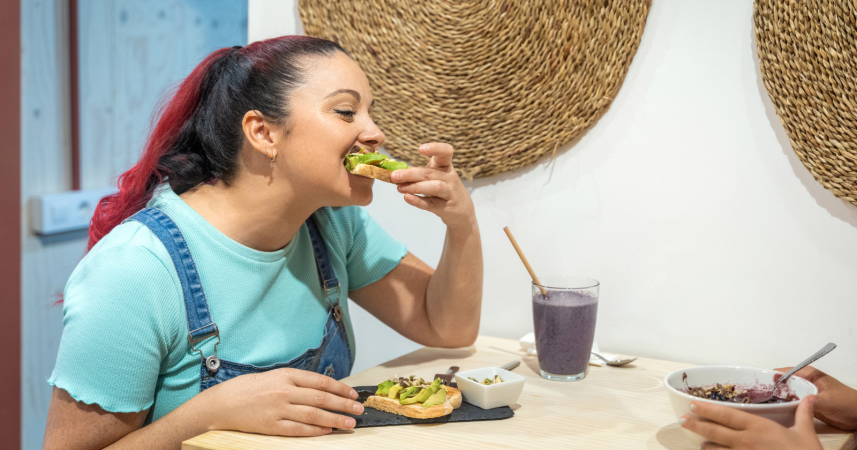
4. Avocado instead of vegan butter on toast
This one felt personal. I'd spent years finding the perfect vegan butter, one that melted properly and didn't taste like chemicals.
Avocado on toast seemed like a cliché, something influencers posted about rather than something I actually wanted to eat.
My resistance was pure stubbornness. Avocado, mashed with a fork and seasoned with flaky salt and a squeeze of lemon, is objectively delicious.
It's creamy, satisfying, and packed with monounsaturated fats that support healthy cholesterol levels.
What surprised me most was how much more filling this swap made my breakfast. I stopped reaching for a mid-morning snack.
Have you noticed how the foods that truly nourish us tend to keep us satisfied longer?
5. Tahini instead of oil-based dressings
I'm particular about salad dressing. I'd perfected a balsamic vinaigrette that I made weekly, and the idea of replacing it with tahini felt like being asked to give up a small pleasure for no good reason.
But tahini-based dressings, thinned with lemon juice and a touch of maple syrup, have become my new obsession.
They cling to greens differently, coating each leaf with a creamy richness that oil-based dressings can't replicate. Tahini also provides calcium and plant-based protein, which my cardiologist appreciated.
The key is finding a tahini you genuinely like. I went through three brands before landing on one that's smooth rather than bitter. Don't give up if your first attempt disappoints you.
6. Edamame instead of roasted chickpeas for snacking
Roasted chickpeas had been my go-to crunchy snack for years.
I made them weekly, experimenting with different spice blends. Edamame seemed boring by comparison, something you eat mindlessly at a sushi restaurant.
What changed my mind was convenience. Frozen edamame, steamed and sprinkled with sea salt, takes five minutes.
On busy writing days when I'm deep in a deadline, that simplicity matters. And the protein content keeps my energy stable through afternoon hours when I used to crash.
I still make roasted chickpeas occasionally, but edamame has become my weekday staple.
Sometimes the best swaps aren't about finding something better, but finding something sustainable.
Final thoughts
Six months into these changes, my cholesterol numbers have improved enough that my cardiologist is pleased.
But the numbers aren't what surprised me most. What surprised me is how quickly resistance transforms into preference when we approach change with curiosity rather than resentment.
I spent years in finance watching people make fear-driven decisions, and I've learned that the same principle applies to health.
When we change from a place of fear, we white-knuckle our way through. When we change from a place of curiosity, we discover things we never knew we'd love.
Which swap on this list feels most impossible to you? That's probably the one worth trying first.
What’s Your Plant-Powered Archetype?
Ever wonder what your everyday habits say about your deeper purpose—and how they ripple out to impact the planet?
This 90-second quiz reveals the plant-powered role you’re here to play, and the tiny shift that makes it even more powerful.
12 fun questions. Instant results. Surprisingly accurate.