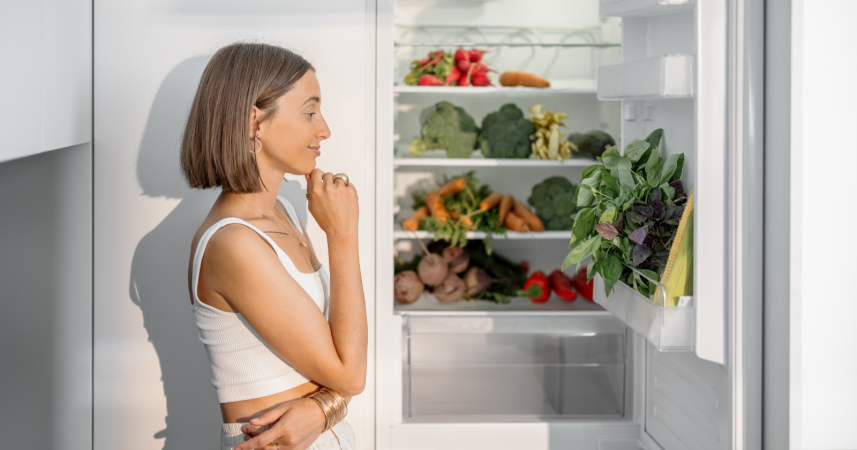
These underrated fridge staples are the unsung heroes of effortless plant-based meals.

Add VegOut to your Google News feed. 
I love eating. Bold flavors, fresh textures, satisfying meals—I’m here for all of it. Cooking, though? Not so much.
Despite growing up in a family of enthusiastic home cooks, these days my schedule doesn’t exactly allow for multi-step recipes and sinkfuls of dishes. Between work, errands, and the general pace of life, spending an hour a night on meal prep isn’t sustainable—for me or the planet.
So I built a system. A fridge framework, if you will.
It’s based on one principle: stock smart, not big. By keeping a short list of versatile, plant-based essentials on hand, I’ve created a low-effort way to eat well—without compromising on health, flavor, or sustainability.
Here’s what always earns space in my fridge—and why.
1. Pre-cooked grains: the humble base layer
If I had to crown one fridge MVP, it would be precooked grains. Think brown rice, farro, quinoa, or even barley. I cook a big batch on Sunday (or buy frozen pouches when I’m really leaning out) and keep them in glass containers front and center.
Why? Because when hunger strikes, decisions get lazy. Having a ready-to-go grain turns random fridge contents into an actual meal—grain bowls, quick stir-fries, or impromptu burritos.
Pro tip: Add a splash of veggie broth when reheating to revive texture. For extra flavor, cook your grains in broth with a garlic clove or bay leaf from the start.
2. Marinated tofu or tempeh: instant protein punch
Raw tofu? A blank canvas. But marinated tofu? That’s dinner.
I usually press and cube a couple of blocks, then let them soak in tamari, sesame oil, garlic, and a little maple syrup.
Tempeh gets the same treatment or a smoky BBQ twist. Once marinated, it’s fridge gold—ready to be tossed into bowls, wraps, salads, or eaten cold with pickles and crackers (yes, really).
Why it works: Keeping pre-flavored protein handy keeps you from reaching for overly processed faux meats or takeout. It also slashes prep time by half and helps you avoid food waste from un-used tofu bricks.
3. Pickled things: the flavor lifter
In my opinion, there is no sad vegan bowl that a spoonful of pickled red onions can’t save.
Seriously—whether it’s quick-pickled carrots, dilly cukes, or leftover radishes soaking in rice vinegar, a little tang adds brightness and crunch to any dish. These also double as palate cleansers and gut-friendly ferments if you let them sit long enough.
Bonus: They last forever (okay, weeks), and help you use up produce before it goes limp in the crisper drawer.
4. Leafy greens, washed and ready
I admit, I don't have the patience to wash lettuce at 8 p.m. So I prep a big batch once a week: rinse, dry, and store it in a salad spinner lined with a towel. That way I can grab a handful for salads, sandwich toppers, or sautéed sides without fuss.
Pro move: Mix two or three types—like spinach, baby kale, and romaine—to avoid salad fatigue.
5. A rotating dip or spread
One week it’s cashew queso. The next, a garlicky hummus. Sometimes it’s baba ganoush, and sometimes it’s just smashed avocado with lemon and chili flakes.
Having one ready-to-scoop dip means snack boards come together in seconds, wraps have built-in flavor, and grain bowls feel complete. It’s the bridge between “ingredients” and “meal.”
DIY or store-bought? Both. Just check for clean ingredients and skip plastic when possible (some co-ops and refill stores offer bulk dips!).
6. Roasted vegetables: the meal preppers' secret
This one’s for Sunday-me, not Thursday-me. But roasting a sheet pan of veggies—sweet potatoes, cauliflower, zucchini, broccoli—pays dividends all week.
They’re endlessly versatile: turn them into tacos, fold into pasta, layer into sandwiches, or simply eat cold with a tahini drizzle. They even work in breakfast hashes or blended into soups.
Climate bonus: Roasting reduces spoilage from forgotten produce, and cooking in bulk uses less energy than roasting nightly.
7. Something fermented: funk, fizz, and gut-friendly flair
There’s always at least one jar in my fridge that fizzes when opened. That’s my unofficial rule.
Whether it’s tangy kimchi, umami-rich miso, probiotic-packed vegan yogurt, or even a spoonful of sauerkraut, fermented foods are my shortcut to adding complexity, digestion support, and a little magic to everyday meals.
A forkful of kimchi livens up a grain bowl or vegan grilled cheese. Miso paste stirred into broth gives you instant depth with zero chopping. A dollop of yogurt cools down spicy dishes or thickens smoothies with probiotic creaminess.
Tips from my fridge:
-
Store miso in an airtight glass container—it’ll last forever and can sub for bouillon or soy sauce in a pinch.
-
Look for live-cultured labels on pickles and kraut; they pack the most probiotic benefits.
-
And if you’re new to fermented flavors, start small. Add a spoonful to something familiar and let your palate acclimate. It’s an acquired joy—like black coffee, or that one alt-pop song you didn’t get until the third listen.
Planet win: Fermentation preserves produce, meaning less food waste. It also encourages more local, seasonal eating—cabbage and carrots in winter, cukes and chilies in summer. And many ferments come in reusable jars (or better yet, are easy to make at home).
8. Nut or seed butter (that’s not just for toast)
Peanut butter sandwiches are a childhood classic—but nut and seed butters can do so much more than hold hands with jam. I always have at least one jar chilling in the fridge, be it almond, sunflower, tahini, or cashew.
These creamy powerhouses are a godsend when dinner needs to happen fast and flavor still matters.
Stir a spoonful into warm noodles with soy sauce, lime, and chili flakes for a five-minute satay sauce. Swirl into oatmeal with cinnamon and bananas for a protein-rich breakfast. Or drizzle tahini over roasted carrots with a pinch of cumin for a side dish that eats like a story.
Kitchen tip: For the creamiest texture, store the jar upside-down before opening. The oils redistribute naturally, saving your wrists from that dreaded first-stir cement block.
9. Citrus and fresh herbs: the finishing crew
These are the sparkly earrings of your fridge lineup—small, but transformative. I keep a couple of lemons and limes (ideally organic, stored loose or in breathable bags) and a bundle of herbs like cilantro, parsley, or dill nestled in damp paper towels inside a jar or produce keeper.
Why? Because just a squeeze of citrus or a scattering of herbs can revive tired leftovers, balance richness, and add brightness that wakes up your palate.
That bowl of lentils? A spritz of lemon turns it zesty. Yesterday’s roasted veg? Toss with chopped parsley and tahini and it’s a whole new vibe.
Planet bonus: Leftover herb stems can go into stocks, chimichurri, or compound butters. Citrus peels? Steep them for DIY cleaning vinegar or zest them into cookie dough before composting.
The bottom line: Stock smart, not big
If there’s one lesson I’ve learned, it’s that eating well as a low-effort vegan isn’t about packing your fridge with specialty products or meal-prepping every bite. It’s about curating a set of versatile, nourishing components that do the heavy lifting for you.
Start with a grain, a green, a protein, and a punch of flavor—then mix, match, and remix. Suddenly, that fridge of yours is less of a chore and more of a choose-your-own-adventure board.
Why it matters
Beyond convenience and flavor, this approach is a quiet act of sustainability. You’re:
-
Reducing food waste by prepping only what you’ll use.
-
Cutting energy use through batch cooking.
-
Avoiding plastic-heavy takeout with ready-to-go meals at home.
-
Supporting your health by skipping ultra-processed quick fixes.
And maybe most importantly, you’re proving that eating plant-based doesn’t have to be a performance. It can be simple, satisfying, and totally fridge-friendly.
Even if you hate cooking.
What’s Your Plant-Powered Archetype?
Ever wonder what your everyday habits say about your deeper purpose—and how they ripple out to impact the planet?
This 90-second quiz reveals the plant-powered role you’re here to play, and the tiny shift that makes it even more powerful.
12 fun questions. Instant results. Surprisingly accurate.