From how you treat the barista to how long you linger with your laptop, your behavior in a café says more about your social class than you might think. Subtle details—like how you order, tip, or handle mistakes—reveal far more than clothes or coffee choice ever could. Here’s what your café habits might be telling the world.
Spend enough time in cafes and you start to notice things.
Not just the coffee, but the people—their tone, the way they order, how they handle space, the subtle social signals that speak louder than the drink in their hand.
We all like to think we’re immune to these cues, but truthfully, the smallest habits often reveal the most about us.
From how we treat staff to how we occupy a table, our cafe behavior is a mirror of our upbringing, education, and—yes—our social class.
Here are eight of the most telling.
1) How you treat the barista
Let’s start with the obvious one.
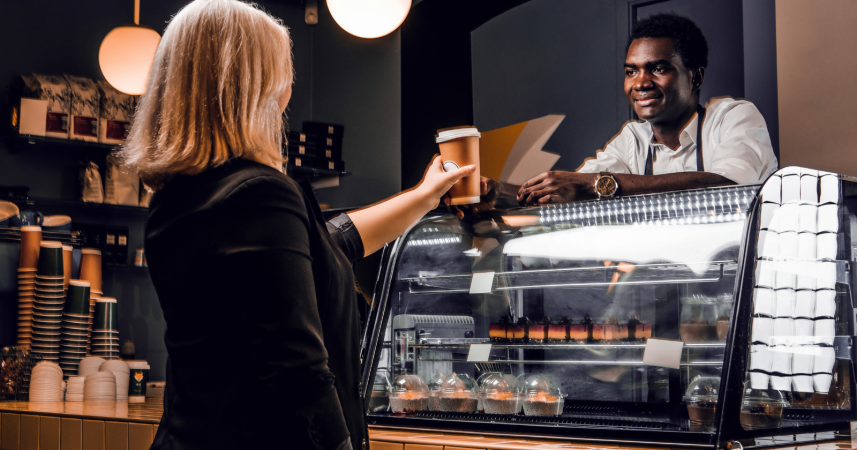
You can tell almost everything you need to know about someone by how they treat the person behind the counter.
Do they make eye contact and say “please” and “thank you,” or do they bark an order without looking up from their phone?
People from more privileged backgrounds are often taught (explicitly or implicitly) that service workers are invisible.
Those who’ve spent time working in hospitality, or who value empathy, tend to do the opposite—they acknowledge the person making their coffee as an equal.
When I worked in fine dining, our best guests were never the ones with the flashiest watches. They were the ones who said “thanks” and remembered our names.
You can’t fake that kind of class—it’s built from respect, not money.
2) What you do after you finish your drink
When you’re done, do you leave your cup on the table or bring it back to the counter?
Some people will argue this depends on the country or the type of cafe, and that’s true—but it’s also a behavior rooted in social awareness.
People who have an ingrained sense of etiquette tend to clean up after themselves, even when they don’t have to. They understand that someone else will have to do it otherwise.
It’s not about being overly polite—it’s about recognizing invisible labor.
And those who grew up with exposure to well-run spaces, whether in hospitality or at home, usually carry that understanding with them.
3) How you order
There’s a huge difference between confidence and entitlement at the counter.
Some people order like they’re performing—loud voice, exaggerated gestures, maybe a complaint about prices thrown in for good measure.
Others simply know what they want, say it clearly, and move on.
The truth is, how you order your drink reflects how comfortable you are navigating social hierarchies.
Those who’ve had to earn respect in life tend to be measured and polite. Those who assume it’s automatic often mistake rudeness for confidence.
And then there’s the indecisive over-apologizer who spends five minutes studying the menu and still ends up asking, “What’s good?” (I’ve been that guy.)
That usually says less about class and more about self-assurance. Still, it’s telling.
4) How you use space

Next time you’re in a cafe, look at how people handle space.
Does someone spread their belongings across multiple tables? Do they treat their laptop, charger, and tote bag like border fences?
Taking up more than you need, especially in a busy cafe, suggests a certain detachment from others’ needs. It’s the public equivalent of parking your SUV across two spaces.
On the other hand, people who are used to shared environments—public transport, small apartments, coworking spaces—tend to be more spatially considerate.
They stack their things neatly, make room for others, and read the energy of the room.
It’s not about being uptight; it’s about being aware.
5) How long you stay
Every barista knows that customer—the one who orders a single black coffee and occupies a table for three hours with their laptop, plugged into the only outlet.
There’s nothing wrong with working from a cafe. But the way you do it reveals a lot. Do you order another drink after an hour?
Do you take calls loudly without headphones? Do you acknowledge that others might also need a seat?
In my restaurant days, we had a rule: you can stay as long as you want, as long as you keep ordering. It wasn’t written anywhere—it was just good manners.
People who understand that tend to come from environments where consideration and reciprocity were modeled. Those who don’t… usually didn’t.
6) What you talk about
You can also tell a lot by what someone chooses to discuss in a public space.
Loud phone calls about investments, heated political debates, or complaints about “lazy staff” are classic markers of insecurity disguised as confidence.
The truly comfortable don’t need to broadcast status—they project it quietly, often through understatement.
There’s a sociological pattern here: upper-middle-class individuals tend to avoid overt displays of wealth or authority in casual settings.
The performative chatter often comes from those trying to signal belonging to a tier they’re not entirely sure they’ve reached.
That’s not judgment—it’s psychology. When we feel out of place, we compensate. And few places trigger that like a cafe filled with laptops, latte art, and quiet ambition.
7) How you handle mistakes
This one’s subtle but powerful.
Your drink’s wrong. The milk’s off. The barista forgot your croissant. What happens next?
Some people sigh loudly or make a scene. Others simply point it out, smile, and let it go.
Grace under inconvenience is one of the strongest social indicators there is. It’s the ability to assert your needs without demeaning someone else.
People from higher social strata—at least the ones with genuine class—understand that mistakes happen.
They address the issue calmly and move on. Those with something to prove often see mistakes as personal offenses.
When I trained restaurant staff, I always said: “You can tell who’s been served before by how they react when things go wrong.”
The ones who’ve experienced real service don’t panic—they just expect it to be made right.
8) How do you tip
And finally, the money moment.
You can argue that tipping culture shouldn’t exist (I’d agree), but it still does—and how you handle it says a lot.
People who’ve worked in service know what those few extra dollars mean. People who haven’t often tip based on mood, convenience, or ignorance.
The size of the tip matters less than the consistency of the habit.
Do you tip because you genuinely value the service, or because you feel pressured to? Do you round up automatically, or do you analyze the total and calculate down to the cent?
In hospitality, an act of tipping has always been a kind of social litmus test. It doesn’t measure wealth—it measures perspective.
And here’s the kicker: the people who can least afford to tip are often the ones who do it most generously. That’s class in its purest form.
The bottom line
At the end of the day, cafes are tiny theaters of social behavior. Every action—where you sit, what you say, how you order—tells a story about what you value and how you were raised.
But this isn’t about snobbery. It’s about awareness.
Our habits in public spaces reveal how much we respect others, how comfortable we are in our own skin, and whether our idea of “class” comes from money or from manners.
So next time you’re sipping your latte, pay attention—not to who’s wearing what, but to how people move through the space.
That’s where the real distinction lies.