Taste is learned, not ordained; what’s strange today can be satisfying tomorrow.
You know that feeling when you travel, order something “quintessentially local,” and your brain does a double-take at the first bite?
I’ve eaten my way through tasting menus and street carts on five continents and I’ve learned that what feels normal in one country can be a head-scratcher somewhere else.
Food is identity, nostalgia, and a mirror that shows our habits, our history, and the stories we tell ourselves.
Today, let’s have some fun with five American favorites that the rest of the world often finds… well, a little bizarre.
I’m not here to poke fun, rather, I'm here to explore why these dishes hit so hard in the US, why they raise eyebrows elsewhere, and what they teach us about taste, culture, and personal growth.
Ready to challenge your palate—and maybe your assumptions?
1) Peanut butter and jelly
Did you grow up on PB&J?
If you’re American, it’s practically a childhood rite; if you aren't, the combo sounds strange.
Peanut butter is savory, salty, and heavy while jelly is sweet, glossy, and fruity.
Spread both on soft bread and you’ve got… dessert? Lunch? Both?
When I first served this to a European friend, he took one careful bite and asked, “Why are you eating cake for lunch?”
Fair point.
In much of the world, peanut butter isn’t a staple, and fruit preserves belong on a cheese board or hot toast—not with a legume paste and sliced bread from a plastic bag.
Here’s the genius: PB&J is macro-balanced comfort.
Protein and fat from the peanut butter, quick sugar from the jelly, and carbs from the bread.
It’s portable, cheap, and reliable—that’s modern American convenience in a sandwich.
Tip if you want to “adult” it up: Swap in seeded sourdough, use a no-sugar peanut butter and go for a high-quality jam with actual fruit chunks, then add a few flakes of sea salt.
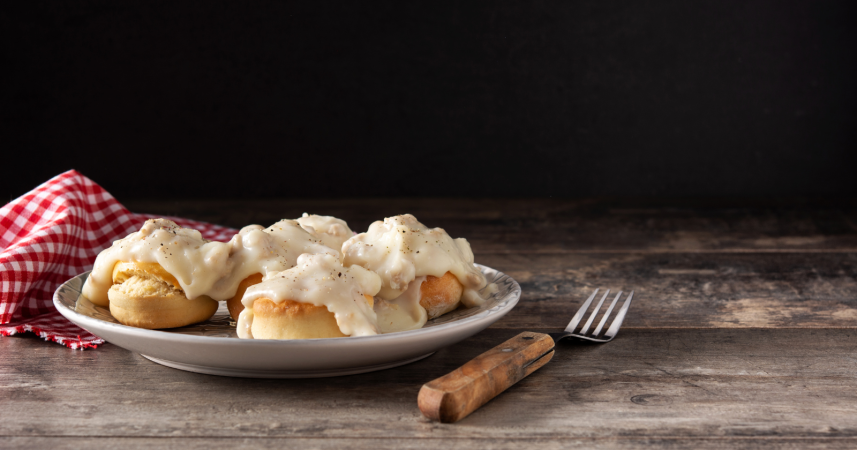
2) Biscuits and gravy
The first time I plated biscuits and gravy for a visiting chef from Tokyo, he paused.
“You poured béchamel on a scone?” he whispered.
American biscuits are tender, flaky, and buttery—more like savory scones than British “biscuits” (cookies).
The gravy is a thick, peppery, sausage-laced sauce with a texture somewhere between a cream soup and mortar.
To many non-Americans, the visual is the hurdle.
It’s beige on beige, no bright acidity, no crunch.
Just soft, rich, and heavy—especially for breakfast.
However, when you taste it, the story changes: The pepper cuts through, the pork brings depth, and the dairy smooths everything out.
It’s a hug in bowl form as it’s a dish born of scarcity and ingenuity.
Flour, fat, milk, and sausage ends become something deeply satisfying.
That’s frontier logic—stretch what you have and make it count.
Don’t underestimate ugly delicious.
A lot of our growth looks like beige mush while it’s happening—unsexy reps, quiet mornings, un-Instagrammable spreadsheets—but “ugly” is often where the results cook.
If you always chase flashy, you miss the food (and habits) that actually sustain you.
Want to lighten it? Add a side of quick-pickled onions for acid and snap, use a coarser grind on the sausage, and finish with chives.
3) Corn dogs
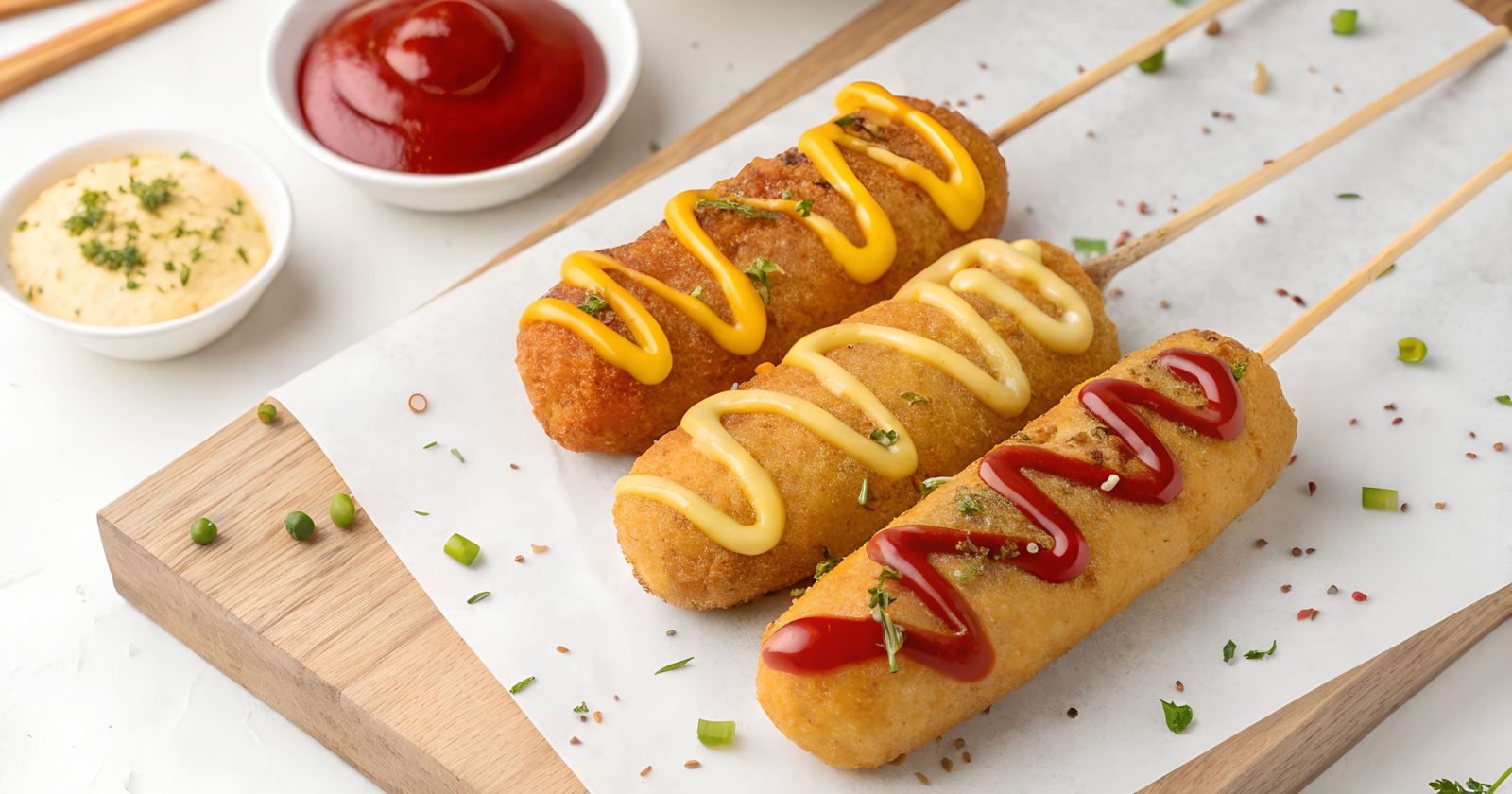
A hot dog on a stick dipped in cornmeal batter and deep-fried.
Try describing that to a French culinary student with a straight face.
“So… you made a sausage lollipop?”
Yes, and it slaps!
The corn dog is peak Americana; it’s county fairs, ball games, and summer nights—engineered for one-handed eating while you wander.
Outside the US, the idea of battering a hot dog and impaling it can read like food cosplay.
In cultures where street food is already thriving—think skewers in Southeast Asia or pinchos in Spain—the corn dog still feels like an outlier.
The batter is thick, the sweetness pronounced, and the dog itself is highly processed by design.
Yet in function, the corn dog is brilliant.
It’s fast fuel with a textural drama: Crackly shell, plush crumb, salty snap.
You taste childhood and carnival lights whether or not you lived them—that’s the power of cultural storytelling attached to a bite.
If you want an upgrade, try a cornbread-style batter with a touch of smoked paprika and a better-quality frank, and serve with mustard that has a bite.
4) Chicken and waffles
Here’s the part that blows minds abroad: Yes, it’s breakfast and also dinner.
It’s sweet, salty, and we pour maple syrup on top of fried chicken.
If you’ve never seen it, it looks like a menu typo but bite in and you meet one of the most successful flavor equations in the American playbook.
Crisp, juicy chicken, steam-belching waffle with a buttery, and custardy interior as syrup and hot sauce shaking hands like old friends.
It’s a texture and temperature party and a story of cultural crossover—Southern cooking, soul food traditions, and diner culture blending into a dish that shouldn’t work but does.
Outside the US, people often struggle with the “dessert meets lunch” thing.
In many places, sweet belongs at the end.
In America, sweetness threads through the middle: Think of barbecue sauces, candied yams with marshmallows, or maple-cured bacon.
Comfort first, rules second; opposites can belong together.
We’re taught to pick lanes—creative or analytical, ambitious or kind, disciplined or fun but some of the best results come from “and,” not “or.”
Pro-tip from the kitchen: Brine the chicken (even a quick buttermilk bath), use a yeast-raised waffle for open crumb, and add a dash of hot honey.
5) Jell-O salads
Finally, let’s talk about the pastel elephant in the room: Jell-O “salads.”
Lime gelatin suspending canned fruit and cottage cheese, strawberry Jell-O layered with Cool Whip and pretzels, and ambrosia with mini marshmallows and mandarin oranges.
If you grew up with it, it’s a time capsule; if you didn’t, it’s culinary science fiction.
Why the confusion abroad? In much of the world, gelatin desserts are clear, elegant, and served at the end of the meal, not beside the roast.
The American take folds in dairy, vegetables, or pretzels and then calls the whole thing a salad—which is already a language prank.
Moreover, the texture—bouncy, creamy, crunchy—surprises people who expect “jelly” to be smooth and solitary.
Mid-century America fell in love with convenience and novelty.
Packaged gelatin promised color, stability, and a fridge-friendly canvas for potlucks.
It was architecture you could eat, built from pantry items and optimism.
If you want a modern spin, set real-fruit gelées with leaf gelatin, fold in fresh whipped ricotta for creaminess, and add a salted pretzel crumb for contrast.
It keeps the spirit, upgrades the experience.
The bottom line
Taste is learned, not ordained.
That’s the beauty of food and growth; what’s strange today can be satisfying tomorrow once you understand the context and the value.
Take that energy into your life, keep the traditions that serve you, and upgrade the ones that don’t.
Try the odd pairings and ask better questions than “Is this normal?”
Ask if it works for you, then build a plate—and a life—that you’ll actually want to come back to every day.