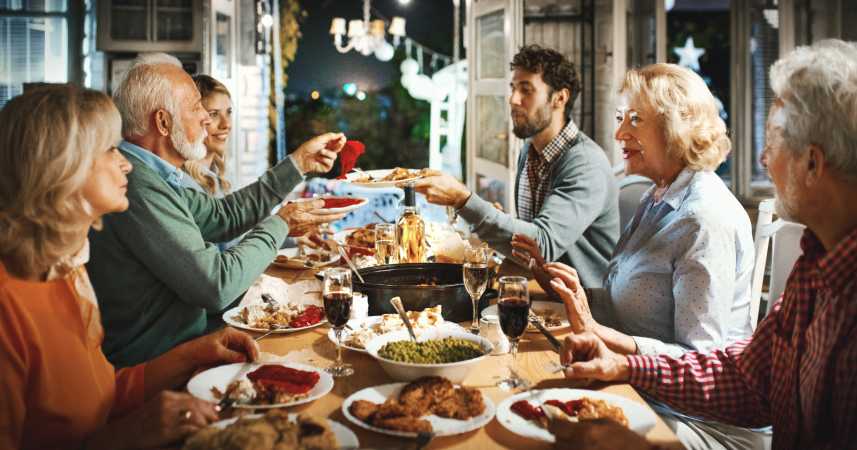
From sitting at the table every night to keeping phones away, these classic dinner traditions bring connection and warmth that younger generations often miss.

Add VegOut to your Google News feed. 
Dinner used to be more than just a meal — it was a daily ritual.
For many boomers, it was the centerpiece of family life, a moment to pause, connect, and reflect on the day.
These habits weren’t just about food.
They were about togetherness, tradition, and the subtle rules that brought structure to home life.
Today, younger generations live in a fast-paced, screen-filled world that often pushes shared meals to the sidelines.
While times have changed, some of these old-school dinner practices still hold a certain charm — and many people quietly miss them.
Here are eight dinner habits boomers continue to embrace, even as younger generations let them fade away.
1. Sitting down at the table every night
For boomers, dinner wasn’t a casual, “eat wherever you want” affair.
It meant everyone sitting down together at the dining table — no exceptions.
The table wasn’t just a place to eat, it was a place to talk, share stories, and mark the transition from day to evening.
This ritual created a sense of stability and routine that shaped family dynamics.
Today, many meals happen on the couch, in front of the TV, or scattered between rooms as everyone grabs food at different times.
Younger generations are often juggling busy schedules and don’t always make time to sit down together.
But boomers still tend to see the dinner table as sacred space.
It’s a small but powerful act of connection, and one that many families now miss.
The simple act of gathering at the table can make a home feel whole.
2. Cooking meals from scratch
While convenience foods have always existed, boomers grew up in an era where most dinners were cooked from scratch.
Casseroles, roasts, soups, and hearty sides were staples made with fresh ingredients.
This habit wasn’t just about health — it was about skill, pride, and tradition.
Many boomers still prefer to cook at home rather than rely heavily on takeout or frozen meals.
Younger generations often lean on pre-packaged options due to busy schedules, long commutes, or lack of cooking confidence.
While there’s nothing wrong with convenience, something gets lost when food stops being a creative act.
Cooking from scratch fosters a deeper relationship with what we eat and the people we feed.
It’s also more cost-effective in the long run, a lesson boomers know well.
For them, dinner isn’t just fuel — it’s an expression of care.
3. Setting the table properly
Boomers often grew up learning the “right” way to set a table, complete with placemats, cloth napkins, and neatly arranged silverware.
This practice signaled that dinner was an event, not just another task to check off the list.
It also taught respect for the meal and for the people gathered to share it.
Today, many households skip this step entirely, especially with informal dining becoming the norm.
Meals are often served directly from takeout containers or eaten with mismatched utensils on the go.
While there’s nothing wrong with casual dining, setting the table creates a sense of order and beauty.
Boomers still tend to value this small ritual, seeing it as a way to elevate even the simplest meal.
It reminds everyone to slow down and be present.
Younger generations could benefit from rediscovering this simple, grounding habit.
4. Saying grace or expressing gratitude
For many boomer families, dinner began with a moment of pause.
This could be a formal prayer, a simple “thank you,” or even a shared moment of silence.
The point wasn’t necessarily religious — it was about acknowledging the effort behind the meal and the privilege of having it.
Today, this practice has largely faded as schedules grow busier and traditions evolve.
Many younger families jump right into eating without a moment to reflect.
Boomers, however, often continue this ritual as a way of staying connected to gratitude and mindfulness.
It sets a tone of respect and presence that can shift the whole mood of the meal.
Even a quick acknowledgment can bring warmth and intention to the table.
5. Prioritizing home-cooked Sunday dinners
Sundays used to be synonymous with big family dinners.
For boomers, this weekly ritual was non-negotiable — roast chicken, pot roast, or pasta dishes brought everyone together.
It was about more than food.
It was a way to close out the week, reconnect with loved ones, and prepare for the days ahead.
Younger generations often spend Sundays catching up on errands or relaxing alone, with takeout replacing the traditional feast.
While this reflects modern lifestyles, it also means fewer opportunities for shared family memories.
Boomers who still host Sunday dinners carry on a tradition of continuity and care.
These gatherings remind everyone of their roots and provide a sense of belonging.
It’s a habit worth keeping alive, even in smaller, simpler ways.
6. Serving meals family-style
Boomers often grew up with meals served family-style: big dishes placed in the center of the table for everyone to share.
This approach encouraged interaction, cooperation, and plenty of conversation.
Passing the mashed potatoes or carving the roast wasn’t just about logistics — it was part of the experience.
Today, many meals are individually plated, especially when eating alone or ordering takeout.
While practical, this style can feel more transactional than communal.
Family-style dining, on the other hand, builds a sense of togetherness.
It makes the meal feel like a shared event rather than a series of separate ones.
Boomers still tend to embrace this tradition, valuing the connection it brings.
It’s a simple way to make dinner more meaningful and interactive.
7. No phones or screens at the table
For most boomers, the dinner table was a screen-free zone by default — no TVs blaring, no phones buzzing, no distractions pulling people away.
Conversation was the main event, and meals were a time to be fully present.
Today, it’s common to see family members scrolling on their phones between bites or watching TV during dinner.
This shift has quietly eroded some of the connection that shared meals once provided.
Boomers who stick to the no-screens rule understand its value.
It’s not about rejecting technology, but about protecting a sacred space for human interaction.
Even just 30 minutes of uninterrupted conversation can strengthen relationships.
Younger generations might find that setting this boundary brings surprising benefits.
It turns an ordinary dinner into a real moment of connection.
8. Making dinner conversation a priority
Dinner isn’t just about what’s on the plate — it’s about what’s said around the table.
Boomers often grew up in households where conversation was as important as the food itself.
Stories were shared, advice was given, and memories were made through words.
This practice fostered listening skills, storytelling, and a deeper understanding of one another.
Today, with fast-paced lifestyles and digital communication, these conversations are happening less often.
Meals are sometimes rushed or silent, with everyone retreating into their own world.
Boomers who keep the tradition alive are holding onto something invaluable.
The simple act of talking over dinner creates bonds that last long after the plates are cleared.
It’s a habit younger generations may deeply miss — even if they don’t realize it yet.
Closing reflection: lessons worth keeping alive
The way we eat has changed dramatically over the years.
While modern life brings convenience and flexibility, some of the old rituals have lasting value.
Boomers remind us that dinner can be more than a quick meal.
It can be a moment of connection, gratitude, and love.
You don’t have to recreate every tradition perfectly to benefit from them.
Even small shifts — like setting the table or turning off phones — can bring back some of that magic.
Because at the end of the day, it’s not just about food.
It’s about what happens when people gather to share it.