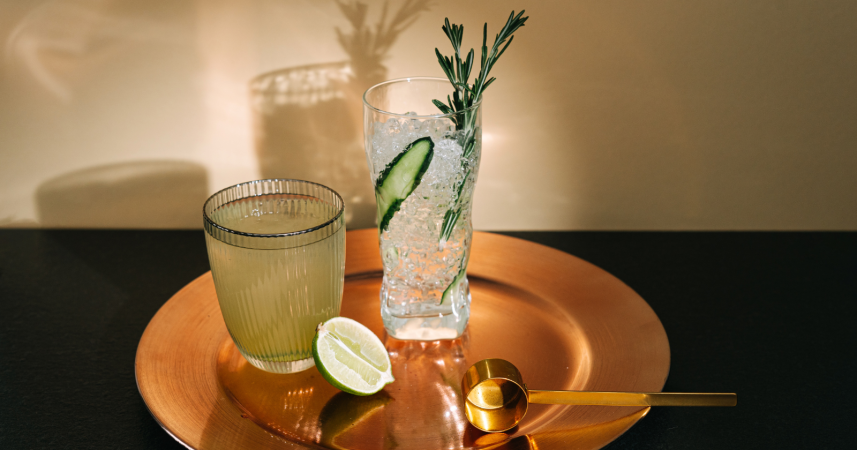
That glass of wine or pint of beer might contain hidden animal products, but with a little knowledge, you can toast confidently to your values.

Add VegOut to your Google News feed. 
When I first went vegan at 35, I thought I had the basics covered. No meat, no dairy, no eggs. Simple enough.
Then a friend casually mentioned that my favorite red wine probably wasn't vegan, and I nearly dropped my glass. Animal products in wine? It felt like discovering a hidden clause in a contract I thought I'd read thoroughly.
Turns out, the world of alcohol is full of these surprises. Many beers, wines, and spirits use animal-derived ingredients during production, even if none end up in the final bottle.
The good news? Once you know what to look for, navigating the bar menu becomes second nature. Here's what I've learned about keeping your drinks aligned with your values.
1. Understand why some alcohol isn't vegan
The issue usually isn't the core ingredients. Grapes, grains, potatoes, agave... these are all plant-based. The problem lies in processing, specifically a step called fining.
Fining agents help clarify beverages by binding to unwanted particles and sediment, which are then filtered out. Common animal-derived fining agents include isinglass (fish bladder protein), gelatin (from animal bones and connective tissue), casein (milk protein), and egg whites.
None of these typically remain in the final product in significant amounts, but they're used during production. For many vegans, that's enough to make a drink off-limits.
Have you ever wondered why this information isn't on labels? Unfortunately, alcohol labeling laws don't require disclosure of processing aids. It's one of those regulatory gaps that makes conscious consumption a bit more challenging.
2. Know which drinks are most likely to be vegan
Some categories are safer bets than others. Most unflavored spirits, including vodka, gin, rum, whiskey, and tequila, are typically vegan. Their distillation process doesn't usually require animal-based fining.
Beer is hit or miss. Many craft breweries skip isinglass entirely, but traditional cask ales and some mass-produced beers still use it. German beers brewed under the Reinheitsgebot (purity law) are generally safe, as the law restricts additives.
Wine and cider are the trickiest. Red wines often use egg whites, while white wines frequently rely on isinglass or casein. Organic and natural wines are more likely to be vegan, but it's not guaranteed. The only way to know for sure is to check.
3. Use Barnivore as your go-to resource
I discovered Barnivore about six months into my vegan journey, and it changed everything. This volunteer-run database catalogs thousands of beers, wines, ciders, and spirits, rating them as vegan, not vegan, or unknown based on direct communication with producers.
Before heading to a restaurant or liquor store, I'll often do a quick search. It takes thirty seconds and saves the awkward conversation of asking a server to check with the bar about fining agents. The site also has a handy mobile version, perfect for those moments when you're standing in the wine aisle, squinting at labels.
Is it exhaustive? No. But it's the most comprehensive resource I've found, and the community keeps it updated.
4. Look for vegan certifications and labels
More producers are recognizing the demand for transparency. Look for bottles marked with vegan certifications from organizations like The Vegan Society, BeVeg, or Vegan Action. Some brands simply state "vegan" or "vegan-friendly" on their labels.
This trend is especially strong in the natural wine movement, where minimal intervention often means skipping animal-derived fining agents altogether. Many winemakers now use bentonite clay, activated charcoal, or pea protein instead.
When shopping, I've noticed that smaller, independent producers are often more forthcoming about their processes. Don't hesitate to email a winery or brewery directly. In my experience, they're usually happy to answer questions, and sometimes you discover a new favorite in the process.
5. Ask questions and advocate for transparency
Here's something I've learned from years of navigating both corporate boardrooms and farmers markets: asking questions creates change. Every time you inquire about vegan options at a bar, request information from a producer, or choose a certified vegan wine, you're sending a market signal.
When I ask bartenders about vegan options, I keep it simple and friendly. "Do you know if any of your wines are vegan?" Most don't know off the top of their heads, but the question plants a seed. Some have later told me they started researching options because customers kept asking.
Your curiosity isn't an inconvenience. It's advocacy in action.
Final thoughts
Going vegan taught me to look more closely at everything I consume, and alcohol was one of the more surprising lessons.
What initially felt like an overwhelming amount of research has become intuitive. I have my trusted brands, my go-to resources, and a willingness to ask questions when I'm unsure.
The beautiful thing is that the industry is shifting. More vegan options exist now than when I started this journey, and that number grows every year. So raise a glass to progress, to curiosity, and to making choices that reflect who you want to be. Just maybe check Barnivore first.