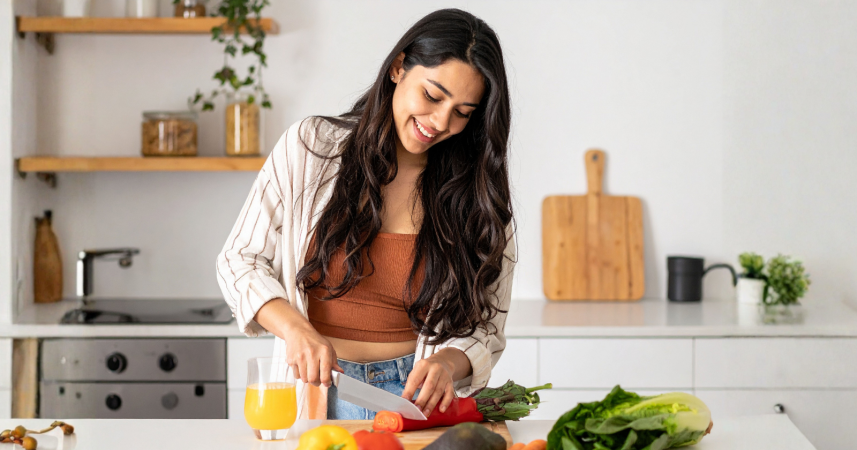
Starting a vegan journey doesn't require perfection or a complete pantry overhaul, just a simple framework that works with your real life.

Add VegOut to your Google News feed. 
When I first went vegan at 35, I made every mistake in the book. I bought ingredients I'd never heard of, attempted complicated recipes on weeknight evenings, and found myself standing in my kitchen at 8 PM wondering why I'd thought cashew cheese required a four-hour soak.
The whole thing felt overwhelming, and I nearly gave up before I'd really begun.
What saved me wasn't a perfect plan. It was permission to keep things simple. Five years later, I've learned that sustainable change comes from building a foundation you can actually stand on.
So if you're new to plant-based eating and feeling that familiar mix of excitement and overwhelm, let me share what I wish someone had told me from the start.
The real secret is structure, not restriction
Here's what took me too long to understand: meal planning isn't about limiting yourself. It's about creating enough structure that decision fatigue doesn't derail you by Wednesday. When I worked in finance, I made hundreds of decisions daily. By evening, I had nothing left for figuring out dinner. Sound familiar?
A beginner-friendly meal plan works because it removes the constant mental negotiation. You're not asking yourself what sounds good or what's in the fridge every single night. You've already decided, which frees up energy for everything else.
Research from the Harvard T.H. Chan School of Public Health supports this approach, noting that meal planning is associated with better diet quality and more food variety.
Building your weekly framework
I think of my week in themes rather than rigid recipes. Monday might be grain bowls, Tuesday is soup night, Wednesday features pasta. This gives me flexibility within a structure. If I'm tired, the grain bowl can be rice with canned beans and whatever vegetables are in the crisper.
If I have energy, maybe I'll roast some chickpeas and make a tahini dressing.
For beginners, I'd suggest starting even simpler. Pick three dinners you already know how to make, or that require minimal skill. Think stir-fry with tofu, pasta with marinara and vegetables, and a big salad with beans. Rotate these for two weeks. Yes, it might feel repetitive, but repetition builds confidence.
Once those three feel automatic, add a fourth. Then a fifth. What meals already feel comfortable to you?
Breakfast and lunch don't need to be complicated
One of my biggest early mistakes was trying to reinvent every meal. Breakfast doesn't need to be a production. Oatmeal with fruit and nuts, toast with peanut butter and banana, or a smoothie with greens and frozen berries will serve you well for months.
I've eaten some version of oatmeal nearly every morning for five years, and it still feels like a gift rather than a chore.
Lunch can be even simpler. I'm a big believer in the "grain, green, bean" formula. Cook a batch of quinoa or rice on Sunday, keep some greens washed and ready, and open a can of chickpeas or black beans.
Combine with whatever dressing you like. This takes five minutes and travels well. The Physicians Committee for Responsible Medicine recommends building meals around these plant-based staples for optimal nutrition.
The batch cooking approach that actually works
I used to think batch cooking meant spending all of Sunday in the kitchen. Now I know better. My version takes about an hour and sets me up for the week without burning me out before Monday arrives.
Here's what I prep: one pot of grains, one pot of beans or lentils (or I open a few cans, no shame), and one or two roasted vegetables. That's it. Everything else happens in the moment.
This gives me building blocks without locking me into specific meals. Tuesday's grain bowl becomes Wednesday's stuffed pepper filling becomes Thursday's soup base. Have you ever noticed how the same ingredients can feel completely different depending on how you combine them?
Handling the inevitable imperfect days
Some nights, dinner is going to be hummus and crackers with baby carrots. Some weeks, you'll order takeout more than you planned. This is not failure. This is being human.
When I was new to veganism, I held myself to impossible standards. Every meal had to be balanced, beautiful, Instagram-worthy. That pressure nearly pushed me back to my old habits. What kept me going was accepting that consistency matters more than perfection.
A week of simple, imperfect vegan meals still moves you forward. The goal isn't to become a plant-based chef overnight. It's to build a sustainable way of eating that serves your values and your actual life.
Final thoughts
Starting something new always involves a learning curve, and vegan eating is no exception. But the curve doesn't have to be steep. Begin with what you know, add structure where it helps, and give yourself permission to keep things simple for as long as you need.
I think back to my early days of standing confused in the kitchen, and I wish I could tell that version of myself to relax. The elaborate recipes and specialty ingredients can come later, or never.
What matters is showing up, meal after meal, with whatever you've got. That's how change actually happens. Not in one dramatic overhaul, but in the quiet accumulation of ordinary days.