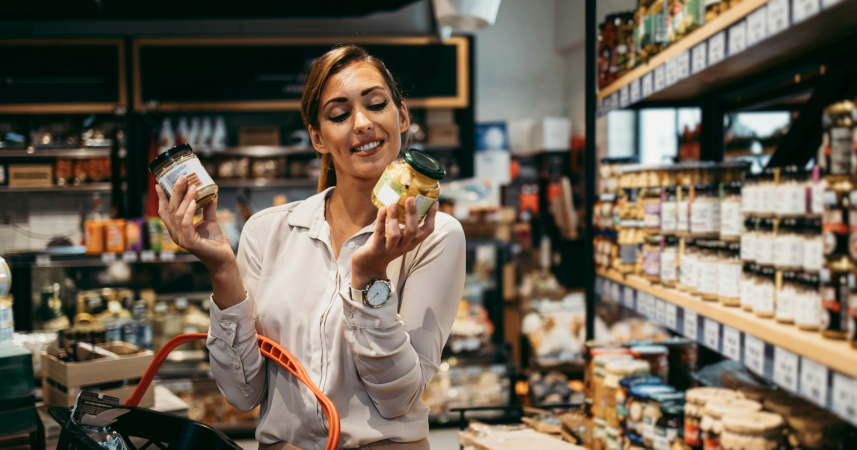
From artisan bread to fresh herbs, certain grocery store splurges quietly reveal humble beginnings. These small luxuries aren’t about showing off—they’re about celebrating growth, gratitude, and the joy of finally saying “yes” to yourself.
There’s a special kind of satisfaction that comes from treating yourself at the grocery store.
It’s not about luxury brands or hundred-dollar wines—it’s about those small, deliberate splurges that say, “I can afford this now.”
If you grew up lower middle class, you probably know what I mean.
Back then, groceries were about getting what was practical and affordable. Generic cereal, store-brand peanut butter, and maybe, if it was a special week, a box of frozen waffles.
Now, as adults with a bit more financial stability, those modest splurges we make in the aisles say a lot about where we came from—and how far we’ve come.
Here are ten grocery store indulgences that quietly reveal your lower middle class roots—because you know the value of a small luxury better than anyone.
1) The “fancy” loaf of bread
For many of us, bread was white, soft, and came in a plastic bag that crinkled loudly when you opened it.
Now? We eye the fresh-baked sourdough with the crusty exterior and flour-dusted top like it’s a piece of art.
Maybe it’s seeded, maybe it’s rosemary-infused, maybe it costs $7—but it feels worth it.
Growing up, bread was utility. Now it’s an experience. Toasting that artisan loaf feels like a little victory—one you can actually taste.
2) Pre-cut fruit
If you were raised with a parent who bought whole watermelons because they were cheaper by the pound, this one hits home.
Pre-cut fruit used to seem outrageously expensive. “Why pay more for someone else to do the cutting?” your mom might have said.
But now, grabbing that container of perfectly cubed pineapple feels like an act of self-care. It’s not about laziness—it’s about time, convenience, and yes, a bit of indulgence.
Funny how something as simple as diced mango can feel like success.
3) Name-brand cereal
Growing up, you probably had “Toasty O’s” instead of Cheerios and “Choco Rice” instead of Cocoa Krispies. And you know what? They were fine.
But there’s something deeply satisfying about tossing the real brand into your cart now without hesitation.
It’s not about the cereal itself—it’s about freedom. Freedom from watching every price tag. Freedom from the “we can’t get that one” conversation in the aisle.
There’s a quiet pride in knowing you can choose based on preference, not price.
4) The good coffee
If your parents made coffee in a drip machine using a giant tub of Maxwell House, you probably still remember the smell—burnt and nostalgic all at once.
These days, you might find yourself buying organic beans from a local roaster, maybe even grinding them fresh at home.
Sure, it’s a splurge. But it’s also a ritual—a small, daily luxury that marks how your relationship with money and sense of self-care has evolved.
As someone who volunteers at a farmers’ market, I’ve seen how people light up over small indulgences like local coffee.
It’s not just about taste; it’s about feeling connected—to the community, to yourself, to a life you’ve built beyond survival mode.
5) The “nice” olive oil

When you were younger, olive oil might have been reserved for special recipes (and it was probably a bargain brand).
Now, you actually notice the difference between cold-pressed and extra virgin.
Maybe you buy the one in the dark glass bottle, imported from Italy, and use it sparingly like liquid gold.
It’s funny—spending $18 on oil might once have seemed absurd.
But when you drizzle it over roasted vegetables or a salad, it transforms an ordinary meal into something almost elegant.
That’s what financial growth feels like sometimes—not dramatic, just quietly elevated.
6) The fancy vegan cheese (or plant-based milk)
Let’s be real: the dairy-free section used to feel like a niche luxury. If you’re vegan like me, you know the struggle of those early years when almond milk cost more than dinner.
But buying oat milk, cashew yogurt, or artisanal vegan cheese now isn’t just about diet—it’s about choice.
It’s the ability to invest in your health and values without worrying about whether it’s “worth it.”
When you grew up stretching every dollar, even these small switches carry emotional weight. They’re a declaration that your needs and preferences matter now.
7) The premium frozen meal
For many lower middle class families, frozen food was a budget staple—TV dinners, bulk lasagna, or those massive economy bags of mixed vegetables.
Now? You might still buy frozen, but it’s the kind of frozen that comes in sleek packaging and mentions words like “organic,” “wild-caught,” or “chef-inspired.”
You’re no longer grabbing it because you have to. You’re choosing it because it fits your lifestyle.
There’s something empowering about being able to buy convenience out of desire, not necessity.
8) Fresh herbs
When I was a kid, the only “herbs” in our house were dried flakes in tiny glass jars that probably hadn’t been replaced in a decade.
Buying a bunch of fresh basil or cilantro now feels oddly luxurious. It’s that simple upgrade that signals abundance—not just financially, but mentally.
Because fresh herbs don’t just add flavor; they symbolize presence. You buy them knowing you’ll take the time to cook, to enjoy, to savor.
And if you’ve ever grown your own herbs (a habit I picked up while gardening), you know how that connection deepens. It’s not about extravagance—it’s about enrichment.
9) The organic produce splurge
You know that moment when you reach for the organic apples and hesitate, because the regular ones are cheaper? That inner tug-of-war never fully goes away.
But when you do buy them, it’s not just about avoiding pesticides—it’s about reclaiming choice.
When you grow up lower middle class, you’re taught to think in terms of “enough,” not “ideal.”
So being able to buy the version that aligns with your values—whether it’s organic, local, or sustainable—feels quietly revolutionary.
I’ve spoken to countless people at the farmers’ market who say the same thing: “I can’t believe I used to think this was out of reach.”
Turns out, sometimes growth tastes like a crisp, organic apple.
10) A bouquet of flowers
This one might surprise you. But for a lot of people, flowers were considered unnecessary growing up—something you bought for a special occasion, not for the kitchen table.
So now, when you buy that $12 bouquet of tulips or sunflowers on a random Wednesday, it’s not frivolous. It’s symbolic.
It’s saying, “My life is worth celebrating today.”
It’s the shift from survival to joy—from “do we really need this?” to “I deserve a little beauty in my home.”
And isn’t that what we’re all chasing, in one way or another?
The bottom line
Growing up lower middle class teaches you a certain kind of awareness—about money, about value, and about gratitude.
So when you splurge at the grocery store, it’s rarely mindless. It’s intentional. It’s an echo of the kid who once asked, “Can we get that?” and now doesn’t have to.
These little indulgences—whether it’s fresh herbs, real cereal, or a good loaf of bread—aren’t about showing off. They’re about honoring your journey.
Because the truth is, people who’ve known limits appreciate abundance differently. You understand the quiet power of saying “yes” to yourself in small, everyday ways.
And maybe that’s what growing up was always meant to lead to: not extravagance, but ease.
The kind that lets you walk down a grocery aisle, toss something you love into the cart, and smile—because this time, you can.