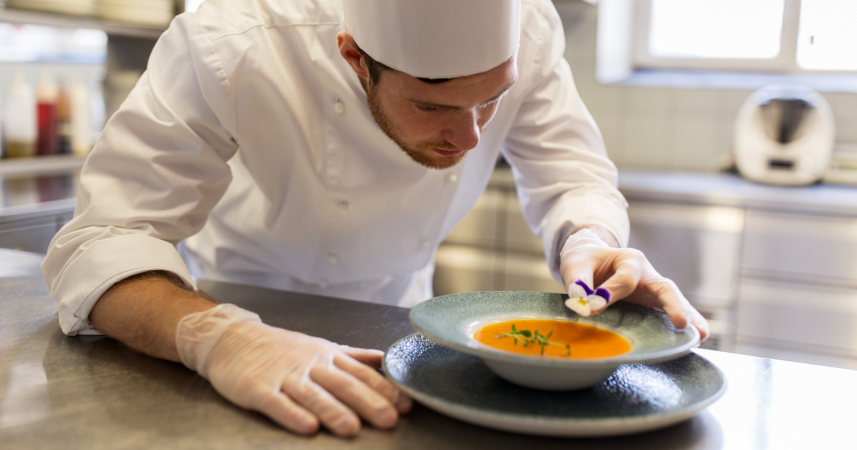
The next time you read about a vegan chef winning a major award or opening a new spot in your city, see it as a reminder that you, too, are allowed to change the script.
The first time I sat down for a multi-course vegan tasting menu, I caught myself doing something weird.
I kept waiting for the "real" food to arrive.
By the time dessert came out, that story had completely fallen apart.
I walked out of that restaurant feeling not just full, but quietly shaken.
That is the magic of the chefs who are putting plant-based food firmly on the culinary map.
They are not just plating beautiful dishes. They are messing with our mental models in the best possible way.
As someone who used to live in spreadsheets and earnings calls, I love watching people shift the numbers.
For decades, animal-based dishes dominated fine dining, food media, and our idea of what "special" food looks like.
Now a growing group of chefs is proving that vegetables, grains, beans, herbs, and all their plant-based friends can be just as luxurious, creative, and emotionally satisfying.
Why these chefs matter for our own growth
When a restaurant like Plates in London becomes the first fully vegan restaurant in the UK to earn a Michelin star, that is not just a win for plant-based eaters.
It is a psychological permission slip for everyone who has quietly wondered if there is another way to live, eat, or work that better reflects their values.
Food is one of the most public ways we express identity.
If a chef can say, "I care about animals, the planet, and my own health, and I refuse to compromise on pleasure or excellence," it gives the rest of us a template.
Maybe you want to leave a job that looks good on paper but feels empty, or maybe you want to drink less, or buy less fast fashion, or finally align your money with your ethics.
Watching these chefs thrive makes those shifts feel a little less radical and a little more doable.
When we "meet" these chefs, we are studying people who are quietly modeling how to rewrite a script that the world swore was non-negotiable.
Fine dining chefs rewriting the rules
Let me start in the place that once seemed most hostile to vegan food: The white-tablecloth world of Michelin stars.
In south London, Chef Kirk Haworth runs Plates, a restaurant that serves a seven-course plant-based tasting menu.
It recently became the first fully vegan restaurant in the UK to receive a Michelin star, with reservations booking out months ahead.
What I love about Haworth’s story is that he did not set out to win an award for veganism.
His journey into plant-based cooking came through chronic illness and a search for healing.
He re-trained his creativity around plants because his body demanded it. The recognition came later.
Many of our big life changes begin with pain or exhaustion.
The chefs I am talking about today did not wait for perfect circumstances.
They took that discomfort into the kitchen and used it as fuel.
Over in Zurich, chef Zineb "Zizi" Hattab is doing something similar at KLE, a cozy restaurant that blends Moroccan and Mexican influences through a fully plant-based lens.
KLE earned a Michelin star in 2023, with tasting menus that focus on regional, seasonal ingredients and sustainability.
This is vegetables as joy, memory, and artistry.
Then there is Alain Passard at L’Arpège in Paris.
Once known for meat-centric haute cuisine, he gradually turned his three-Michelin-star restaurant into an "almost vegan" temple to vegetables, removing meat and fish and leaning heavily on produce from his own farms.
Critics warned he would lose his stars.
Instead, he kept them and attracted diners who were curious about what happens when a legendary chef bets almost everything on plants. (The Times)
Think about the courage that takes; Passard had already "won" in the old system.
He could have played it safe but, instead, he risked his reputation to follow a conviction that felt truer.
When I watch these stories, I hear a quiet question in the background: Where in my own life am I still cooking someone else’s menu because it once earned me praise, even though it no longer feels like me?
Creators turning home kitchens into mini revolutions
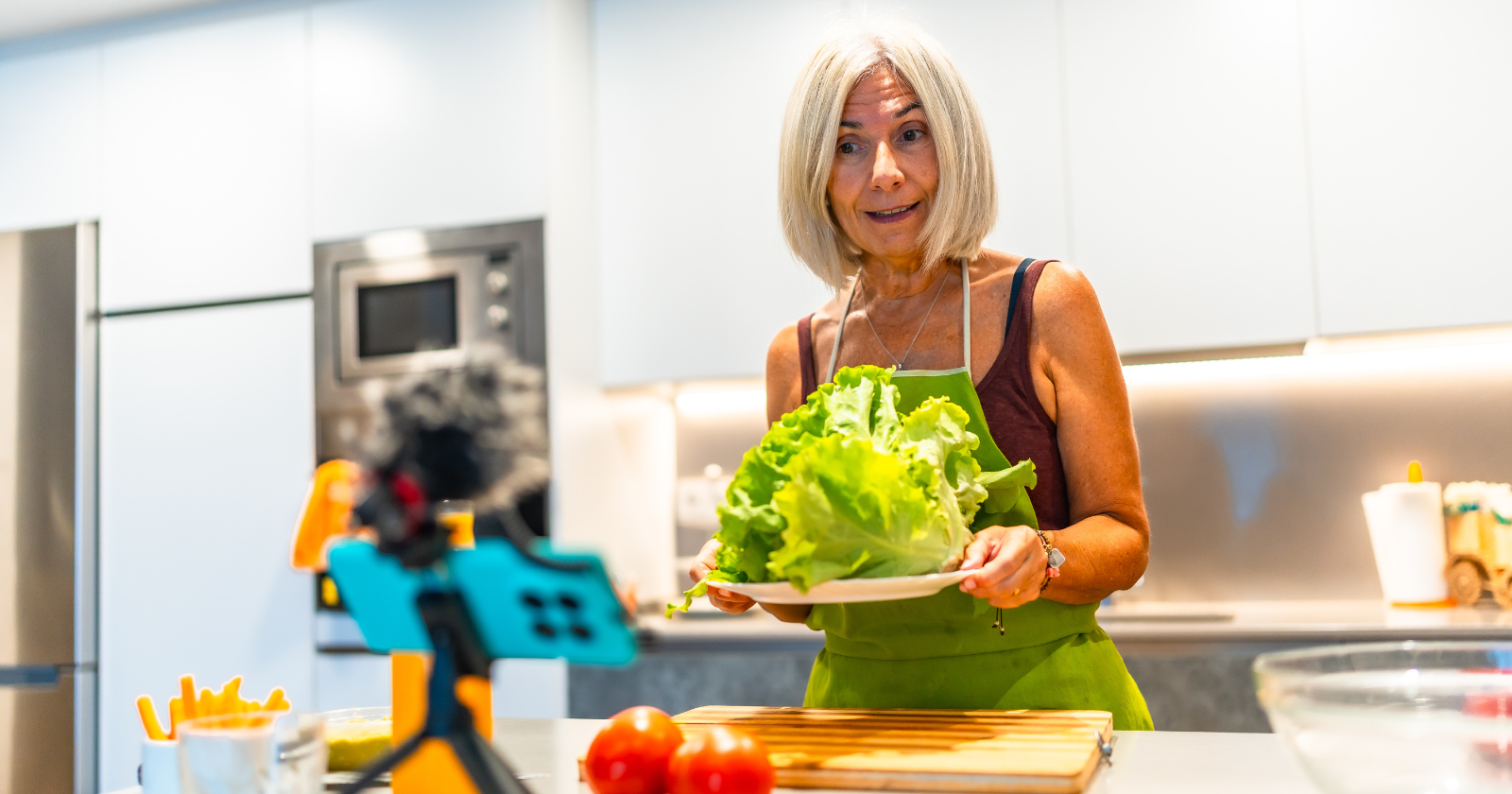
Some of the biggest shifts in how we see vegan food are happening through YouTube videos, cookbooks on kitchen counters, and Instagram reels watched in bed at midnight.
Take Gaz Oakley, the Welsh chef and cookbook author behind Avant-Garde Vegan.
He has been described as "a star of the meat-free world," with recipes that earn respect from both vegetarians and meat eaters.
His YouTube channel is full of high-impact dishes, outdoor cooking sessions, and farm-to-table experiments that can be streamed straight into your kitchen.
What I appreciate most about chefs like Gaz is that they shrink the gap between "restaurant magic" and "real life."
He is saying, "Here is how you can make it too," and that is a powerful psychological shift.
Instead of seeing plant-based eating as something you outsource to special occasions or fancy restaurants, you start to see it as a skill you can practice, like strength training or learning a new language.
Every time you nail a new recipe, you collect evidence that you are capable of change.
Your identity shifts from "someone who could never give up cheese" to "someone who experiments and surprises themselves."
Entrepreneurs building plant-based empires
There are the chefs who think in ecosystems.
Matthew Kenney is an American chef who has spent years building a network of plant-based restaurants, food halls, and culinary schools across multiple countries.
He has founded dozens of vegan restaurants and created plant-based culinary education programs that have trained chefs around the world.
Whatever you think of his business ups and downs, it is hard to deny his role in normalizing plant-based cuisine in mainstream hospitality.
When a hotel, airport, or mall includes a sleek vegan concept, it sends a quiet message that plant-based eating is no longer fringe. It is just food.
Zoom out and you see this pattern everywhere.
Articles now profile plant-based chefs from Zimbabwe to Germany to France, noting how their restaurants, cookbooks, and online platforms are reshaping what diners expect from vegan food globally.
What does this have to do with self-development? A lot, actually.
These chefs are building infrastructure around their values.
Instead of waiting for the world to fully understand them, they are creating the schools, businesses, and media that make that world more possible.
That is a helpful model if you have ever felt like "the weird one" in your family or workplace for caring about something that others dismiss.
What these chefs teach us about change
If we peel away the truffle foam and microgreens, a few clear psychological principles show up again and again in these stories.
First, they treat constraints as creative prompts, not prison walls.
No meat and no dairy, just seasonal ingredients only.
For most of culinary history, those rules would have been seen as a handicap.
But the chefs we have talked about lean into them. They use smoke, fermentation, spice, texture, and plating to create surprise and depth.
In our own lives, we often treat our constraints as excuses.
The plant-based chefs rewriting the culinary map flip that script.
The very thing that looks limiting becomes the thing that forces innovation.
Second, they do not wait for the crowd to understand.
Alain Passard did not ask every critic to sign off before he transformed L’Arpège. Zineb Hattab did not wait for Zurich to be "ready" for a fully plant-based Michelin-level restaurant.
Kirk Haworth did not wait for UK diners to collectively decide that a vegan tasting menu sounded exciting.
They moved first, and the recognition followed.
Third, they keep pleasure at the center.
This might be the most radical part.
A lot of us grew up with the idea that ethical or healthy choices have to feel like deprivation.
Vegan food especially was framed as "good for you" in a kind of joyless way.
These chefs reject that; their plates look indulgent, sometimes even a little over the top.
That is the secret sauce for sustainable change in any area.
If your new habits feel like punishment, your brain will fight you; if they feel like an upgrade, you are far more likely to stick with them.
Bringing this mindset to your plate
What do we do with all this, especially if we are not about to open a restaurant or chase a Michelin star?
Most of the chefs leading this movement are inviting people in with beauty and flavor.
When I share food with friends or family who do not eat plant-based, I try to do the same.
I focus on delight, not debate; I remember that every time I choose a meal that reflects my values, I am practicing a skill that transfers everywhere else.
The courage to be different, the willingness to experiment, and the patience to be misunderstood for a while.
Those are life skills.
The next time you read about a vegan chef winning a major award or opening a new spot in your city, see it as a reminder that you, too, are allowed to change the script.
You are allowed to build a life that is aligned with your ethics and your joy, even if the world has not fully caught up yet.
If you want a place to start, maybe it is as simple as this question: What is one plant-based dish you could try this week that would make Future You just a little bit proud?
Then go meet these chefs in the best way possible—fork first!
Just launched: Laughing in the Face of Chaos by Rudá Iandê
Exhausted from trying to hold it all together?
You show up. You smile. You say the right things. But under the surface, something’s tightening. Maybe you don’t want to “stay positive” anymore. Maybe you’re done pretending everything’s fine.
This book is your permission slip to stop performing. To understand chaos at its root and all of your emotional layers.
In Laughing in the Face of Chaos, Brazilian shaman Rudá Iandê brings over 30 years of deep, one-on-one work helping people untangle from the roles they’ve been stuck in—so they can return to something real. He exposes the quiet pressure to be good, be successful, be spiritual—and shows how freedom often lives on the other side of that pressure.
This isn’t a book about becoming your best self. It’s about becoming your real self.