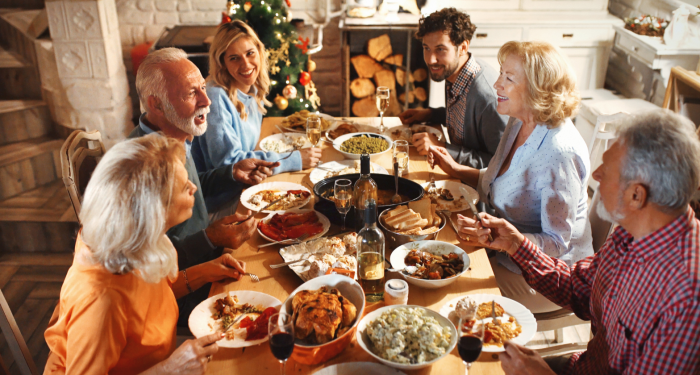
You don’t need the exact bread or the same brand of soup. What you’re recreating is the ritual: warmth, togetherness, the joy of enough.
Let’s be honest: a lot of what we grew up eating wasn’t impressive.
It was whatever stretched a paycheck, filled little bellies, and didn’t require a culinary degree.
But if I close my eyes, I can still taste the after-school sweetness of a too-thick PB&J or hear the snap of a saltine hitting tomato soup. Those moments weren’t gourmet—but they were gold.
Nostalgia gets a bad rap, as if remembering is the opposite of moving forward. As psychologist Constantine Sedikides has said, “When you become nostalgic, you don’t become past-oriented. You want to go out there and do things.”
So this isn’t a list of “sad desk lunches” from childhood. It’s a love letter to the small, scrappy meals that taught us about comfort, connection, and creativity—lessons I still use today (yes, even after my spreadsheet-loving years as a financial analyst).
And because I write for practical optimists, I’ve tucked in simple ways to recreate the feeling now—without needing to replicate the exact ingredients or price tags.
1. Beans on toast
Where I grew up, this was the SOS dinner: a can of beans, a few slices of toast, done.
The magic wasn’t in the method; it was in the meaning. Someone saw we were hungry and fed us quickly. We ate hot food together. That’s security on a plate.
Why it still works now: it’s a masterclass in humble abundance. Toast is a stage; beans are a canvas. I’ll mash white beans with a little garlic and lemon, or warm up smoky pinto beans with chili flakes.
Pile on crunchy things (pickled onions, scallions) and something bright (a squeeze of citrus). It takes five minutes and reminds me that care doesn’t have to be complicated.
2. Peanut butter and jelly sandwiches
Sticky fingers, grape stains, the first bite that squishes out the sides—tell me that doesn’t transport you.
What made PB&J perfect wasn’t just the flavor; it was the autonomy. We could make it ourselves. We could choose “more peanut butter” or “more jelly.”
Childhood power, deliciously expressed.
To capture that feeling today, I keep it tactile and customizable. Thick sourdough. A smear of peanut butter (or almond, or sunflower seed). Something jammy with real fruit. Sometimes I toast the bread, sometimes I don’t.
The point is the ritual, not the rules. If you’re plant-based or nut-free, you already know the swaps—what you might not know is how liberating it feels to build this with your hands, the way you did as a kid.
3. Instant ramen with add-ins
I learned early that a ten-cent package could become a feast.
My version had peas from the freezer and a sliced scallion if I could find one. The steam fogged my glasses. The bowl warmed my forearms.
And for twelve minutes, the world felt simple.
Ramen is the beginner’s guide to resourcefulness. Today, I’ll drop in a handful of greens, swirl in a spoon of miso, or add a drizzle of sesame oil. If I’m feeling fancy, I’ll bake tofu cubes and toss them on top.
But I try to preserve the “I made this” buzz—the quiet pride of doing a lot with a little.
4. Tomato soup with saltines
A can opener. A saucepan. Crackers that shatter into the bowl like snow. That first slurp wasn’t just soup; it was a way to soften a hard day. And the crunch? Proof that texture can turn a basic meal into a sensory event.
Recreating the joy means leaning into contrast: hot vs. crisp, tangy vs. mellow. I’ll simmer crushed tomatoes with a splash of plant milk to make it creamy, then finish with black pepper and basil.
If I’m out of saltines, toast does the job. What matters is the sound as you break it, the calm that follows. Neuroscientist Rachel Herz put it this way: “Smell can instantly trigger an emotional response along with a memory…”—and those wafts of tomato, garlic, and toasted bread carry you straight back.
5. Oatmeal with brown sugar and cinnamon
This was the winter morning MVP. A pot bubbling on the stove, bowls set out like little moons, and the “choose your own topping” bar (a grand name for raisins and a shaky container of cinnamon).
It felt communal: we were all starting our days together.
As an adult, I still love the way oatmeal slows me down. I’ll stir in a pinch of salt (my inner analyst insists—it makes everything taste more like itself), then add sliced banana, a dusting of cinnamon, and a tiny spoon of sugar.
If I want grown-up gloss, I finish with toasted nuts or a dollop of peanut butter.
Is it fancy? No.
Is it deeply kind to my morning self? Absolutely.
6. Rice and beans
Two pantry staples, infinite variations. I learned early that this combo is cheap not because it’s lesser, but because it’s elemental—like a drumbeat beneath a song. Every family had their version, every kitchen its spices, and every bowl tasted like home.
I still make it on autopilot when I’m tired. I’ll simmer black beans with onion and cumin while rice puffs on the back burner. A squeeze of lime, a sprinkle of cilantro, and it’s ready. If you grew up with a different spice profile, follow your muscle memory. The joy isn’t in perfect replication; it’s in letting the smells find you.
7. Baked potato bar
There was nothing more thrilling than a tray of baked potatoes split open like treasure chests, with bowls of toppings waiting their turn. It was our childhood version of a buffet—and it taught me that choice is its own flavor.
Today, I sometimes roast a tray of small potatoes and play “toppings roulette”: steamed broccoli, scallions, leftover chili, olive oil, salt, cracked pepper. Everyone builds their own.
The table gets loud. We pass things around. Shared food still multiplies the meaning of a meal.
As Michael Pollan wrote, “The shared meal elevates eating from a mechanical process of fueling the body to a ritual of family and community…”
What these meals actually taught us
Joy is often just competence in disguise. Think about it: making your own sandwich, stirring a pot of soup, timing a packet of noodles. Those were tiny acts of agency. We felt capable. We still can.
Cheap is not a character flaw. It’s a design brief. A constraint that breeds creativity. When my budget is tight, I don’t panic; I prototype. I ask, “How can I get maximum comfort with minimum fuss?” The answer is usually waiting in the pantry.
Senses are shortcuts to self-care. Smell, especially, is a backdoor to memory. One whiff and you’re in your childhood kitchen again, shoulders down, safe. That’s not regression. That’s regulation. Nostalgia, used wisely, is a psychological resource—not a trap door. When we revisit these meals on purpose, we’re not pretending to be kids; we’re borrowing their steadiness.
Meals are messages. Even the simplest bowl says, “You deserve to be fed.” On hard days, I make beans on toast just to hear that sentence more clearly. It’s not the bread or the beans. It’s the love note.
How to bring the feeling forward (without getting stuck in the past)
-
Recreate the ritual, not the recipe. Ask yourself: What was the emotional job of this meal? Speed? Warmth? Togetherness? Then cook to that brief. If tomato soup meant “quick comfort,” anything red and steamy will do—tomato, red lentil, even a fast veggie broth.
-
Keep a tiny toppings kit. Crunch, acid, and freshness transform pantry basics. I keep lemon or vinegar, something crisp (pickled onions), and a green herb. Five cents of garnish can feel like five stars.
-
Use “kid rules.” Eat by the window. Stand at the counter. Cut your sandwich into triangles. Light a candle for ramen. Silly? Yes. Delightful? Also yes.
-
Invite someone in. Joy compounds when we share it. Make a PB&J for a friend the way you used to—overstuffed and unapologetic. Remind each other how good simple can be.
And if you ever worry that nostalgia will glue you to the past, remember Sedikides’ point: it can energize the present. Let the memory be a springboard. Cook the thing, then go do your thing.
Final thoughts
These seven “cheap” meals were never about thrift alone. They were about belonging, autonomy, and the tiny ceremonies that turn food into care.
When life gets loud, I go back to them—not to relive childhood, but to borrow its clarity.
The truth is, affection scales. It fits a lavish dinner party and it fits a midnight bowl of oats. If you need permission to eat simply and feel deeply, consider this it. Go make beans on toast. Crack the saltines. Build the sandwich with too much jelly.
You’re not cutting corners. You’re cutting straight to joy.
As a last note, the science supports your instincts. Our senses connect memory and emotion in an instant, and shared meals stitch people together in ways that outlast the food itself.
But you don’t need a study to feel it—you just need a spoon and a little hunger.
What’s Your Plant-Powered Archetype?
Ever wonder what your everyday habits say about your deeper purpose—and how they ripple out to impact the planet?
This 90-second quiz reveals the plant-powered role you’re here to play, and the tiny shift that makes it even more powerful.
12 fun questions. Instant results. Surprisingly accurate.