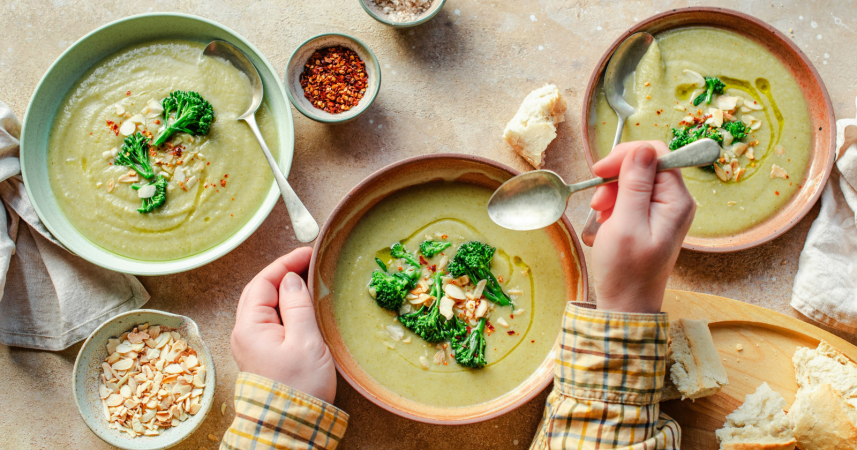
The right lighting and a tiny spoon swoosh can turn leftovers into a love letter to yourself.
I love the moment when a simple Tuesday salad looks like it belongs in a chef’s tasting menu—especially when it’s just me, my kitchen light, and a hungry curiosity about how presentation changes how we feel.
If you’ve ever wondered why some home-cooked plates pop on camera while others feel… flat, this one’s for you.
I’m not a food stylist. I’m a former analyst who now writes about the tiny levers that make life feel more artful and intentional. Plating is one of those levers. And yes, it’s wildly learnable.
Let’s make your next homemade meal look like it wandered out of a nice restaurant—without adding an hour to dinner.
1. Start small and leave breathing room
A smaller plate makes ordinary portions look abundant, which instantly reads as composed instead of chaotic. I aim for 8–9-inch plates for mains and even smaller for sides. Then I leave negative space—about a third of the plate clean. The eye loves a calm border.
Try this tonight: spoon your bean stew into an offset crescent, not a puddle. Tuck a spoonful of rice or quinoa against it, leaving a clean arc of plate around everything. Snap the photo before you add garnish—you’ll see why in a second.
2. Stack, lean, and layer for height
Flat food photographs flat. Even a rustic bowl becomes camera-ready when you give it dimension. I use a few simple moves:
-
Stack: Layer roasted veggies (say, carrots on chickpeas) so you get peaks and valleys.
-
Lean: Rest one element against another—two crispy tofu slabs propped on a sweet potato wedge.
-
Layer: Swirl a puree (cauliflower, pea, carrot) as the base, then nestle the star ingredient on top.
Height adds shadows, which add drama. And bonus: your plate looks intentional without needing micro-tweezers.
3. Rule of thirds and odd numbers (your quiet power duo)
If you’ve ever lined everything up in neat little rows and thought “meh,” this is why.
Place your focal point off-center—roughly a third from the edge—and group elements in odds (3, 5, 7). Three asparagus tips angled at 10 o’clock, five chickpeas sprinkled around, one bold focal element.
It’s subtle, but your photo will feel more alive and less diagram-like.
When I volunteer at my local farmers’ market, I notice I’m drawn to stalls that unconsciously follow these rules—clusters of oranges, not tidy grids. The same instinct works on a plate.
4. Paint with sauce, then wipe the rim
Sauce is your brush. Two options I use all the time:
-
The swoosh: Put a spoonful of puree (hummus, beet, carrot-ginger) near the rim. Press the back of a spoon into it and pull in a gentle arc. It creates instant movement.
-
The dots: Use a squeeze bottle or teaspoon to place small dots of a contrasting sauce (basil oil on tomato soup, tahini on roasted squash). Odd numbers again.
Then—this matters—wipe the rim with a clean, dry towel. A pristine rim screams “restaurant.” A smudge reads “rushed.”
5. Color contrast is your home cook’s supercharger
Great restaurants think about harmony and contrast. You can, too. Start with your dominant color (say, golden roasted cauliflower). Add a complementary pop: something green (herbs, peas), something deep (black sesame, balsamic), or something bright (pickled onion, pomegranate). Two little handfuls of parsley stems can wake up an entire plate.
When I’m gardening, I plan beds in color blocks because contrast helps each plant stand out. Plates are the same: the red of a cherry tomato feels redder when it sits beside leafy green.
6. Finish with texture (crunch, sparkle, and gloss)
Texture is what turns “nice” into “whoa.” Aim for a 10-second “finish line” ritual:
-
Crunch: toasted nuts, seeds, or crispy shallots.
-
Sparkle: flaky sea salt or citrus zest—tiny, shiny, and camera-friendly.
-
Gloss: a final drizzle of extra-virgin olive oil makes veg look succulent rather than dry.
As Samin Nosrat reminds us, “Salt, fat, acid, and heat are the four elements of good cooking.” That finishing salt for sparkle, oil for gloss, and a drop of acid (see the next tip) are doing double duty: they taste better and they photograph better.
7. Add a bright hit of acid and a cool-toned garnish
Acid brightens flavors—and it brightens colors. A squeeze of lemon over grilled zucchini turns muted olive into lively green. A spoonful of quick pickles (red onions, cucumbers) adds shine and contrast.
For garnish, think cool-toned greens: dill fronds, chive batons, mint leaves, or celery leaves.
I like to scatter garnish mostly on the focal area and a little on the plate itself, the way you’d dot a canvas. Keep it intentional: if it doesn’t add flavor or freshness, it’s just confetti.
8. Use soft, directional light and a simple setup
You don’t need studio gear. A window, a white napkin, and your phone are plenty. Place the plate beside a window and turn off overhead lights (they cast color and harsh shadows).
Shoot with the light coming from the side or at a 45-degree angle behind the food—this rakes across texture and makes everything look three-dimensional.
I keep a piece of white foam board around; it bounces light back on the shadow side like a gentle reflector. If I’m photographing dinner after a trail run and the sun’s down, I’ll use a single warm lamp—pulled far away and diffused through a thin curtain or parchment paper.
And if you’re tempted to wait for a “better camera,” don’t. As photographer Chase Jarvis famously said, “The best camera is the one that’s with you.” Your phone camera is not the bottleneck—light and composition are.
9. Style the scene, then edit lightly
A restaurant plate looks “finished” because the scene is tidy. Do a 30-second reset:
-
Choose a neutral, matte surface (a cutting board or baking sheet under parchment works wonders).
-
Add one prop that belongs to the story: a spoon with a little sauce on it, a folded linen, a lemon wedge that signals flavor.
-
Remove anything that doesn’t help: rogue crumbs, busy patterns, extra cutlery.
When you edit on your phone, keep it subtle: bump exposure slightly, nudge contrast, reduce warmth if the image skews yellow from indoor light, and increase sharpness just a pinch to make textures sing. Avoid heavy filters—they can turn kale gray and tomatoes neon.
A quick plating blueprint you can steal tonight
If all of this feels like a lot, here’s the 90-second “restaurant-level” flow I use when I’m hungry and impatient:
-
Plate smaller. Scoop the grain into an off-center crescent; leave clean space.
-
Add height. Stack the star (tofu, mushrooms) on the grain, lean a veg wedge against it.
-
Paint. Swoosh hummus or yogurt on the open side, dot with herb oil.
-
Contrast. Add one bright color (pickled onion) and one deep tone (black sesame).
-
Finish. Sprinkle crunchy seeds, a pinch of flaky salt, drizzle EVOO, squeeze lemon.
-
Light. Move to a window, turn off overheads, bounce with a white napkin.
-
Shoot. Try overhead for flat dishes and 45° for stacked ones. Take 5 quick shots.
-
Edit. Tiny tweaks to exposure/contrast. Done.
Common mistakes that make plates look “homey” (and how to fix them)
-
Overcrowding the plate. If you can’t see plate, you can’t see composition. Go smaller or serve less.
-
Sauce everywhere. Sauces look best when deliberate: a swoosh, a pool, or dots—not all three.
-
Monochrome meals. Delicious, yes. Photogenic, not always. Add a pop (herb, pickle, zest).
-
Shiny plates and spoons reflecting everything. Matte surfaces are kinder to food.
-
Overhead kitchen lights. They add yellow cast and kill texture. Window light wins.
Why this matters beyond Instagram
We’re not chasing perfection for the algorithm. We’re practicing attention. Plating well is a 5-minute ritual that slows you down enough to notice: color, seasonality, what you grew in your garden, the craft of the farmers who got it to your market table.
It turns dinner into a tiny celebration of effort—yours and theirs.
Personally, the simple act of wiping a rim and adding a twist of lemon reminds me I can raise the bar of everyday life without making it heavier. That feeling tends to spill into other corners: the way I organize my desk, how I approach a meeting, how I reset my mood after a long day. It’s about care, not perfection.
Final thought
Start with one trick—maybe just the smaller plate and the clean arc of negative space. See how it changes your eye, your appetite, and your camera roll.
The beautiful thing about plating is that the “win” is immediate. Dinner looks elevated, and—because you’ll season and finish more intentionally—it tastes elevated, too.
And if you make a mean swoosh tonight, I expect a photo.