When you cook at lower temperatures at home, you end up steaming food instead of searing it, and your vegetables get soggy instead of crispy.
Ever notice how even a simple dish at a restaurant seems to taste worlds better than when you make it at home?
You follow the recipe to the letter, you use quality ingredients, and yet somehow your pasta doesn't sing the way it does at your favorite Italian spot. Your stir-fry falls flat compared to the one from the place down the street.
After years of cooking at home and picking up tricks from chef friends, I've learned that restaurants aren't keeping some magical secret from us. They're just doing a few things differently. Things we can absolutely replicate in our own kitchens once we know what they are.
Let's break down exactly what makes restaurant food so irresistible and how you can bring those same flavors home.
1. They use way more salt than you think
This is the big one, and it's something most home cooks seriously underestimate.
Restaurants salt their food at every stage of cooking. They salt the pasta water generously. They season the vegetables before they hit the pan. They taste and adjust constantly throughout the cooking process.
At home, we tend to add a pinch here and there, worried about overdoing it. But proper seasoning is what makes flavors pop and come alive on your palate.
The fix? Start tasting your food as you cook and season in layers. Salt your pasta water until it tastes like the sea. Season your proteins before cooking, not just after. And always, always taste before serving. You'll be surprised how much difference it makes.
2. Butter, and lots of it
Have you ever wondered why restaurant vegetables taste so much better than yours? Or why that sauce has such a luxurious, silky texture?
The answer is probably butter. Lots and lots of butter.
Professional kitchens use butter with abandon. They finish sauces with a knob of cold butter to create that glossy, rich consistency. They toss roasted vegetables in butter before serving. They baste steaks in melted butter as they cook.
Julia Child famously said, "With enough butter, anything is good." She wasn't wrong. Butter adds flavor, richness, and a satisfying mouthfeel that's hard to replicate with anything else.
At home, try finishing your dishes with a tablespoon or two of butter, swirled in at the end. Toss your cooked pasta in butter before adding sauce. You're not trying to make everything heavy, just adding that restaurant-quality richness.
3. They cook at much higher heat
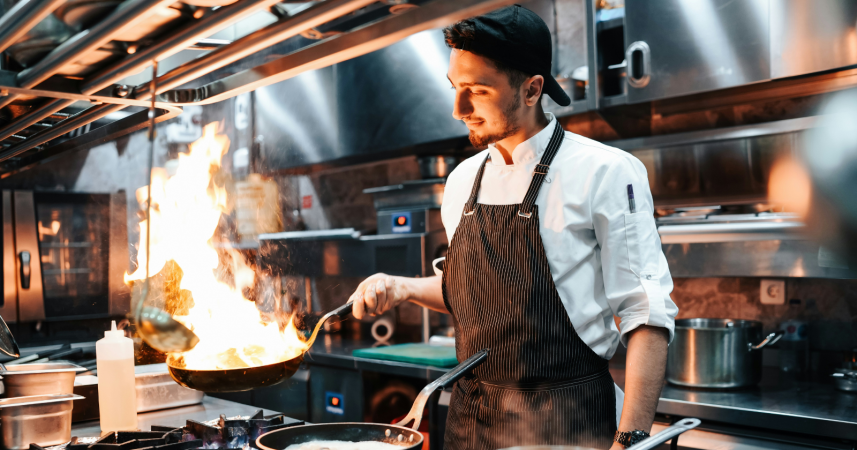
Restaurant stoves are powerhouses compared to most home setups. Commercial burners can reach temperatures that would make your home range weep with envy.
This high heat is what creates that perfect sear on a steak, the crispy edges on roasted vegetables, and the smoky char on stir-fried dishes. It's what gives restaurant food that depth of flavor through caramelization and browning.
When you cook at lower temperatures at home, you end up steaming food instead of searing it. Your vegetables get soggy instead of crispy. Your proteins don't develop that beautiful brown crust.
The solution? Preheat your pans longer than you think necessary. Get them properly hot before adding food. Don't overcrowd the pan, which drops the temperature. And consider cranking your oven higher than the recipe suggests for roasting. Your food will thank you.
4. Fresh herbs are used generously
I used to buy a bunch of parsley or cilantro, use two tablespoons in a recipe, and watch the rest wilt in my fridge. Restaurants don't do that.
They use herbs by the handful, not the pinch. Fresh herbs aren't just a garnish in professional kitchens. They're a key flavor component that gets incorporated throughout the dish.
Think about it. When was the last time you added a full cup of fresh basil to your pasta? Or a huge handful of cilantro to your tacos? Restaurants do this routinely because they know it transforms a dish from good to unforgettable.
Start buying herbs with the intention of using them liberally. Add them at different stages too. Some at the beginning for depth, some at the end for brightness. Your dishes will taste fresher, more vibrant, and yes, more restaurant-quality.
5. They're not afraid of fat
Beyond butter, restaurants use fat strategically throughout their cooking. Olive oil, bacon fat, duck fat, cream. They understand that fat carries flavor and creates satisfaction.
That crispy chicken skin? It's been cooked in its own rendered fat. Those perfectly caramelized onions? They've been swimming in olive oil. That creamy soup? There's probably heavy cream in there, not milk.
As noted by chef and author Samin Nosrat in her book "Salt, Fat, Acid, Heat," fat is one of the four essential elements of good cooking. She writes extensively about how fat makes food taste better by carrying flavors and creating pleasing textures.
You don't need to deep-fry everything at home, but don't be shy about adding good fats where they count. Use enough oil to properly sauté. Don't drain all the fat from your pan if it's adding flavor. A little extra fat often makes the difference between bland and brilliant.
6. Everything is prepared fresh to order
Here's something I noticed during my years analyzing business operations. Restaurants have systems in place that we don't replicate at home, and it shows in the final product.
They prep ingredients in advance, sure, but they cook most dishes fresh when you order them. That means your food hits the table at peak temperature and texture. Nothing's been sitting around getting soggy or overcooked.
At home, we often cook everything at once and let it sit while we finish other components. By the time everything's ready, some parts are lukewarm or past their prime.
Try cooking more like a restaurant. Prep your ingredients first, what chefs call mise en place. Then cook in stages, timing everything so it all comes together hot and fresh. It takes practice, but the results are worth it.
7. They layer flavors through stocks and reductions
When restaurants make a sauce, they're probably not starting with store-bought stock. They're using rich, homemade stocks that have been simmering for hours. They're deglazing pans to capture every bit of flavor. They're reducing sauces to concentrate tastes.
This is where professional kitchens really outpace home cooking. They have the time and resources to build deep, complex flavor profiles from the ground up.
You can bridge this gap at home by keeping better-quality stock on hand. Look for stocks with minimal ingredients and no added sugar. Or make a big batch on a weekend and freeze it in portions. Use the fond in your pan by deglazing with wine or stock instead of just wiping it out. Let your sauces reduce a bit longer than you think necessary to concentrate those flavors.
These small steps add up to restaurant-quality depth in your dishes.
8. Professional technique makes a real difference
There's something to be said for the muscle memory that comes from making the same dish hundreds of times. Restaurant cooks know exactly when their pan is hot enough, how long to cook something for perfect doneness, and how to plate food attractively.
They've mastered knife skills that make prep faster and more uniform, ensuring even cooking. They know how to emulsify a vinaigrette properly or how to get scrambled eggs just right.
The good news? You can learn these techniques too. Watch cooking videos, practice your knife skills, and pay attention to what works and what doesn't. Every meal is an opportunity to get better.
Final thoughts
The truth is, restaurant food isn't magic. It's just the result of understanding how flavors work and not being afraid to use the techniques and ingredients that make food taste incredible.
You probably recognized yourself in some of these points. Maybe you're undersalting your food or cooking at too low a temperature. Maybe you've been treating butter like it's precious gold instead of the flavor powerhouse it is.
The beautiful thing about cooking is that it's endlessly forgiving. Every meal is a chance to try something new, to adjust, to improve. Start incorporating one or two of these restaurant secrets into your routine and see what happens.
Before long, you might find yourself wondering why you ever bothered going out to eat in the first place.
If You Were a Healing Herb, Which Would You Be?
Each herb holds a unique kind of magic — soothing, awakening, grounding, or clarifying.
This 9-question quiz reveals the healing plant that mirrors your energy right now and what it says about your natural rhythm.
✨ Instant results. Deeply insightful.

Avery White
Formerly a financial analyst, Avery translates complex research into clear, informative narratives. Her evidence-based approach provides readers with reliable insights, presented with clarity and warmth. Outside of work, Avery enjoys trail running, gardening, and volunteering at local farmers’ markets.
More Articles by Avery