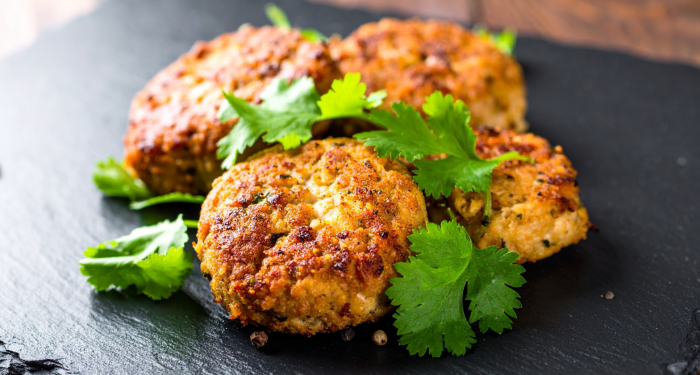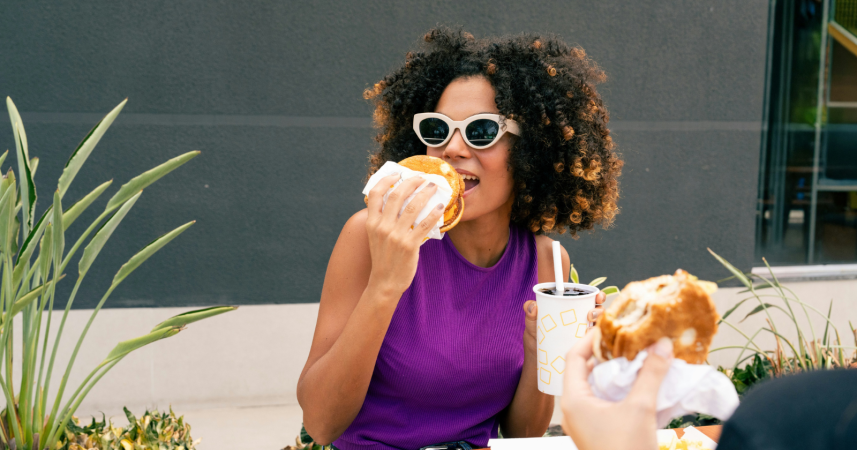
The mall food court was our training ground—for decision-making, sharing, and surviving chaos with a napkin stash.
If you grew up anywhere near a suburban shopping center, you know the ritual.
Saturday afternoon. A pocketful of allowance or a crumpled ten from a parent. The hum of escalators, the neon glow of storefronts, and the siren call of the food court. That wide-open plaza wasn’t just a place to refuel—it was our arena for independence.
As sociologist Ray Oldenburg might say, malls were a classic “third place”—neutral ground where we learned to people-watch, make tiny decisions, and feel a little more grown up than we actually were.
I still remember how those micro-choices—pizza or pretzel? lemonade or fro-yo?—felt like warm-ups for bigger choices that would come later.
And the smells? They’re practically time machines.
There’s a reason scent yanks us back so powerfully; memory and smell are inseparable dance partners.
So, let’s stroll that sticky tile floor together and revisit the staples that defined our Saturdays.
1. Orange Julius: the frothy gateway drink
Before “smoothie culture” took over, there was the Orange Julius—frothy, borderline mysterious, and so bright it practically glowed.
I treated that creamy citrus like currency, trading sips with friends for bites of pretzel. It was sweet but not heavy, the perfect opener for a lap around the atrium.
What did it teach me? Entry points matter. A small, friendly “yes” opens the door to bigger adventures—whether that’s a new job, a training plan, or just making conversation with the person behind you in line.
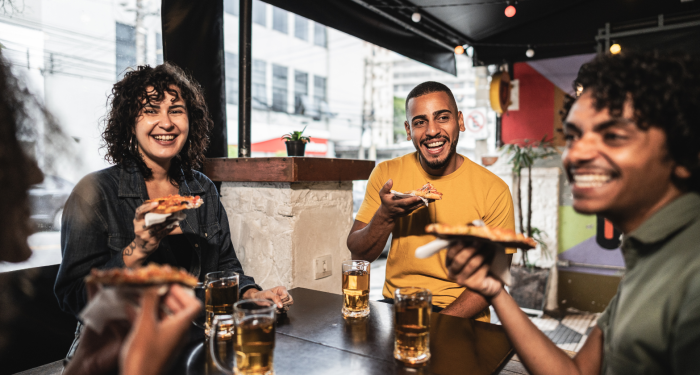
2. Sbarro pizza by the plank
Foldable, glossy, and wider than my face.
A Sbarro slice felt like an event. I’d perch at a too-high stool and try to look casual while wrestling the cheese.
Sbarro taught me a life skill I still use: commit with two hands.
When something’s unwieldy—an ambitious project, an awkward conversation—secure your grip, lean in, and take the bite.
3. Auntie Anne’s pretzels (and the power of smell)
That buttery scent curled around escalators like a cartoon finger beckoning you closer.
I’d snag pretzel nuggets and mustard, then walk the loop perfectly content.
It wasn’t just a snack; it was an olfactory map of the mall.
4. Cinnabon’s cinnamon cyclone
Cinnabon wasn’t a treat—it was a commitment.
The swirl, the frosting drift, the napkins multiplying like tribbles.
I learned moderation the hard way: half now, half later. That rule still saves me at work. When a task feels too gooey and big, I halve it and let the rest cool.
The payoff is sweeter when I’m not battling a sugar crash of overwhelm.
5. Panda Express (and the free-sample hustle)
You know that moment: a tiny toothpick extended like a ceremonial scepter—orange chicken glistening, the worker smiling.
Did I want a sample? I always wanted a sample.
Panda Express revealed another human truth: we respond to generosity. A small free thing (feedback, a resource, a warm intro) can build goodwill faster than a dozen polished pitches.
I try to lead with a sample now—offer help first, ask second.
6. Hot Dog on a Stick and the fearless uniform
The lemonade was legit. The corn dogs were glorious.
But the uniform—the striped hat, the primary colors—was the show.
As a teen, I’d watch the staff wield those lemon mashers with athletic precision. There’s something wonderfully defiant about wearing bright stripes in a sea of black hoodies.
It reminded me that owning a look—your voice, your quirks, your “hat”—is magnetic. Authenticity isn’t a buzzword; it’s the reason people remember you across a crowded court.
7. Mrs. Fields cookies warm from the tray
A warm chocolate chip cookie handed over like a secret. The surface crackled; the middle surrendered.
I’d save the softest bite for last. Mrs. Fields taught me about pacing rewards. When I’m grinding—writing drafts, budgeting, training for a race—I stash a tiny delight for the end.
That “last warm bite” habit turns discipline into something I actually want to repeat.
8. TCBY and the fro-yo era
Before toppings bars became architectural marvels, TCBY held court with tart vanilla and rainbow sprinkles.
Fro-yo wore the halo of “better choice,” which made it an early lesson in labels: not all “better” is better for you.
The best choice is the one you’ll stick with and feel good about later. I apply that to habit-building today—choose the version of the habit you’ll actually do. Ten minutes of movement beats a gym plan that never leaves your notes app.
9. Teriyaki and bourbon-chicken spots (the food-court drumbeat)
You heard it before you saw it: spatulas chattering, steam surging, samples materializing on cue.
Whether it was Sarku Japan, a local teriyaki stall, or the mythic “bourbon chicken” place, these counters felt like culinary theater.
10. Dippin’ Dots—ice cream from the future
Did it taste different? Not really.
Did it feel futuristic? Absolutely.
I bought Dippin’ Dots as a statement that I was keeping up with tomorrow.
And that’s valuable in its own right—sometimes a small novelty rekindles curiosity.
11. The lemonade stand (whoever was selling it)
Whether it was Hot Dog on a Stick’s hand-mashed classic or a rotating kiosk, lemonade cut through food-court heaviness like a bell.
It was the reset button. That matters beyond lunch. In a long afternoon—shopping, studying, parenting—build in your sips of acid-bright relief.
Five deep breaths in a bathroom stall, a quick walk in fresh air, a glass of cold water. You return clearer. You make better choices. You enjoy the rest more.
What those Saturdays actually gave us
When I look back, I don’t just see food. I see reps—tiny repetitions of agency.
I learned to spend within limits, to weigh options, to try new things in low-stakes ways. I learned to share (“You get the pretzel, I’ll get the cookie”), to negotiate (“Half now, half later”), and to read social cues while waiting for my number to flash on the screen.
Most of all, I learned that environment shapes behavior. The food court wasn’t elegant, but it was designed for lingering: brighter than a restaurant, looser than a living room, louder than a library. That noise taught me how to focus in motion—a skill that still helps when life is anything but quiet.
If you want to bring that energy into your grown-up Saturdays, try this:
-
Give yourself a roaming budget. A small, guilt-free allowance for curiosity—coffee, a bookstore browse, a museum ticket—keeps your exploratory muscles strong. Decision-making gets easier when you practice on tiny stakes.
-
Build a “sample first” habit. Offer something small and helpful before you ask for something big. People remember the toothpick of generosity.
-
Create scent anchors. Use aroma to cue a mindset—citrus for energy, cinnamon for comfort. The brain loves reliable signals (again, here’s the why).
-
Split the Cinnabon. Break overwhelming tasks into two warm halves. Enjoy both.
I think about those Saturdays whenever I’m tempted to overcomplicate growth.
The food-court version of self-development is humble and effective: sample widely, commit to what you like, share with your people, and carry napkins.
You don’t need perfect conditions to practice being the person you want to be. You just need a tray, a seat in the open, and a willingness to take a bite and see how it feels.
And if the smell of warm pretzels still makes you turn your head? Same.
That’s your past tapping your present on the shoulder, reminding you that tiny choices, repeated over time, define whole eras of who we become.
What’s Your Plant-Powered Archetype?
Ever wonder what your everyday habits say about your deeper purpose—and how they ripple out to impact the planet?
This 90-second quiz reveals the plant-powered role you’re here to play, and the tiny shift that makes it even more powerful.
12 fun questions. Instant results. Surprisingly accurate.