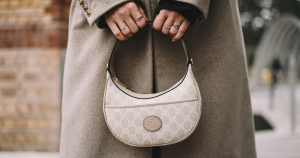
Let your clothes support the life you are building.
Crafting a life you actually enjoy often shows up in tiny choices, like what colors you reach for in the morning.
If you lean toward neutrals more than brights, you might be signaling more than taste.
You might be revealing how your mind prefers to operate.
Here are seven rare personality traits I often notice in people who choose a muted palette:
1) You optimize for clarity
People who gravitate to neutrals tend to like clear mental space.
Fewer visual distractions and even fewer competing signals; that preference often mirrors an inner push for clarity in work, relationships, and goals.
When I swapped my closet to a simple range of black, gray, olive, and cream, something weird happened.
My mornings got quieter. I made faster decisions and felt less scattered.
Choosing clothes stopped competing with choosing how to spend my best energy.
If you love tidy interfaces and uncluttered rooms, your color choices might be another way you curate clarity.
2) You are internally anchored
There is a subtle confidence in not needing to be the loudest person in the room.
People who prefer neutrals often source identity from the inside out.
They care about how they feel in their clothes more than how loudly those clothes speak for them.
A psychology professor once told me, “Style is a value system you wear.”
If your values are autonomy, substance, and steadiness, a quiet wardrobe fits.
You do not need applause to know who you are.
That internal anchor shows up in calm decision-making and an ability to hold your line when trends whip around.
3) You notice nuance
Do you pick between two near-identical tees because one has a better drape and the stitching sits flatter on your shoulder?
That is nuance; neutrals highlight shape, texture, and proportion.
When color is dialed down, details step forward.
This often maps to a personality that pays attention.
You hear the subtext in what a friend did not say, you spot early signals in a project’s metrics, and you catch the micro-optimizations that compound.
People who favor a muted palette frequently bring that same fine-grained perception to the rest of life.
In teams, they become the go-to for quality control because they actually see what others miss.
4) You conserve bandwidth for what matters

Choice is expensive; every extra decision taxes your brain a little.
A softer palette reduces friction.
You can mix nearly anything and it works, and that's strategy.
I have mentioned this before but my best writing days start when I make fewer decisions before 10 a.m.
Coffee, meditation, a quick lift, then I pull on black jeans and a tee and sit down to draft.
Saving that small packet of attention turns into one more clean paragraph before lunch.
If you care about your health or your impact on animals and the planet like I do, you know those early wins create momentum.
A simplified wardrobe can be part of that optimization loop.
5) You prefer long-term quality over short-term spectacle
Neutrals can reveal a bias toward durability.
If you are not buying a neon statement piece every season, you might be saving for a jacket that will last five years.
You read fabric labels, you research fit, and you learn to repair.
This has a personality echo as you likely value reliability in yourself and others.
You care about keeping promises, not making flashy ones.
In a world of constant novelty, choosing the classic cut or the well-made vegan leather boot is a quiet bet on the future.
That patience shows up in your learning habits, your savings plan, and how you invest in relationships.
6) You adapt across contexts
I used to play small venue gigs when I wrote about indie music.
Load-in at 4 p.m., photos in low light, then a quick hop to a late dinner with friends.
Neutrals let me move through all those spaces without changing gear.
A black shirt worked on stage, behind a camera, and at the table.
People who love a pared-back palette often value adaptability.
They can walk into a startup office, a community event, or a weekend hike and feel appropriately dressed.
That same flexibility appears in their thinking.
They know when to speak up and when to hold back; they read the room, they match tone, and they blend without disappearing.
7) You regulate emotions by managing inputs
Color is stimulus as bright hues can be energizing, but they can also be loud.
If you naturally manage your energy by tuning inputs, a softer palette helps keep your baseline calm.
Calm does not mean dull. Calm means available.
I see this in creative friends who do their best work when their environment is steady.
They use playlists that do not demand attention, they cook simple food that fuels focus, and they walk in the same park because it clears mental static.
Neutrals are another dial they set.
The result is more room for deep work, better listening, and clearer conversations.
A neutral finish
If your wardrobe leans neutral, it might be more than a style preference because it might be a map of how you think, focus, and move through the world.
If you are curious to try it, start small: Two colors, three pieces, one week, then see how you feel.
Short and simple; let your clothes support the life you are building, not compete with it.
What’s Your Plant-Powered Archetype?
Ever wonder what your everyday habits say about your deeper purpose—and how they ripple out to impact the planet?
This 90-second quiz reveals the plant-powered role you’re here to play, and the tiny shift that makes it even more powerful.
12 fun questions. Instant results. Surprisingly accurate.