
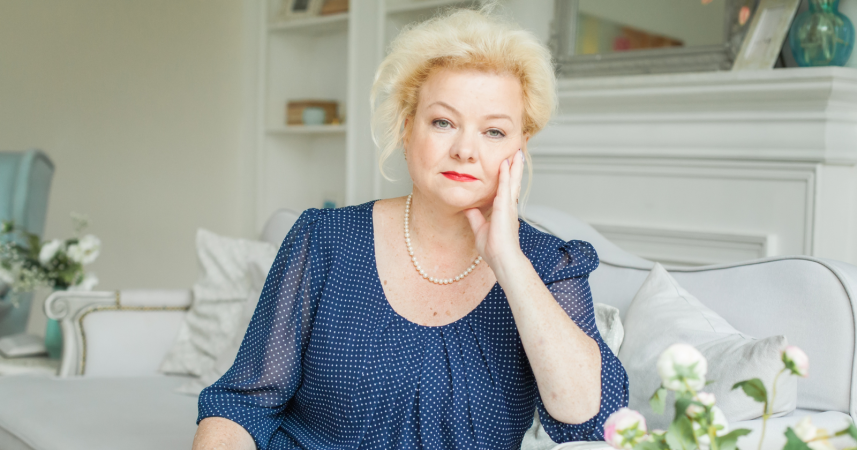
Updating your hairstyle doesn’t mean changing who you are. It just means choosing a look that reflects the confidence, wisdom, and ease you’ve earned over the years.

Add VegOut to your Google News feed. 
It’s funny how certain trends stay with us long after they’ve left the magazines.
We get attached.
We get comfortable.
And sometimes we don’t even notice when a hairstyle that once made us look fresh and confident is now quietly aging us in ways we didn’t expect.
I see this a lot when chatting with women at the farmers’ market where I volunteer. There’s something about hair that feels emotional. It holds memories. It carries stories. And letting go of a style you’ve worn for decades can feel oddly personal.
But the truth is your hair can either lift your look or weigh it down.
And some trends from the 80s and 90s simply don’t work the way they used to.
So if you’re ready for a refresh that reflects the vibrant, self-assured woman you are today, here are nine styles that might be time to retire.
1) The overly teased crown
Remember when bigger meant better?
For a while, every woman I knew sprayed half a can of hairspray onto the top of her head before leaving the house. The goal was height. Lots of it.
But heavy teasing rarely flatters anyone now. It tends to collapse throughout the day, leaving the hair looking stiff instead of full. And for women over 60, that extreme height can actually emphasize thinning instead of disguising it.
Volume is great, but there are softer, modern ways to achieve it that don’t rely on aggressive teasing. A layered cut or a lightweight volumizing mousse goes much further without creating that helmet effect.
Your hair should move with you, not stand at attention.
2) The crunchy gel spiral curls
You know the look.
Perfectly defined ringlets so stiff they don’t dare separate.
I had these in high school, and every photo from that era makes me cringe. The curls were technically neat, but they looked more like plastic coils than natural hair.
Today, the goal is softness. Touchability.
Movement.
Especially as we age, softer curls do wonders for framing the face and adding youthfulness. Hard, crunchy spirals, on the other hand, create the opposite effect by drawing sharp lines around the face instead of gentle ones.
If you have natural curls, embracing more hydration and less control can make a world of difference. Think creams, leave-in conditioners, and a little scrunching instead of freezing everything in place.
3) The razor-thin penciled bangs
These were everywhere in the 90s.
Those tiny, wispy strips of hair that barely covered the forehead but required constant styling to behave. I once tried cutting my own. It was a disaster that took months to grow out.
The problem with these bangs now is simple. They make the forehead look larger and can highlight lines more than soften them. They also tend to separate easily, leaving gaps that draw attention upward.
A modern fringe can still be light and airy, but it should have fullness and intention. A soft, side-swept bang or a fringe with slightly more density looks elegant, timeless, and flattering.
Thin, stringy bangs rarely do anyone favors.
4) The heavy, one-length bob
There was a time when a blunt bob felt chic and powerful.
But for many women over 60, especially those with fine or thinning hair, this style can fall flat. Literally.
A single-length cut tends to weigh down the bottom of the hair, pulling everything down instead of creating lift. It can also make the face appear longer and more angular, depending on the jawline.
Layers are your friend here.
Even minimal layering can add movement, shape, and softness.
It doesn’t mean abandoning the bob. It just means modernizing it so it complements your natural texture instead of working against it.
5) The ultra-dark, jet-black dye job
Have you ever noticed how harsh very dark hair can look as we get older?
This is something I learned firsthand after years of financial analysis left me with early grays. I once dyed my hair in a shade that was far too dark because I thought it made me look polished.
It did not.
Deep black absorbs light instead of reflecting it. It can accentuate shadows and make the complexion appear cooler and more severe. For women over 60, that contrast can unintentionally highlight fine lines or under-eye circles.
Softer shades, subtle highlights, or warm lowlights can brighten your features and make the hair look healthier. You don’t have to go blonde. Just aim for multidimensional color instead of a solid wall of darkness.
6) The over-plucked, ultra-arched brows paired with big hair
Brows count as part of the overall look, and in the 90s, thin brows were practically a personality trait.
Here’s the issue: when thin, severe brows meet a voluminous hairstyle, it creates a dated contrast. The face looks sharper, the hair looks bigger, and instead of balance you get an unintentional throwback.
Your brows frame the face.
They anchor the hair.
They ground the whole look.
A fuller, softer brow shape does wonders for creating harmony between your features and your hairstyle. You don’t have to go thick. Just aim for a natural shape with gentle arches rather than rigid ones.
Pairing a modern brow with a modern cut can transform your whole appearance.
7) The crimped sections
Crimped hair had its moment.
It was fun. It was quirky. It was everywhere.
But crimping hasn’t aged well. The sharp, zigzag texture tends to look frizzy rather than intentional, especially on mature hair. It can also create dryness because the tool uses intense heat.
If you’re craving texture, there are far better options now. Loose waves. Air-dried curls. Soft bends with a modern curling iron.
Texture should look lived-in and effortless, not uniform and brittle.
8) The chunky highlights
This is one trend that instantly timestamps you.
Thick, high-contrast streaks of blonde or caramel were iconic in the 90s. But today, they often look harsh and disconnected from the rest of the hair.
Modern highlights are all about blending. Subtle dimension. Gradual transitions.
And the truth is blended color is far more flattering as we age. It softens features, adds warmth, and creates that “glow from within” effect that chunky highlights can’t replicate.
If you still love highlights, keep them. Just update the placement and tone so they lift your complexion instead of creating sharp lines.
9) The tight perm with uniform curls
Finally, let’s talk about the classic perm.
Back then, perms were everywhere. The curls came in identical sizes, perfectly tight, and often overly processed. For many women, the perm became part of their identity.
But uniform curls don’t look natural, and the tightness can actually shrink the look of your hair, making it lose length and balance. They can also emphasize dryness, which is more common as we age.
Today’s perms, if you choose to get one, are far softer. They use different rod sizes for a more organic look and much gentler formulas. The goal now is movement, not uniformity.
If you haven’t updated your perm style since the 80s or 90s, this might be the perfect time.
Final thoughts
It reminds us of who we were and what we lived through. And while there’s nothing wrong with a little nostalgia, there’s also so much freedom in letting your style evolve.
The best part? Updating your hairstyle doesn’t mean changing who you are. It just means choosing a look that reflects the confidence, wisdom, and ease you’ve earned over the years.
So if any of these trends feel familiar, consider whether they’re still serving you. Your hair can be one of your greatest forms of self-expression. It deserves to feel current, fresh, and aligned with the woman you are today.
A small change can make you feel lighter, brighter, and more you than ever.












