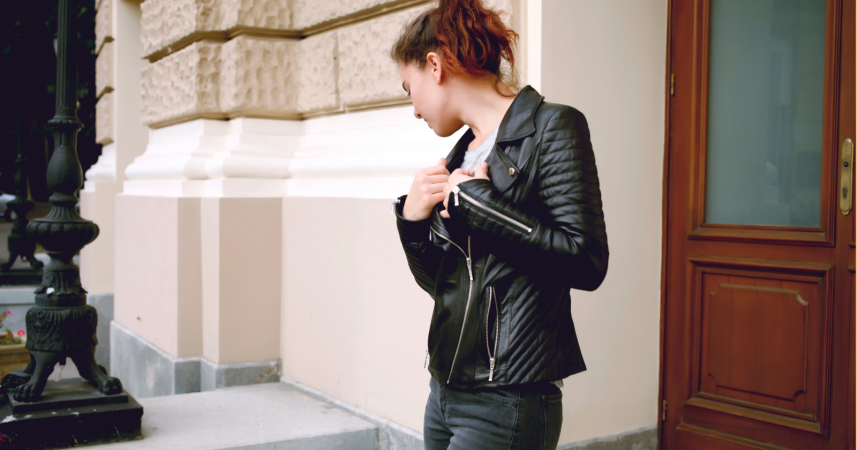
Your wardrobe might not just reflect style—it could be echoing your hidden needs for safety, depth, and unspoken emotion.
Open your closet for a moment. What do you see?
For some people, it looks like a rainbow—bursts of red, yellow, turquoise, and lime. For others, it’s a different story. Neutrals, muted tones, blacks, and grays dominate the hangers.
If you belong to the second group, it’s worth asking yourself why. Preferring darker or softer tones isn’t just a fashion choice—it can reveal a lot about your inner world.
Psychologists often say our clothing is a nonverbal form of self-expression. Whether we realize it or not, the shades we choose often mirror what we’re feeling inside or the traits we carry with us day to day.
Now, avoiding bright colors doesn’t mean you’re “hiding” something in a negative sense. But it may point toward qualities that aren’t obvious at first glance. Think of your wardrobe like a subtle autobiography—you might not spell things out, but the themes are there.
Here are seven traits people who prefer understated clothing often share.
1. You’re introspective
People who gravitate toward darker or neutral wardrobes are often thinkers. They spend more time reflecting inward than seeking outside attention. Clothing becomes a way to stay in the background so the mind can do its work.
There’s a reason artists, writers, and academics often favor simple black clothing—it clears away distraction. Coco Chanel once said, “Black has it all. White too. Their beauty is absolute. It is the perfect harmony.” When you’re not busy dazzling with neon or patterns, you create space for thoughts to take center stage.
Ask yourself this: do you prefer long conversations that dig into meaning rather than casual chit-chat? Do you often leave social gatherings feeling like you need time to process? If so, your wardrobe choices may simply reflect your inner need for contemplation.
I’ve had mornings when I put on black jeans and a gray sweater, and it feels like stepping into a safe bubble. I’m not worried about how bold or flashy I look. Instead, I can think, plan, and notice details. For many, that sense of inner clarity is worth more than standing out.
2. You crave emotional safety
Clothes are never “just clothes.” They carry emotional signals.
Bright colors demand to be seen. Neutrals, on the other hand, whisper instead of shout. For someone who values emotional safety, quieter clothing feels like a natural extension of their personality. It’s a way to move through the world without feeling exposed.
Psychology research has tied this to emotional regulation. Think of it as your nervous system finding balance. Muted clothing creates predictability—you know how it will be received, and you know it won’t call too much attention.
People who value safety often have a strong sense of loyalty and consistency in relationships. They don’t seek thrills for the sake of it. Instead, they build trust slowly and prefer steady ground over risky leaps. In a noisy, unpredictable world, your wardrobe becomes your shield.
3. You’re sensitive to overstimulation
Ever walk into a room with flashing lights, blaring music, and chaotic energy—and immediately want to leave? That’s the experience of many highly sensitive people.
This sensitivity doesn’t just apply to environments. It shows up in clothing too. Bright, clashing colors can feel overwhelming, almost like sensory overload. Muted tones, by contrast, soothe the system. They provide balance in a world that can already feel too loud.
Far from being a weakness, this trait makes you especially attuned to subtle signals others miss. You might notice when someone’s mood shifts before they say a word. You may catch the fine details in a work project that others gloss over.
Choosing understated clothing helps protect this gift. It allows you to maintain focus and calm without extra stimulation pressing in from every angle.
4. You value depth over appearances
Muted wardrobes often send a silent message: judge me on my character, not my outfit.
It’s not that you dislike beauty—it’s that you believe surface-level impressions aren’t the full story. Someone who avoids bright colors may be saying, “What matters most isn’t how I stand out in a crowd—it’s how I show up when it counts.”
When I worked in finance, I noticed something curious. Some of the sharpest thinkers in the room were dressed in the simplest clothes. Their power wasn’t in their fashion—it was in the way they spoke, listened, and made decisions. That taught me something important: depth has its own magnetism.
If you’re someone who avoids bold colors, you may also prefer meaningful conversations over small talk, or long-term friendships over wide social networks. You care less about drawing eyes and more about drawing connection.
5. You carry cautiousness
Have you ever stopped yourself from buying a bright shirt because you thought, “That’s too much—I’ll never wear it”?That small hesitation points to a bigger pattern: caution.
Neutral tones are safe. They don’t make bold statements, they don’t risk clashing, and they rarely invite criticism. In psychology, this links with cautious temperaments—those who like to measure steps before making moves.
This doesn’t mean you’re fearful. It means you’re thoughtful. You probably like to test the waters before diving in. You may take longer to open up to new people, but when you do, it’s authentic. You prefer a steady approach to life rather than reckless leaps.
That cautiousness, though sometimes misunderstood, is also why others often see you as reliable. You’re the person who doesn’t rush into things blindly. Your wardrobe simply reflects that intentional nature.
6. You prioritize professionalism
Step into any corporate environment and you’ll notice the dominance of navy, gray, and black. That’s no accident. These colors project competence, reliability, and authority.
People who favor subdued wardrobes often value being taken seriously. They want their work to stand on its own. And research backs this up: studies show that people wearing darker, more neutral colors are frequently perceived as more professional and capable in workplace settings.
If your closet leans heavily on these tones, it might reflect your drive for respect. You don’t want to distract from your abilities—you want them to shine. Your clothing says, “I’m here to deliver, not just decorate the room.”
It’s no wonder many leaders and professionals default to these shades. They know the clothing itself isn’t the story—their impact is.
7. You may be guarding unspoken emotions
Here’s the most hidden layer. Sometimes, the colors we avoid speak louder than the ones we choose.
Bright colors can feel too vulnerable, too revealing, especially if you’re carrying unresolved feelings. In difficult seasons—grief, stress, major change—people often find themselves reaching for darker clothing. It becomes a quiet way of saying, “Not everything is okay right now, and I’m not ready to show it.”
I’ve lived this personally. During a period of deep loss, my closet was almost entirely black. At the time, I thought it was just convenience. But looking back, I see it was a language my heart was speaking before my mouth could. The safety of dark tones gave me room to heal without questions or exposure.
This doesn’t mean everyone in dark clothes is sad. But for many, it’s a sign that emotions are being managed privately. Their wardrobe provides a protective layer while they process beneath the surface.
Final thoughts
Your wardrobe is more than fabric—it’s a reflection of how you move through the world. Avoiding bright colors doesn’t make you dull or uninteresting. In fact, it often signals traits like introspection, sensitivity, professionalism, and depth.
Still, clothing can also be a playful experiment. If you’ve lived in neutrals for years, you might try slipping in a bold accent piece—a scarf, a tie, even just a pair of shoes. Notice how it feels. Sometimes, color has the power to shift not only how others see us, but how we feel inside.
At the end of the day, the goal isn’t to wear what society says you should. It’s to wear what feels authentic. Whether that means sticking to grays and blacks or introducing flashes of red and yellow, your wardrobe should reflect your truth.
Because ultimately, the colors you wear are less about the eyes of others and more about the story you’re telling yourself.
Just launched: Laughing in the Face of Chaos by Rudá Iandê
Exhausted from trying to hold it all together?
You show up. You smile. You say the right things. But under the surface, something’s tightening. Maybe you don’t want to “stay positive” anymore. Maybe you’re done pretending everything’s fine.
This book is your permission slip to stop performing. To understand chaos at its root and all of your emotional layers.
In Laughing in the Face of Chaos, Brazilian shaman Rudá Iandê brings over 30 years of deep, one-on-one work helping people untangle from the roles they’ve been stuck in—so they can return to something real. He exposes the quiet pressure to be good, be successful, be spiritual—and shows how freedom often lives on the other side of that pressure.
This isn’t a book about becoming your best self. It’s about becoming your real self.