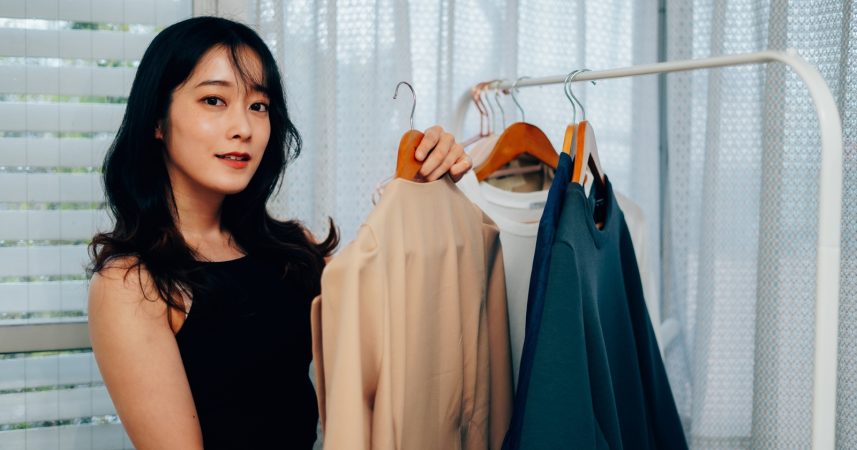
What if the pieces hanging in your closet are quietly influencing your confidence more than you realize?

Add VegOut to your Google News feed. 
Clothes tell a story long before we open our mouths. They shape how we’re perceived—and just as importantly, how we perceive ourselves. Over the years, I’ve noticed that certain pieces, no matter how trendy or nostalgic, don’t do me any favors. They dull my confidence instead of elevating it.
I’m not talking about chasing fast fashion or breaking the bank. I’m talking about making intentional choices that align with how I want to show up in the world. When I let go of the clothing that was holding me back, my style—and my self-assurance—leveled up.
Here are eight things I no longer keep in my closet.
1. Worn-out shoes
Have you ever noticed how quickly people glance down at your feet? Shoes make a stronger impression than we think. For years, I kept pairs that were scuffed, faded, or had soles peeling away, convincing myself no one noticed. But they did—and more importantly, I did.
I can remember one work meeting where I wore an otherwise polished outfit, but my heels had obvious wear on the toes. I noticed one colleague’s eyes flick down, and suddenly I couldn’t stop thinking about it. My confidence wobbled—not because of them, but because I knew I hadn’t shown up fully.
The truth is, shabby shoes drag down even the sharpest outfit. As stylist Clinton Kelly once said, “You can tell a lot about a person by their shoes.” And he’s right—your footwear speaks volumes.
Now, I’d rather have three pairs of well-kept, versatile shoes than a dozen tired ones. I polish and care for them, and when they’ve truly reached the end of their life, I let them go.
It’s a small shift, but it’s one that says, “I respect myself enough to show up well.”
2. Baggy, shapeless jeans
I once had a pair of jeans I wore so often they practically knew my schedule. They were comfy, yes, but also saggy in all the wrong places. Looking back at photos, I realize they swallowed me up instead of complementing my shape.
Jeans don’t have to be skin-tight, but they should have some structure. A good fit—even just a straight-leg pair with a defined waist—makes me look put together without trying too hard. When denim feels intentional, the whole outfit comes together.
What I’ve learned is that clothes send cues to our brain about how we feel. Psychologists call this enclothed cognition: the way our clothing influences our mindset.
Slipping into shapeless jeans made me slouch, move slower, and even choose baggier tops to “match.” By contrast, when I wear structured denim, I naturally stand taller.
Now I ask: Do these jeans make me feel strong or sloppy? If the answer leans sloppy, they don’t make the cut.
3. Clothes with obvious logos
Here’s something I had to learn the hard way: oversized logos don’t signal sophistication, they signal advertising. I used to think a designer logo splashed across my chest added status. In reality, it distracted from me.
As noted by psychologist Dr. Jennifer Baumgartner in You Are What You Wear: What Your Clothes Reveal About You, many of us use clothing choices—labels, logos, flashy brands—as signs of where we want to be seen, often to cover up deeper insecurities or to seek validation.
Once I recognized that logos weren’t boosting my confidence, I gravitated toward subtle, timeless pieces.
Think about it: when was the last time you complimented someone on their giant logo shirt? Probably never. Instead, we admire how well their clothes fit their personality and lifestyle.
Quiet luxury—simple cuts, rich textures, neutral tones—communicates confidence without the shouting. Now people notice me, not the brand stamped on my chest.
4. Trendy “fast fashion” buys
Ever bought something trendy only to wear it twice before realizing it didn’t actually suit you? I have—more times than I’d like to admit. Those impulse buys often ended up in the donation pile, barely worn.
I’ll never forget the neon-green blazer phase. I convinced myself I needed one because everyone on Instagram was wearing it. It arrived, I wore it once, and immediately felt like a highlighter. Not surprisingly, it stayed on the hanger until I let it go.
The problem with chasing micro-trends is they age fast. What looked edgy one season looked outdated the next. These days, I ask myself: Would I still love this piece a year from now? If the answer is no, I leave it behind.
Style is less about keeping up and more about curating what lasts. I’ve discovered that when I stick to colors and silhouettes that actually flatter me, I wear them longer and feel more authentic. That’s something no fast-fashion thrill can replicate.
5. Ill-fitting blazers
Blazers are meant to sharpen your look, but for years I wore ones that were either too tight across the shoulders or too boxy in the torso. Instead of giving me that polished, powerful feel, they looked borrowed from someone else.
There was one navy blazer I bought on sale because it was “good enough.” But every time I wore it, I fiddled with the sleeves or tugged at the hem. That discomfort distracted me from actually being present.
The shift happened when I invested in tailoring. A blazer that nips in at the waist, sits comfortably on the shoulders, and hits at the right length transforms everything—even jeans and a tee. Fit is king, and nothing communicates confidence quite like clothes that look made for you.
The psychological effect is real: when something fits well, you’re not preoccupied with hiding or adjusting. You show up and own your space. That’s worth more than any discount rack find.
6. Clothes with faded colors
I once loved a deep black dress that, over time, turned into a murky gray. Did I keep wearing it? Guilty. But every time I caught my reflection, it didn’t give me the same energy it once did.
Color psychology is real. According to research published in Frontiers in Psychology, color influences psychological functioning in many ways—affecting mood, self-perception, and motivation. Fresh, vibrant colors tend to boost energy; when colours fade, even a well-fitting garment can look washed-out.
I’ve started to look at my clothes in natural light. If the black isn’t truly black, or the red has dulled to pinkish rust, I make the hard call. And honestly? Donating or recycling those items makes me feel lighter. It’s not wasteful—it’s making space for clothes that still serve me.
7. Overly casual hoodies
Hoodies have their place—I still wear them for trail runs or gardening. But when I wore them out for dinners or casual meetups, I realized they weren’t giving the impression I wanted.
One friend once teased me, “You look like you just rolled out of bed,” and while she meant it lightheartedly, it stung. She was right. I wasn’t showing the best version of myself.
There’s nothing wrong with comfort, but for me, hoodies blurred the line between relaxed and careless. I swapped them for cozy yet structured sweaters, and suddenly my casual outfits felt intentional. I didn’t lose comfort—I just traded it for a more refined version.
And here’s the kicker: people noticed. “You look nice today,” I’d hear, when really I’d just swapped the hoodie for a knit. That’s the power of subtle upgrades.
8. Clothes I keep out of guilt
This one’s less about fashion and more about psychology. I used to hold onto pieces that no longer fit, gifts I didn’t love, or expensive items I regretted buying. Every time I saw them in my closet, they whispered failure.
As Marie Kondo has famously said, “The question of what you want to own is actually the question of how you want to live your life.” Letting go of guilt-laden clothes freed me from that mental weight. Now my wardrobe feels like a reflection of who I am today, not who I used to be—or who I thought I should be.
I think of it this way: a closet full of clothes that don’t serve you is like mental clutter. Each morning, you’re reminded of past mistakes, old sizes, or relationships that aren’t part of your life anymore. That’s not exactly an empowering way to start the day.
Now, I only keep clothes that bring me energy, comfort, or joy. If they don’t tick one of those boxes, they don’t belong.
Final thoughts
We often think of clothing as surface-level, but it goes much deeper. What we wear impacts how others see us and, more importantly, how we see ourselves. The wrong pieces can chip away at our confidence without us even realizing it.
For me, clearing out these eight categories wasn’t just about style—it was about self-respect. Every piece I keep now has to earn its place. It has to feel like it supports the woman I am today, not weigh me down with the past.
Maybe it’s time to ask yourself: Which clothes in your closet make you shrink—and which make you stand taller? The answer might surprise you.
If You Were a Healing Herb, Which Would You Be?
Each herb holds a unique kind of magic — soothing, awakening, grounding, or clarifying.
This 9-question quiz reveals the healing plant that mirrors your energy right now and what it says about your natural rhythm.
✨ Instant results. Deeply insightful.

Avery White
Formerly a financial analyst, Avery translates complex research into clear, informative narratives. Her evidence-based approach provides readers with reliable insights, presented with clarity and warmth. Outside of work, Avery enjoys trail running, gardening, and volunteering at local farmers’ markets.
More Articles by Avery