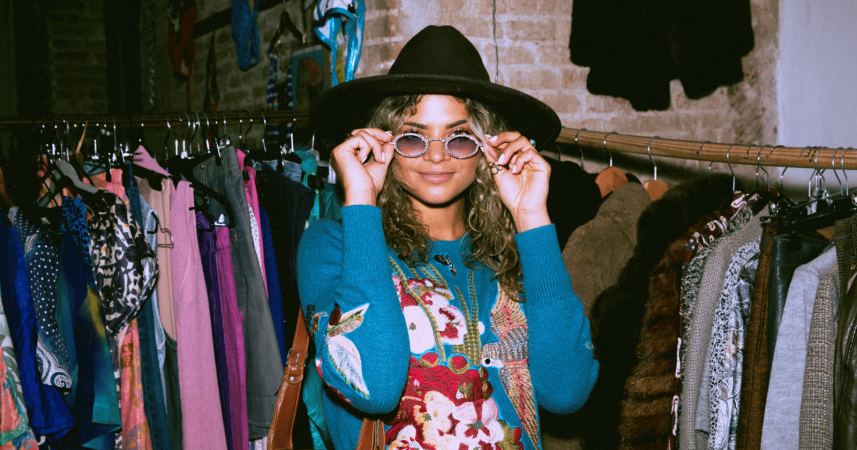
Fashion isn’t just about clothes—it’s the stories each generation retells through the same pieces, reshaping their meaning while thinking they’ve discovered something new.
Fashion is cyclical. We all know this, but it still catches us off guard.
One moment, a style is the butt of every joke. The next, it’s plastered all over TikTok with captions like “vintage find” or “old money aesthetic.”
What makes me smile is that many of these so-called vintage pieces are things our parents—or even grandparents—wore as part of their everyday lives. To them, these weren’t edgy or ironic. They were just clothes.
That’s the beauty of fashion: the meaning behind it changes, even if the fabric doesn’t. Let’s take a look at seven outfits Gen Z swears are vintage but actually trace straight back to boomers’ closets.
1. High-waisted jeans
We’ve got to start here.
Gen Z has embraced high-waisted denim, calling them “mom jeans” and pairing them with crop tops, chunky sneakers, or oversized blazers. To them, the look is retro, playful, and cool.
But for boomers, these weren’t “mom jeans.” They were just jeans. In the ‘70s and ‘80s, high-waisted denim was everywhere. The cut was considered flattering, elongating the legs and cinching the waist. There wasn’t a conversation about “low-rise versus high-rise” because low-rise wasn’t really an option yet.
I remember trying on a pair of my mom’s old Levi’s in high school. I laughed at how they nearly reached my ribcage—but they also looked incredible. My friends thought I’d scored a thrift-store gem. Nope, just borrowed from my mom’s bottom drawer.
As fashion historian Deirdre Clemente has pointed out, “Jeans are one of the most democratic garments in history, reinvented by each generation to suit their own values.” For boomers, that meant practical and durable. For Gen Z, it means stylish and nostalgic.
2. Oversized blazers
You’ve seen this one all over Instagram—slouchy blazers draped over slip dresses or paired with chunky loafers.
Here’s the thing: boomers wore oversized blazers too, though the vibe was completely different. In the power-dressing ‘80s, blazers symbolized ambition and authority. The padded shoulders, boxy fits, and sharp tailoring were about making a statement: “I belong here.”
For women especially, the blazer was a tool to be taken seriously in male-dominated workplaces. As Valerie Steele, director of The Museum at FIT, has noted, “The blazer was more than fashion—it was a uniform for women claiming space in professional culture.”
Now? Gen Z throws one on for coffee dates or fashion week. The blazer went from a symbol of authority to an accessory of nonchalance. Same garment, opposite message.
3. Wide-leg trousers
Do you think Gen Z invented the return to wide-leg pants? Not quite.
From disco flares in the ‘70s to relaxed trousers in the ‘90s, wide cuts have been through many lives. Boomers embraced them not as rebellion, but as the mainstream. Skinny jeans? Practically unheard of until much later.
I once pulled a pair of my mom’s tailored wool trousers out of storage and wore them to a networking event. A younger colleague asked me which boutique I found them at. When I said they were from the ‘70s, she blinked and said, “Oh, so like… actual vintage?”
Yes. Actual vintage.
The appeal now is comfort paired with style. The appeal then was similar—but without hashtags or thrift flips to glamorize it.
4. Midi skirts
Midis might feel like a clever middle ground today, but for boomers, they were just the norm.
In the ‘50s and ‘60s, hemlines rarely strayed above the knee. A-line or pencil midis were standard in offices, schools, and casual wear. They didn’t scream “fashion statement.” They whispered conformity and respectability.
The shift came when minis broke into the mainstream in the late ‘60s. Suddenly, the midi felt conservative. But here’s the twist: what once was ordinary became, decades later, chic again.
Gen Z reimagines the midi with chunky sneakers, graphic tees, and oversized knits. Boomers paired them with polished loafers or neat blouses. Same skirt, different context.
5. Knit vests
Here’s where things get cozy.
The sweater vest, now considered quirky, preppy, and very “dark academia,” wasn’t ironic for boomers. It was practical.
Holiday family albums from the ‘70s and ‘80s are full of knit vests—sometimes homemade, sometimes bought at Sears. They were worn by dads, uncles, even teenagers trying to look sharp. My grandmother knitted vests for nearly everyone at one point. They weren’t Instagram-worthy—they were simply part of family life.
Now Gen Z pulls them from thrift bins and layers them over oversized shirts. They call it “retro layering.” Boomers called it “staying warm.”
As one Vogue writer put it, “The sweater vest proves that no garment is ever truly unfashionable—it just waits for its moment of reappraisal.”
6. Denim jackets
Denim jackets are so universal, it’s hard to imagine a world without them. But boomers were the ones who made them iconic.
By the 1960s, denim was tied to rebellion, youth culture, and rock-and-roll. Boomers grew up with denim jackets as a rite of passage. The Levi’s trucker jacket, especially, became a symbol of cool defiance.
I can still picture my dad’s old jacket, covered in patches from concerts and road trips. For him, it wasn’t about making a fashion statement. It was about identity.
Gen Z leans into oversized fits, distressed washes, and layering. Boomers wore theirs until they were soft and threadbare—then patched them up to make them last. Different approach, same jacket.
7. Turtlenecks
This one might be the most enduring.
Gen Z wears turtlenecks under slip dresses, with chunky chains, or as sleek monochrome outfits. The look is considered artsy and minimal.
But boomers lived in them. Beat poets of the ‘60s. Professors in the ‘70s. Suburban parents in the ‘80s. The turtleneck was versatile, spanning subcultures and social classes.
I have vivid memories of tugging uncomfortably at my scratchy turtleneck as a kid while my mom insisted it was “classic.” She was right. The silhouette never really disappeared—it just got rebranded.
Fashion critic Anne Hollander once said, “The turtleneck is proof that style doesn’t change—it just changes hands.”
Why this cycle matters
You might be wondering—who cares who wore it first? Isn’t it enough that fashion comes back around?
Here’s why it matters. Fashion isn’t just fabric. It’s culture, identity, and history. When Gen Z reclaims boomers’ styles, they’re not just reviving looks. They’re reframing meaning.
Blazers went from workplace authority to effortless chic. High-waisted jeans went from practicality to nostalgia. Knit vests went from holiday gift staples to academic-cool.
It’s a reminder that we’re never as original as we think. And that’s not a bad thing. In fact, it’s liberating. None of us are reinventing the wheel—we’re remixing what came before, putting our spin on it, and making it ours.
There’s also something grounding in realizing that what we wear today may circle back decades later. Imagine Gen Alpha rediscovering “Y2K revival” in 2060 and calling it vintage. They’ll be laughing at us the same way we laugh at boomers.
Final thoughts
If you’ve ever rolled your eyes at Gen Z calling something vintage, just remember—our parents rolled their eyes at us too. That’s the rhythm of style.
Fashion doesn’t die. It pauses. It waits patiently in closets, thrift stores, and memory boxes until someone new rediscovers it.
The next time you see a turtleneck, denim jacket, or blazer labeled “vintage,” smile a little. Chances are, a boomer wore it first—probably without giving it a second thought.
That’s the beauty of it: every generation inherits the same pieces, but each tells a different story with them.
If You Were a Healing Herb, Which Would You Be?
Each herb holds a unique kind of magic — soothing, awakening, grounding, or clarifying.
This 9-question quiz reveals the healing plant that mirrors your energy right now and what it says about your natural rhythm.
✨ Instant results. Deeply insightful.

Avery White
Formerly a financial analyst, Avery translates complex research into clear, informative narratives. Her evidence-based approach provides readers with reliable insights, presented with clarity and warmth. Outside of work, Avery enjoys trail running, gardening, and volunteering at local farmers’ markets.
More Articles by Avery