What worked perfectly under studio lights in 1989 is doing the exact opposite on your face today.

Add VegOut to your Google News feed. 
I was digging through an old box in my closet last week when I found a photograph from 1989. There I was at 23, wearing electric blue eyeshadow up to my eyebrows, frosted pink lips, and enough powder to bake a cake. I laughed out loud.
Then I went to volunteer at the farmers' market and noticed something interesting. Several women around my age were still wearing versions of that same look. Not intentionally retro or ironic, just unchanged from what we learned back then.
Here's what I realized during my years analyzing patterns as a financial analyst: when something works, we stick with it. But makeup is like investing. What served you well in one decade can actually cost you in another. Our skin changes, formulas evolve, and techniques that once made us look polished now make us look dated.
The 80s gave us bold, unapologetic beauty. But those techniques were designed for young, plump skin under bright lights. On mature skin today, they emphasize exactly what we'd rather minimize.
1) Heavy, matte foundation applied in thick layers
Back in the 80s, the goal was flawless, poreless, almost mask-like skin. We layered foundation thick, then set it with even more powder. Multiple coats were standard. Shine was the enemy.
I spent two decades working in finance before transitioning to writing, and let me tell you, I understand commitment to a system that seems to work. But this foundation approach is aging you.
Here's why: as we age, our skin produces less natural oil and doesn't hold moisture like it used to. Heavy foundation settles into every fine line, crease, and texture issue. It emphasizes rather than conceals. That matte finish that looked smooth at 25 looks flat and lifeless at 60.
What actually works now is the opposite. Lightweight, hydrating formulas with a natural finish let your skin breathe. A tinted moisturizer or BB cream gives coverage without the weight. Less truly is more when your skin has earned its character.
2) Applying powder blush in a heavy stripe under the cheekbones
The 80s blush technique was distinctive and dramatic. You took your bright pink or red powder blush and applied it in a heavy stripe from your cheekbones up to your temples, often blending it into your hairline. More was definitely more.
This technique had a specific name back then: draping. And while it photographed beautifully under studio lights, it's not your friend now.
Powder blush on mature skin can look dusty and emphasize texture. The heavy stripe placement actually drags your face down visually, the opposite of what you want. When I finally switched to cream blush applied higher on my cheeks with an upward motion, the difference was striking.
Modern application focuses on the apples of your cheeks and blends upward and outward, lifting rather than dragging. Cream formulas melt into skin instead of sitting on top. The result looks fresh and natural, not painted on.
3) Using stark, dark lip liner with lighter lipstick inside
Remember the look? A dark brown or burgundy lip liner creating a sharp outline, filled in with a lighter, sometimes frosted lipstick. We thought this made our lips look fuller and more defined.
Actually, it does the opposite on mature lips. Our lips naturally lose volume and definition as we age. That stark outline just emphasizes the thinning and draws attention to the fine lines around your mouth. It screams a specific era, and not in a good way.
I held onto this technique longer than I care to admit. When I finally let it go, switching to a lip liner just slightly deeper than my natural lip color and filling in my entire lip with it before adding lipstick, the difference was immediate. My lips looked fuller, softer, and infinitely more current.
The goal isn't to outline your lips but to enhance their natural shape. Think of liner as a base, not a border.
4) Generous powder application all over to eliminate shine
The 80s were militantly anti-shine. We powdered everything. Translucent powder, pressed powder, setting powder. Layer after layer to achieve that matte, shine-free finish.
This is one of the most aging techniques you can continue doing. Powder settles into lines, emphasizes texture, and makes skin look dry and flat. It literally highlights every wrinkle you're trying to minimize.
After spending years learning to read patterns in financial data, I got pretty good at spotting what's working and what isn't. Heavy powder isn't working for anyone over 40, let alone over 60.
If you need powder at all, use it sparingly and only in the T-zone where you might actually get shiny. A light dusting at most. Better yet, use a setting spray instead. Your skin will look fresh and alive rather than powdered and finished.
5) Applying glittery or frosted eyeshadow all over the lid
The 80s loved sparkle. Glittery eyeshadow, frosted highlighter, shimmer everywhere. It was part of that maximalist aesthetic that made the decade so fun.
But shimmer and aging skin are not compatible. Glitter and frost settle into creases and wrinkles. They make hooded lids look heavier. They emphasize every texture issue you'd rather people not notice. What looked festive at 20 looks like you're trying too hard at 60.
This was hard for me to accept because I loved the drama of a sparkly lid. But once I switched to matte or satin finishes, especially in neutral tones that open up the eye area, I looked years younger.
You can still use a touch of shimmer, but strategically. A small amount in the inner corner of the eye or on the brow bone can brighten. Just keep it off the main lid area where texture is most visible.
6) Over-plucking eyebrows into thin, defined lines
While the early 80s had fuller brows, by the late 80s we were plucking them thinner. Many of us kept plucking for decades, creating those pencil-thin arcs that seemed sophisticated at the time.
Thin brows age you dramatically. They make your eyes look smaller, your face look longer, and they simply look dated. Worse, decades of over-plucking means many women's brows won't grow back fully.
When I was working in finance, I had one colleague whose brows had been shaped into thin lines for so long that they were permanently sparse. She looked perpetually surprised and older than her years. After working with a good brow specialist, she learned to fill them in more naturally and the transformation was remarkable.
Fuller, more natural brows frame your face and balance your features. Use a brow pencil that matches your hair color, fill in sparse areas with light, feathery strokes, and brush them upward. If your brows are permanently thin, consider microblading or a quality brow pomade.
7) Applying mascara in thick, clumpy layers for a dramatic effect
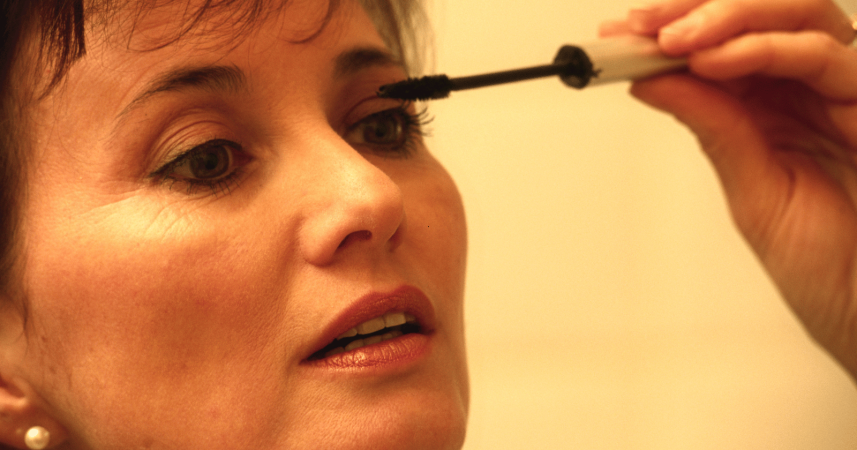
The 80s wanted big, bold lashes. We layered mascara until our lashes were thick, spiky, and dramatic. Sometimes we did the bottom lashes just as heavily. The goal was maximum volume and drama, even if it meant some clumping.
On mature eyes, this technique is actively aging. Heavy mascara can make already thinning lashes look sparse by comparison. It weighs them down. Clumps emphasize rather than enhance. And if you're still doing your bottom lashes heavily, you're creating shadows under your eyes that make dark circles look worse.
I spent too many mornings on the trail running, thinking about how we hold onto habits long after they serve us. This mascara technique is one of those habits.
What works better now: one or two coats of a lengthening mascara on your top lashes only. Focus on separating and defining rather than volume and drama. Skip the bottom lashes entirely or just do a light coat on the outer corners. Your eyes will look bigger, brighter, and more awake.
Moving forward
Recognizing these outdated techniques isn't about criticism. The 80s were iconic, and those looks were perfect for that time. But you're not the same person you were at 25, and your skin isn't the same either.
I didn't throw away all my makeup overnight. It took time to unlearn habits I'd practiced for years. Some techniques were harder to let go than others. That's normal.
Start with one change. Maybe switch from powder to cream blush. Or trade your heavy foundation for something lighter. Small adjustments add up to a dramatically fresher look.
Your face has earned its lines and character through decades of living. The right makeup enhances that rather than fighting against it. You're not trying to look 25 again. You're trying to look like the best version of yourself right now.
And honestly? That's so much more interesting than trying to recreate what worked in another decade. The confidence that comes from knowing you look current, polished, and authentically yourself is worth more than all the frosted eyeshadow in the world.