It’s not the price tag that makes a woman feel powerful, it’s what the mirror tells her when she puts it on.
Let’s be honest, most of us have had a “fake it till you make it” moment when it comes to fashion. You know the one. When you strut out in an H&M blazer feeling like it could pass for Prada if no one looks too closely at the buttons.
And there’s no shame in that. For many women, especially those in the lower-middle class who grew up stretching every dollar, clothing is more than just fabric. It’s about identity, pride, and the subtle art of looking like you belong without paying luxury prices.
As someone who spent years in a corporate environment surrounded by designer handbags and tailored suits, I know the mental gymnastics that go into “dressing the part.” Back then, a Zara tote could make me feel like I had my life together. It wasn’t about pretending, it was about participating.
Because fashion, especially for women from modest backgrounds, isn’t just surface-level. It’s a language. It tells the world: I belong here too.
So, let’s look at seven fast-fashion brands that many women still treat like designer. The ones that have become symbolic of upward mobility, quiet confidence, and self-expression, even if the price tag says otherwise.
1) Zara
There’s something about Zara that just feels expensive. Maybe it’s the minimalist store layout or the way they manage to turn runway trends into wearable office outfits in under a month.
Walk into a Zara store and it’s all glossy white floors and mirrors, subtle signals that whisper “luxury” without shouting it. And that’s part of its power.
You’ll see a Zara blazer hanging in a small apartment closet next to the iron and think, that’s her power piece. It’s the brand people reach for when they have a job interview, a first date, or a presentation where they need to project competence.
I once had a coworker who called Zara her “affordable armor.” She’d pair a structured jacket with thrifted heels and walk into meetings like she owned the building.
And I get it. Zara isn’t just about fashion, it’s about social psychology. It’s a bridge between aspiration and accessibility. You might not afford The Row, but Zara lets you feel like you could.
It’s the illusion of luxury that gives women permission to hold their heads a little higher. Because when you grow up counting every purchase, being able to buy something that looks expensive is its own small win.
2) Mango
If Zara is the “cool-girl” brand, Mango is her quieter, older sister who works in PR and always smells like a $200 perfume.
Mango’s aesthetic is pure European elegance: beige trenches, clean lines, and pieces that whisper “I don’t chase trends, I curate them.”
I’ve seen women treat their Mango coats like heirlooms. They’ll dry-clean them religiously and hang them in garment bags like they’re protecting something sacred. And in a way, they are.
Because for many women, Mango symbolizes the moment life starts to stabilize. When you can afford to buy something not just because it’s cheap, but because it’s beautiful.
Psychologically, this brand sits in a sweet spot: attainable, but aspirational enough to feel special. It doesn’t scream fast fashion. It gently hums “success.”
I’ll never forget the first time I bought a Mango trench coat. I wore it to a professional conference and suddenly felt like someone who had her life together. (Spoiler: I didn’t.) But that coat gave me the illusion of control, and sometimes, that’s all we need to step into new spaces with confidence.
3) H&M
Ah, the original gateway drug to adult fashion.
For many women, H&M was the first introduction to “real” clothes: structured blazers, button-ups, sleek dresses that hinted at professionalism. It’s where we learned that you could reinvent yourself on a budget.
I still remember walking into my first H&M in my early twenties, heart pounding with possibility. I left with a $25 pencil skirt and felt like I’d just made a down payment on my future.
The thing about H&M is that it democratized fashion. It gave women who grew up watching glossy magazine spreads a way to participate in that world. Even if your office was small and your paycheck smaller, you could still look like you belonged in the pages of Vogue.
That’s powerful.
Many lower-middle-class women treat their H&M staples like designer basics: pressing them carefully, pairing them thoughtfully, wearing them proudly. It’s not about delusion; it’s about dignity.
Because when you come from a background where every dollar has to count, the act of caring for your clothes is a way of caring for yourself.
4) Uniqlo
Minimalist. Reliable. Understated.
Uniqlo is the opposite of flashy, and that’s exactly why women treat it with reverence. Its simple designs and neutral palette tap into a sense of calm sophistication.
There’s something deeply comforting about Uniqlo’s consistency. You know what you’re getting every time: clean lines, durable materials, and a fit that makes sense.
A friend once told me, “My Uniqlo pieces make me feel like I belong in a boardroom, even if I’m just in my living room.” She wasn’t joking. A $30 turtleneck from Uniqlo, when paired with confidence (and maybe a gold chain), can look like something straight out of a Parisian boutique.
And that’s where the brand wins. It embodies “quiet luxury” for people who can’t afford actual quiet luxury.
There’s a kind of psychological empowerment in simplicity. When you wear something understated, the focus shifts from your outfit to your presence. Uniqlo gives women permission to say, I don’t need logos to be taken seriously.
5) COS
COS is like the intellectual cousin in the fast-fashion family. The one who reads design magazines, wears structured shirts, and has opinions about architecture.
Technically a sister brand to H&M, COS manages to rise above that label in perception. It’s the go-to for women who want that sleek, Scandinavian look without maxing out their credit cards.
The cuts are precise, the materials a little heavier, and the colors soft but strong. There’s a reason so many women wear COS to interviews or networking events: it projects self-assurance.
I once talked to a woman who said she saves her COS dresses for “important days.” When I asked what that meant, she said, “The days I need to remember who I am.”
That hit me.
For many women from modest backgrounds, fashion isn’t just about looking good. It’s about reclaiming identity. COS has become a uniform for self-respect: a way to embody competence before you’re even fully convinced of it yourself.
And maybe that’s the magic of it. When you put on something that feels structured, your thoughts start to structure themselves too.
6) Massimo Dutti
Now this one is the sleeper hit.
Massimo Dutti feels designer, even though it’s technically under the same corporate umbrella as Zara. It’s where women go when they’re ready to treat themselves but not ready to splurge on actual luxury labels.
The stores smell like leather and ambition, and the collections are full of rich neutrals and clean tailoring. You don’t just shop there, you graduate there.
For many women in the lower-middle class, Massimo Dutti represents a milestone. Maybe it’s your first big promotion, your first business trip, or that sweet spot when your student loans are finally under control.
I know several women who’ve said, “I bought my first Dutti blazer after my raise, it felt like proof.” They still take care of those pieces years later, pulling them out for interviews and important events.
Because when you’ve worked hard to get somewhere, you want something tangible to remind you of that journey. A Dutti bag or coat becomes a personal symbol of upward momentum: a reward, not just a purchase.
It’s the kind of brand that quietly tells the world: I’m moving forward.
7) & Other Stories
If you’ve ever stepped into & Other Stories, you know it’s not just a store, it’s an experience.
Everything from the lighting to the playlists feels like it’s curated by someone who lives in a Paris apartment with high ceilings and fresh peonies on the table. The clothes are soft, feminine, and effortlessly chic.
And that’s exactly why women treat this brand like a little luxury.
& Other Stories sells fantasy, but not the unattainable kind. It’s the fantasy of being put together, of moving through life with grace and good taste, even if your bank balance doesn’t match the vibe.
I’ve seen women save up for one of their dresses, wearing it to a milestone event like a birthday or an anniversary dinner. They’ll talk about it the way others talk about designer pieces: “I’m wearing my Stories dress tonight.”
Psychologically, that tells you something. For many women, clothes from & Other Stories serve as emotional artifacts. They’re not about status, they’re about identity.
You’re not just wearing a brand. You’re wearing how you want to feel.
Final thoughts
At the end of the day, none of this is really about fashion. It’s about belonging, self-worth, and the quiet victories of women who learned how to make style stretch farther than their paychecks.
When you’ve grown up watching others have what you couldn’t, being able to buy something that makes you feel seen, even if it’s from a fast-fashion rack, becomes deeply symbolic.
Yes, there’s an ethical debate around fast fashion, and as someone who now tries to shop consciously, I don’t ignore it. But empathy has a place in that conversation too.
Because for many lower-middle-class women, these purchases aren’t about mindless consumerism. They’re about self-respect. They’re about walking into a room and not feeling “less than.”
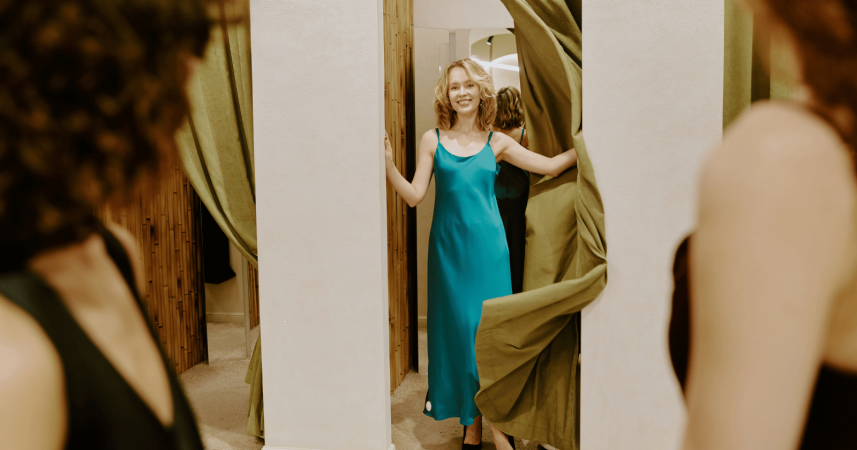
So the next time you see a woman carefully steaming her Zara blazer or smiling at her reflection in a Mango mirror, know this: it’s not vanity. It’s victory.
She’s not pretending to be someone else. She’s becoming the version of herself she’s always believed she could be.
If You Were a Healing Herb, Which Would You Be?
Each herb holds a unique kind of magic — soothing, awakening, grounding, or clarifying.
This 9-question quiz reveals the healing plant that mirrors your energy right now and what it says about your natural rhythm.
✨ Instant results. Deeply insightful.

Avery White
Avery White is a writer and researcher who came to food and sustainability journalism through an unusual path. She spent a decade working as a financial analyst on Wall Street, where she learned to read systems, spot patterns, and think in terms of incentives and consequences. When she left finance, it was to apply those same analytical skills to something that mattered to her more deeply: the food system and its environmental impact.
At VegOut, Avery writes about the economics and politics of food, plant-based industry trends, and the intersection of personal health and systemic change. She brings a data-informed perspective to topics that are often discussed in purely emotional terms, while remaining deeply committed to the idea that how we eat is one of the most powerful levers individuals have for environmental impact.
Avery is based in Brooklyn, New York. Outside of writing, she reads voraciously across economics, environmental science, and behavioral psychology. She runs most mornings and considers a well-organized spreadsheet a thing of genuine beauty.
More Articles by Avery